THE ADVENTURE COLLECTIVE® · Independent discovery and booking for outdoor travel

Four days across East Java’s volcanic highlands: moss-draped De Djawatan forest, the rare blue fire of Ijen, a starlit jeep ride across Bromo’s Sea of Sand, and a canyon trek to Tumpak Sewu. This itinerary pairs culture, geology, and hands-on adventure with local guides and included accommodations.
Four days across East Java’s volcanic highlands: moss-draped De Djawatan forest, the rare blue fire of Ijen, a starlit jeep ride across Bromo’s Sea of Sand, and a canyon trek to Tumpak Sewu. This itinerary pairs culture, geology, and hands-on adventure with local guides and included accommodations.
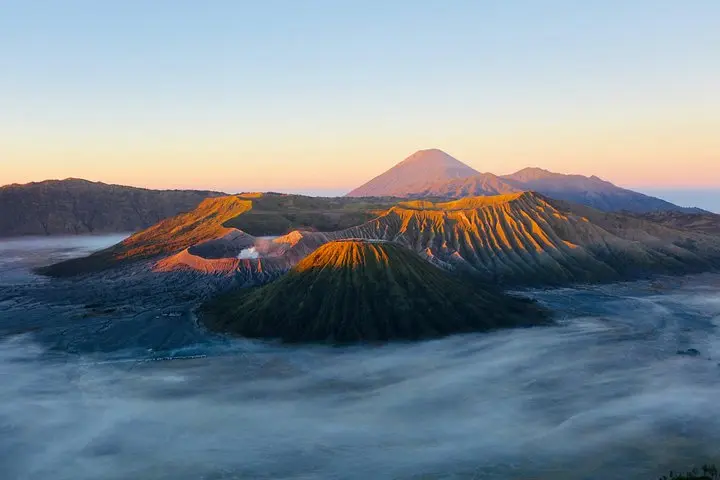
You arrive before dawn, windows fogging as the minivan threads coastal roads into highland mist. In the low light De Djawatan’s giant trembesi trees loom like old watchmen, moss curtains swaying as if the forest breathes. Later that night you climb toward Ijen’s rim under a spatter of stars; sulfur gases flare blue and daring you closer. Dawn at Penanjakan paints Bromo’s craggy cones in clean light, and on the last day the canyon of Tumpak Sewu roars—a vertical curtain of water that seems to pull the jungle inward.
Verified experiences and guided adventures in the surrounding area.
Operated by Wanderlast Travel · Banyuwangi, East Java
You arrive before dawn, windows fogging as the minivan threads coastal roads into highland mist. In the low light De Djawatan’s giant trembesi trees loom like old watchmen, moss curtains swaying as if the forest breathes. Later that night you climb toward Ijen’s rim under a spatter of stars; sulfur gases flare blue and daring you closer. Dawn at Penanjakan paints Bromo’s craggy cones in clean light, and on the last day the canyon of Tumpak Sewu roars—a vertical curtain of water that seems to pull the jungle inward.
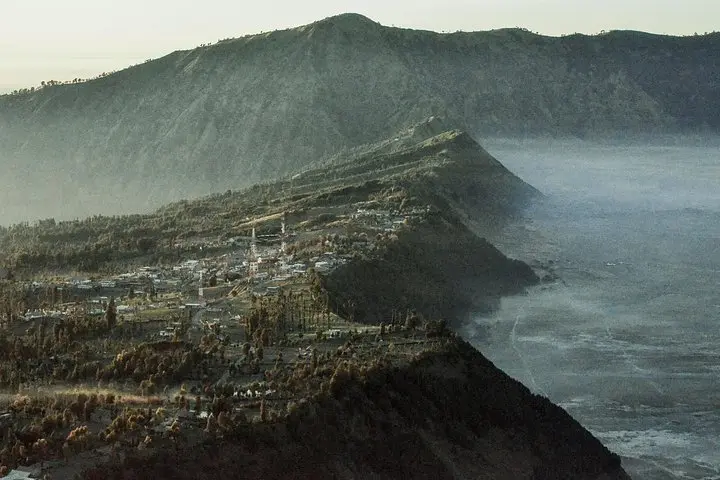
East Java’s landscape is the product of active volcanoes and fast-moving monsoon weather. The Tenggerese people who live around Bromo maintain Hindu rites such as the Yadnya Kasada, tying culture tightly to volcanic cycles. Ijen’s turquoise acid lake is one of the world’s largest of its kind; its blue flames come from burning sulfur gas that ignites where vents escape under low light.
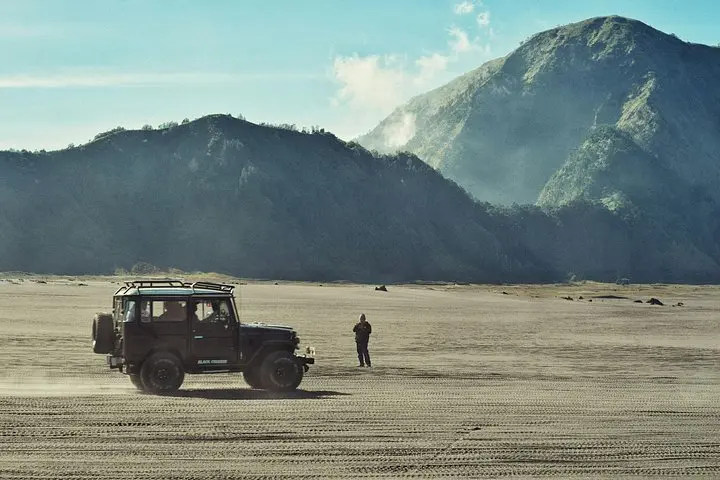
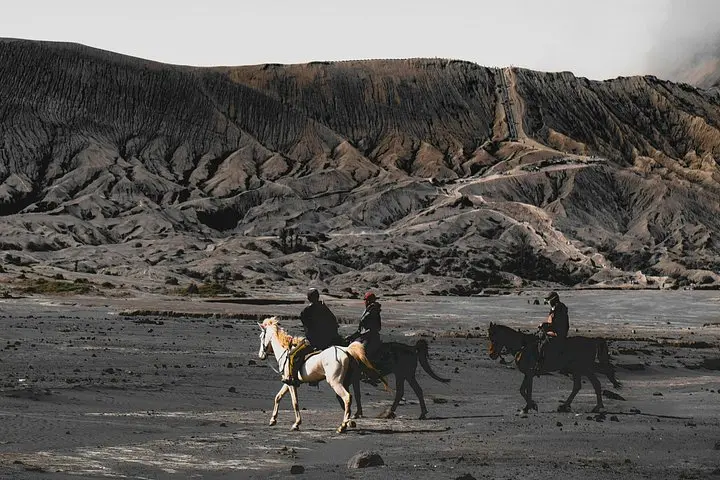
Practical guidance: the tour mixes easy walks and short, steep climbs—expect altitude near 2,400 m at Ijen, and cold, windy conditions before sunrise. Night-hiking to Ijen is a 1–2 hour ascent on uneven volcanic trail; Bromo involves a jeep crossing of the Sea of Sand plus ~250 steps to the crater rim. Tumpak Sewu’s canyon descent includes ladders and river crossings—lightweight waterproof footwear and a basic level of fitness make the trip smoother. Carry local cash for small fees and snacks, a headlamp, a particulate mask for sulfur exposure, and layers for rapid temperature shifts.
The ascent is 1–2 hours depending on pace across steep volcanic scree; it’s strenuous at higher altitude but doable for anyone with regular walking fitness and proper gear.
Blue flames are a function of sulfur gas ignition and are best seen in low light; visibility depends on weather and gas conditions—guides choose the optimal night for viewing when possible.
Yes—this tour includes breakfast, lunch, dinner, and accommodation as listed in the itinerary, with local guesthouses or simple hotels selected near each destination.
Yes—the operator allows start points in Surabaya, Malang, or Banyuwangi; confirm pickup location when booking to coordinate transfers.
Wanderlast Travel operates guided outdoor trips and adventures with an emphasis on safety, stewardship, and memorable experiences.
You arrive before dawn, windows fogging as the minivan threads coastal roads into highland mist. In the low light De Djawatan’s giant trembesi trees loom like old watchmen, moss curtains swaying as if the forest breathes. Later that night you climb toward Ijen’s rim under a spatter of stars; sulfur gases flare blue and daring you closer. Dawn at Penanjakan paints Bromo’s craggy cones in clean light, and on the last day the canyon of Tumpak Sewu roars—a vertical curtain of water that seems to pull the jungle inward.
You arrive before dawn, windows fogging as the minivan threads coastal roads into highland mist. In the low light De Djawatan’s giant trembesi trees loom like old watchmen, moss curtains swaying as if the forest breathes. Later that night you climb toward Ijen’s rim under a spatter of stars; sulfur gases flare blue and daring you closer. Dawn at Penanjakan paints Bromo’s craggy cones in clean light, and on the last day the canyon of Tumpak Sewu roars—a vertical curtain of water that seems to pull the jungle inward.
East Java’s landscape is the product of active volcanoes and fast-moving monsoon weather. The Tenggerese people who live around Bromo maintain Hindu rites such as the Yadnya Kasada, tying culture tightly to volcanic cycles. Ijen’s turquoise acid lake is one of the world’s largest of its kind; its blue flames come from burning sulfur gas that ignites where vents escape under low light.
Practical guidance: the tour mixes easy walks and short, steep climbs—expect altitude near 2,400 m at Ijen, and cold, windy conditions before sunrise. Night-hiking to Ijen is a 1–2 hour ascent on uneven volcanic trail; Bromo involves a jeep crossing of the Sea of Sand plus ~250 steps to the crater rim. Tumpak Sewu’s canyon descent includes ladders and river crossings—lightweight waterproof footwear and a basic level of fitness make the trip smoother. Carry local cash for small fees and snacks, a headlamp, a particulate mask for sulfur exposure, and layers for rapid temperature shifts.