THE ADVENTURE COLLECTIVE® · Independent discovery and booking for outdoor travel

See Easter Island’s defining sites in a compact three-day package: Ahu Akivi, the Birdman ceremonies at Orongo, and the white sands of Anakena. This Super Saver pairs archaeology, volcanic landscapes and coastal downtime with guided transfers and one included lunch.
See Easter Island’s defining sites in a compact three-day package: Ahu Akivi, the Birdman ceremonies at Orongo, and the white sands of Anakena. This Super Saver pairs archaeology, volcanic landscapes and coastal downtime with guided transfers and one included lunch.
A wind-swept morning on Rapa Nui begins with gulls arguing over the surf and cliffs throwing long shadows across volcanic rock. On this three-day combination, travelers move from open ocean platforms to crater rims and finally down to a pocket of white sand, each stop offering a different chapter of the island’s story.
Verified experiences and guided adventures in the surrounding area.
Operated by Gray Line Chile · Hanga Roa, Valparaíso Region
A wind-swept morning on Rapa Nui begins with gulls arguing over the surf and cliffs throwing long shadows across volcanic rock. On this three-day combination, travelers move from open ocean platforms to crater rims and finally down to a pocket of white sand, each stop offering a different chapter of the island’s story.
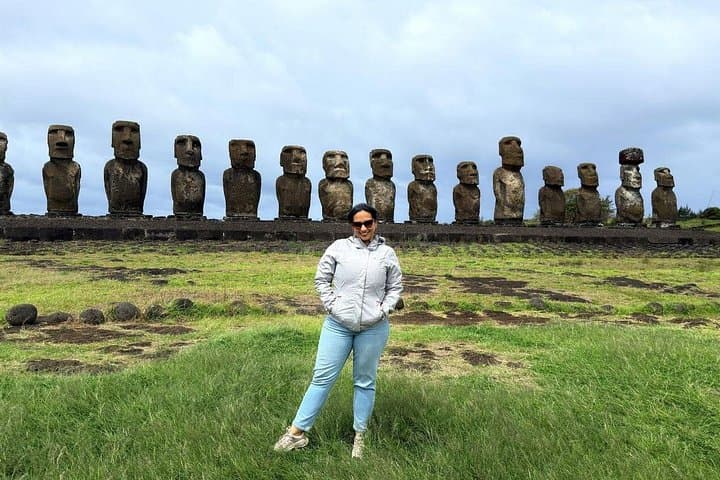
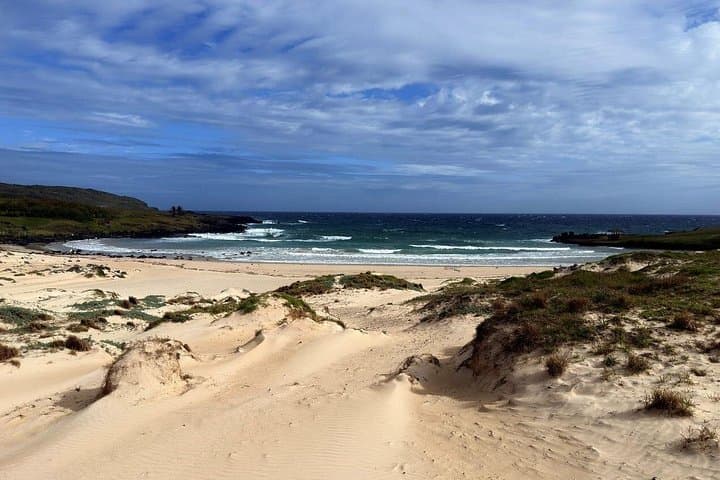
The moai — the carved stone figures that dominate the landscape — were hewn from the red and gray scoria of Rano Raraku and moved across the island on ancient slopes. Orongo sits on the rim of Rano Kau and holds the remains and petroglyphs of the Birdman cult, while Anakena’s coral sand recalls the island’s Polynesian settlement and provides a rare place to swim. Tahai and Ahu Akivi reveal both astronomical alignment and community ritual: some moai face inland, others confront the ocean like sentries.
Geology here is immediate: basalt fields, tuff cones and a hollowed crater lake that collects the island’s sparse freshwater. Culturally, guides translate oral histories of ancestor veneration into the carving and placement of each statue.
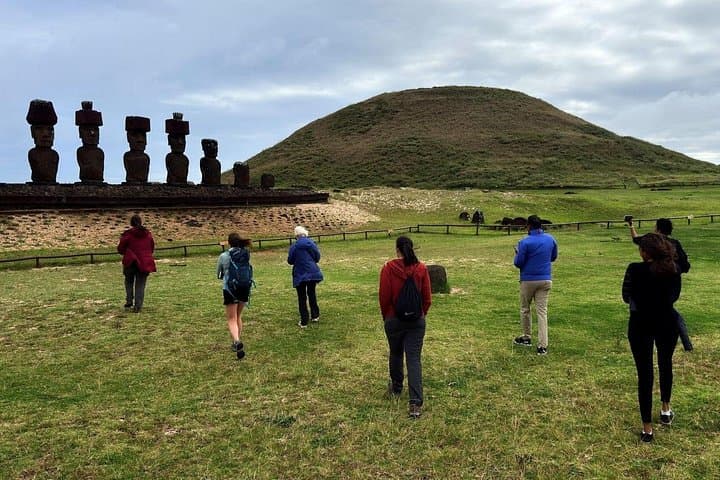
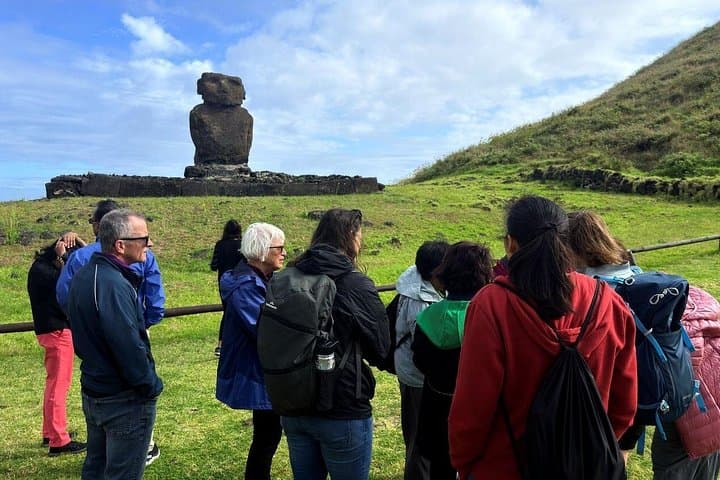
Practical guidance: pack sun protection and a light wind shell; footing is often uneven between ahu and quarry. Tours are scheduled across specific weekdays, so plan dates in advance and confirm pickup. Expect short walks (20–90 minutes per site), roadside transfers in an air-conditioned minivan, and one lunch included on the Anakena day. Respect fences and follow your guide to help preserve fragile archaeology. With basic mobility and a curious mindset, this Super Saver route delivers the island’s key landscapes and stories in three compact, unforgettable days.
Yes — the package runs Ahu Akivi and Orongo on specific weekdays and Anakena on others; indicate preferred dates when booking and confirm by email 48 hours prior.
Yes, Anakena has calm, shallow water suitable for swimming, but watch for sun exposure and occasional seaweed patches; bring towel and swimwear.
Many platforms are viewable from close, but surfaces are uneven and some paths include steps or loose rock; inquire with the operator about specific accessibility needs.
Includes professional guide, hotel pickup/drop-off, air-conditioned transport, round-trip Mataveri Airport transfers, and one lunch on the Anakena day; admission fees where required are typically covered as noted by the operator.
Gray Line Chile operates guided outdoor trips and adventures with an emphasis on safety, stewardship, and memorable experiences.
A wind-swept morning on Rapa Nui begins with gulls arguing over the surf and cliffs throwing long shadows across volcanic rock. On this three-day combination, travelers move from open ocean platforms to crater rims and finally down to a pocket of white sand, each stop offering a different chapter of the island’s story.
A wind-swept morning on Rapa Nui begins with gulls arguing over the surf and cliffs throwing long shadows across volcanic rock. On this three-day combination, travelers move from open ocean platforms to crater rims and finally down to a pocket of white sand, each stop offering a different chapter of the island’s story.
The moai — the carved stone figures that dominate the landscape — were hewn from the red and gray scoria of Rano Raraku and moved across the island on ancient slopes. Orongo sits on the rim of Rano Kau and holds the remains and petroglyphs of the Birdman cult, while Anakena’s coral sand recalls the island’s Polynesian settlement and provides a rare place to swim. Tahai and Ahu Akivi reveal both astronomical alignment and community ritual: some moai face inland, others confront the ocean like sentries.
Geology here is immediate: basalt fields, tuff cones and a hollowed crater lake that collects the island’s sparse freshwater. Culturally, guides translate oral histories of ancestor veneration into the carving and placement of each statue.
Practical guidance: pack sun protection and a light wind shell; footing is often uneven between ahu and quarry. Tours are scheduled across specific weekdays, so plan dates in advance and confirm pickup. Expect short walks (20–90 minutes per site), roadside transfers in an air-conditioned minivan, and one lunch included on the Anakena day. Respect fences and follow your guide to help preserve fragile archaeology. With basic mobility and a curious mindset, this Super Saver route delivers the island’s key landscapes and stories in three compact, unforgettable days.