THE ADVENTURE COLLECTIVE® · Independent discovery and booking for outdoor travel

Step through a monumental pylon into one of Egypt’s most intact Ptolemaic temples. This practical guide frames the Temple of Horus at Edfu—its history, what you’ll see, and how to prepare for a half-day visit along the Nile.
Step through a monumental pylon into one of Egypt’s most intact Ptolemaic temples. This practical guide frames the Temple of Horus at Edfu—its history, what you’ll see, and how to prepare for a half-day visit along the Nile.
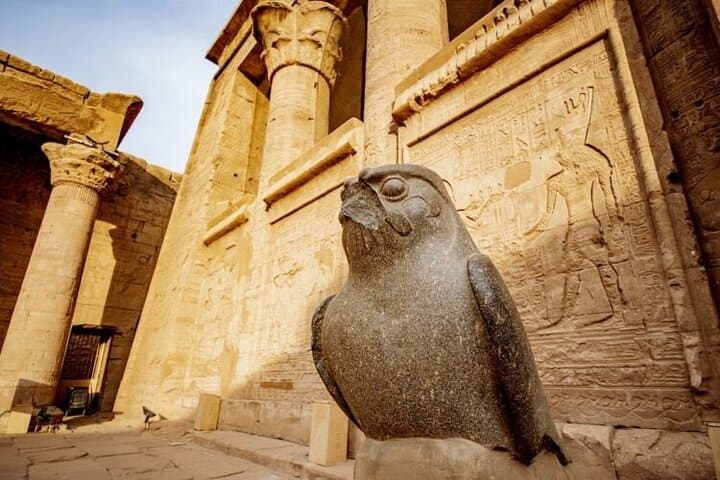
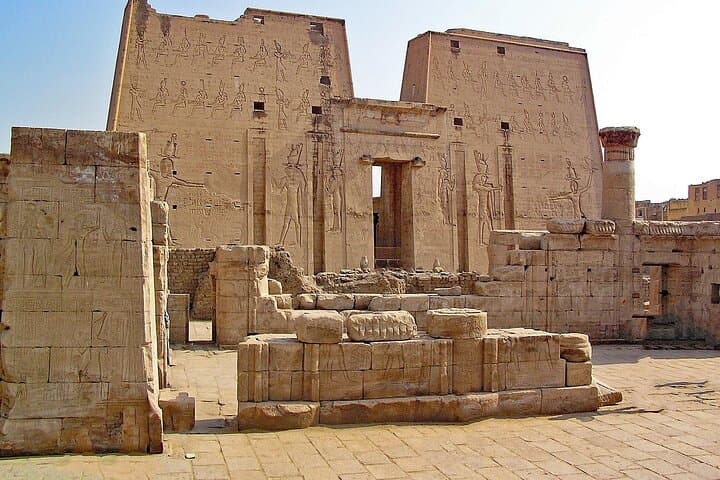
You arrive to the west bank of the Nile as light slants across cut sandstone and shadowed reliefs; the avenue of sphinxes seems to leer and beckon at once. Boats drift along the river that nudges the quay, and the temple’s massive pylon looms—an intact wall of carved stories that survived centuries buried in desert debris.
Verified experiences and guided adventures in the surrounding area.
Operated by NORTH AFRICAN SHIPPING AND TOURISM COMPANY (NASCO TOURS) · Edfu, Aswan Governorate
You arrive to the west bank of the Nile as light slants across cut sandstone and shadowed reliefs; the avenue of sphinxes seems to leer and beckon at once. Boats drift along the river that nudges the quay, and the temple’s massive pylon looms—an intact wall of carved stories that survived centuries buried in desert debris.
Built during the Ptolemaic dynasty between the reigns of Ptolemy III and Ptolemy XII, the Temple of Horus at Edfu is one of Egypt’s best-preserved classical temples. Its hieroglyphs and reliefs record ritual, law, and myth, while the stone itself tells a geological story of Nile-borne sand and silt that both protected and threatened the monument. Local culture still circles the site: modern villagers trade goods along the corniche and small shrines and festivals keep ancient gods in communal memory.
Practically, expect a mostly flat walk across paved and worn stone surfaces, shaded colonnades, and stairways into inner chambers. Guided visits typically last 60–90 minutes at the temple within a longer 5–6 hour excursion from Luxor or Aswan. Midday sun is intense; mornings and late afternoons offer cooler light and better photos. Photography is generally allowed but avoid flash on delicate reliefs and follow guide instructions. Respect barriers—reliefs are fragile and staff enforce conservation rules.
Bring water, sun protection, comfortable shoes, and a light scarf for modesty in sanctuaries. The site is suitable for most fitness levels but includes uneven steps and thresholds—move deliberately and give yourself time to read the carvings and let the Nile keep pace.
The temple visit itself is usually 60–90 minutes; the full door-to-door excursion from Luxor or Aswan runs about 5–6 hours.
Yes—standard guided tours typically include admission to the Temple of Horus as part of the itinerary.
Accessibility is limited: ramps are minimal and there are uneven surfaces and steps; travelers with mobility issues should check in advance and request assistance.
Photography is generally allowed without flash; always follow your guide’s directions and avoid touching reliefs or sensitive areas.
NORTH AFRICAN SHIPPING AND TOURISM COMPANY (NASCO TOURS) operates guided outdoor trips and adventures with an emphasis on safety, stewardship, and memorable experiences.

You arrive to the west bank of the Nile as light slants across cut sandstone and shadowed reliefs; the avenue of sphinxes seems to leer and beckon at once. Boats drift along the river that nudges the quay, and the temple’s massive pylon looms—an intact wall of carved stories that survived centuries buried in desert debris.
You arrive to the west bank of the Nile as light slants across cut sandstone and shadowed reliefs; the avenue of sphinxes seems to leer and beckon at once. Boats drift along the river that nudges the quay, and the temple’s massive pylon looms—an intact wall of carved stories that survived centuries buried in desert debris.
Built during the Ptolemaic dynasty between the reigns of Ptolemy III and Ptolemy XII, the Temple of Horus at Edfu is one of Egypt’s best-preserved classical temples. Its hieroglyphs and reliefs record ritual, law, and myth, while the stone itself tells a geological story of Nile-borne sand and silt that both protected and threatened the monument. Local culture still circles the site: modern villagers trade goods along the corniche and small shrines and festivals keep ancient gods in communal memory.
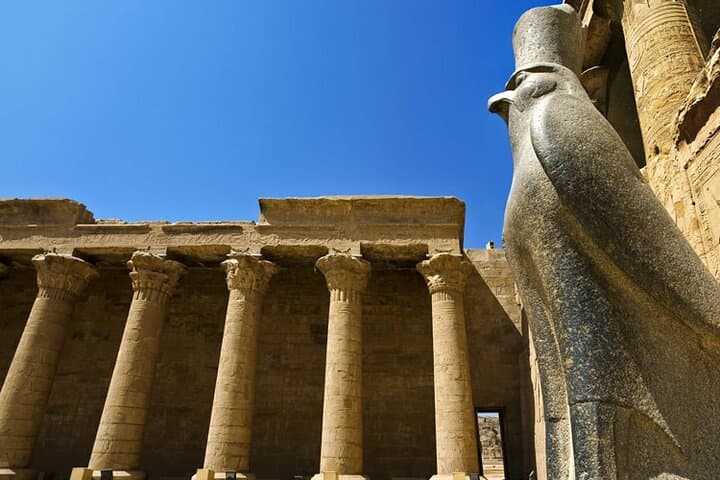
Practically, expect a mostly flat walk across paved and worn stone surfaces, shaded colonnades, and stairways into inner chambers. Guided visits typically last 60–90 minutes at the temple within a longer 5–6 hour excursion from Luxor or Aswan. Midday sun is intense; mornings and late afternoons offer cooler light and better photos. Photography is generally allowed but avoid flash on delicate reliefs and follow guide instructions. Respect barriers—reliefs are fragile and staff enforce conservation rules.
Bring water, sun protection, comfortable shoes, and a light scarf for modesty in sanctuaries. The site is suitable for most fitness levels but includes uneven steps and thresholds—move deliberately and give yourself time to read the carvings and let the Nile keep pace.