THE ADVENTURE COLLECTIVE® · Independent discovery and booking for outdoor travel

Walk to the Norwegian-Russian border across quiet Arctic forests on a guided 3 km snowshoe loop from Kirkenes. Learn Cold War history, visit a guard tower and stand meters from Russia while sipping hot drinks in the snow.
Walk to the Norwegian-Russian border across quiet Arctic forests on a guided 3 km snowshoe loop from Kirkenes. Learn Cold War history, visit a guard tower and stand meters from Russia while sipping hot drinks in the snow.
Snow crunches underfoot and the air bites clean as you step from a minivan into a flat, white silence — the Pasvik valley opening like a map of geopolitics. Guides fit you with snowshoes and gaiters, and the group moves out on a 3 km loop that climbs roughly 100 m through larch stands and birch scrubs toward the old guard tower and the twin border markers.
Verified experiences and guided adventures in the surrounding area.
Operated by kirkenes tours · Kirkenes, Troms og Finnmark
Snow crunches underfoot and the air bites clean as you step from a minivan into a flat, white silence — the Pasvik valley opening like a map of geopolitics. Guides fit you with snowshoes and gaiters, and the group moves out on a 3 km loop that climbs roughly 100 m through larch stands and birch scrubs toward the old guard tower and the twin border markers.
This terrain sits on ancient glacial deposits; low ridges and peat-filled hollows owe their shape to the last Ice Age while the Pasvik river marks a modern geopolitical line. The route traces Cold War history—abandoned posts, stories of patrols and crossings—and finishes with a clear view across to the onion domes of Boris Gleb church on the Russian bank.
Culturally, the area reflects Sámi and Norwegian frontier life: fishing cabins, practical wood buildings, and a quiet respect for harsh winters. Guides interpret border law and local anecdotes, grounding dramatic history in tangible sites.
Practically: the hike is moderate, suitable for anyone with average fitness and no prior snowshoe experience. Expect uneven, sometimes icy footing; poles help. Tours include snowshoes, hot drinks, and snacks, and run about 3.5 hours door-to-door from Kirkenes. Bring a passport if you're an international guest — officials require ID for proximity to the border.
Timing matters: low winter light makes for luminous photos but short days; plan for a midday outing. Dress in insulating layers, protect extremities, and carry a camera and spare batteries — cold drains them fast. The payoff is simple and rare: standing meters from Russia, where nature and history press close together.
No—guides provide instruction and the trail is suitable for beginners with average fitness.
All international guests should carry a valid passport; EU citizens should also bring an official ID card.
Children can join if they meet the guide’s safety requirements and can manage cold conditions and the 3 km route; check operator age limits when booking.
Tours may be canceled for safety in severe weather; the operator reserves the right to cancel or reschedule.
kirkenes tours operates guided outdoor trips and adventures with an emphasis on safety, stewardship, and memorable experiences.
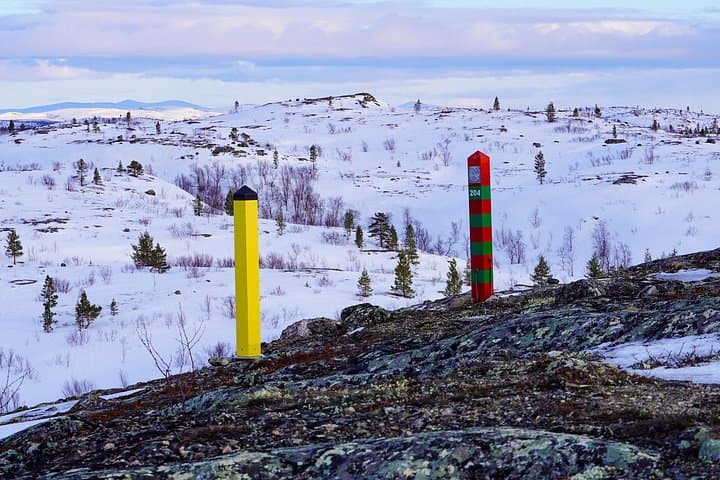


Snow crunches underfoot and the air bites clean as you step from a minivan into a flat, white silence — the Pasvik valley opening like a map of geopolitics. Guides fit you with snowshoes and gaiters, and the group moves out on a 3 km loop that climbs roughly 100 m through larch stands and birch scrubs toward the old guard tower and the twin border markers.
Snow crunches underfoot and the air bites clean as you step from a minivan into a flat, white silence — the Pasvik valley opening like a map of geopolitics. Guides fit you with snowshoes and gaiters, and the group moves out on a 3 km loop that climbs roughly 100 m through larch stands and birch scrubs toward the old guard tower and the twin border markers.
This terrain sits on ancient glacial deposits; low ridges and peat-filled hollows owe their shape to the last Ice Age while the Pasvik river marks a modern geopolitical line. The route traces Cold War history—abandoned posts, stories of patrols and crossings—and finishes with a clear view across to the onion domes of Boris Gleb church on the Russian bank.
Culturally, the area reflects Sámi and Norwegian frontier life: fishing cabins, practical wood buildings, and a quiet respect for harsh winters. Guides interpret border law and local anecdotes, grounding dramatic history in tangible sites.
Practically: the hike is moderate, suitable for anyone with average fitness and no prior snowshoe experience. Expect uneven, sometimes icy footing; poles help. Tours include snowshoes, hot drinks, and snacks, and run about 3.5 hours door-to-door from Kirkenes. Bring a passport if you're an international guest — officials require ID for proximity to the border.
Timing matters: low winter light makes for luminous photos but short days; plan for a midday outing. Dress in insulating layers, protect extremities, and carry a camera and spare batteries — cold drains them fast. The payoff is simple and rare: standing meters from Russia, where nature and history press close together.