THE ADVENTURE COLLECTIVE® · Independent discovery and booking for outdoor travel

Stand at the rim of Saudi Arabia’s Tuwaiq escarpment on a guided Manjour Trail hike, then trade hiking boots for horseback and camel encounters at camp—an evening of barbecue, stars, and local culture.
Stand at the rim of Saudi Arabia’s Tuwaiq escarpment on a guided Manjour Trail hike, then trade hiking boots for horseback and camel encounters at camp—an evening of barbecue, stars, and local culture.
A wind-swept horizon opens as the trail crests the Manjour ridge—rock faces lean away and the world drops into a serrated line of cliffs known locally as the Edge of the World. Hikers move in small groups across stony scrub, the air carrying the dry warmth of the Riyadh plateau while the escarpment dares each step with sudden exposure.
Verified experiences and guided adventures in the surrounding area.
Operated by LANQ · Riyadh, Riyadh Province
A wind-swept horizon opens as the trail crests the Manjour ridge—rock faces lean away and the world drops into a serrated line of cliffs known locally as the Edge of the World. Hikers move in small groups across stony scrub, the air carrying the dry warmth of the Riyadh plateau while the escarpment dares each step with sudden exposure.
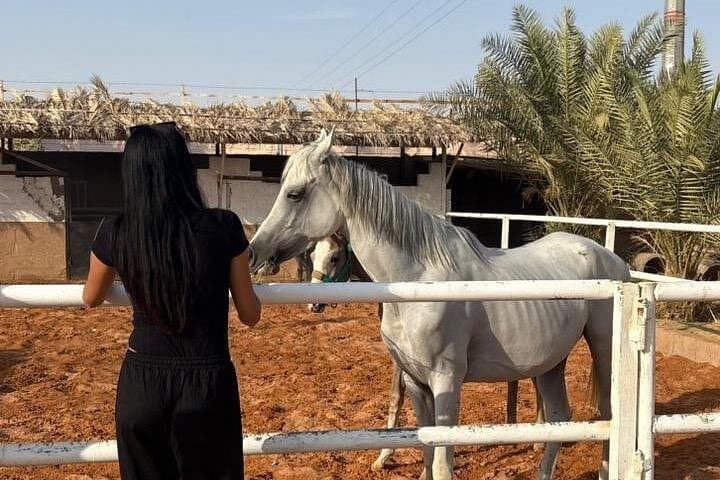
The Tuwaiq escarpment is the product of ancient sedimentary uplift and erosion; its sheer faces expose banded limestone and sandstone laid down millions of years ago. Human history in the area is sparse but tangible—Bedouin routes, grazing grounds, and small settlements like Dharmah Village speak to a culture long adapted to desert rhythm. After the hike, evenings shift from geology to culture: horseback rides and camel encounters recall traditional transport, and a barbecue under unpolluted stars gives a direct line to Saudi hospitality.
Practically, expect uneven, rocky terrain with short steep sections; the trail covers ground that can be dusty and hot by midday. Guides typically provide an air‑conditioned transfer from Riyadh and set up a basic, well-equipped camp for dinner and photography. Bring at least 2–3 liters of water, sturdy boots with good grip, sun protection, and a small daypack. Plan to arrive early or late afternoon to avoid peak heat and to catch golden light along the escarpment. Respect cultural norms—modest dress in shared spaces—and follow the guide’s instructions around animals and the campfire. The experience balances a clear sense of place—raw cliffs and desert night—with accessible logistics for first-time visitors.
The trail is generally moderate with some uneven, rocky sections and short steep bits; it’s suitable for most people in reasonable health.
Most operators provide air‑conditioned transfers from Riyadh; private vehicles can reach the area but require navigation on desert tracks.
Yes—many tours welcome families; younger children should be supervised around cliffs and animals, and infants are typically required to sit on laps during transport.
Typical inclusions are guided hiking, transfers, snacks, lunch or barbecue dinner, tea/coffee, basic campsite setup, and supervised horse/camel interactions.
LANQ operates guided outdoor trips and adventures with an emphasis on safety, stewardship, and memorable experiences.
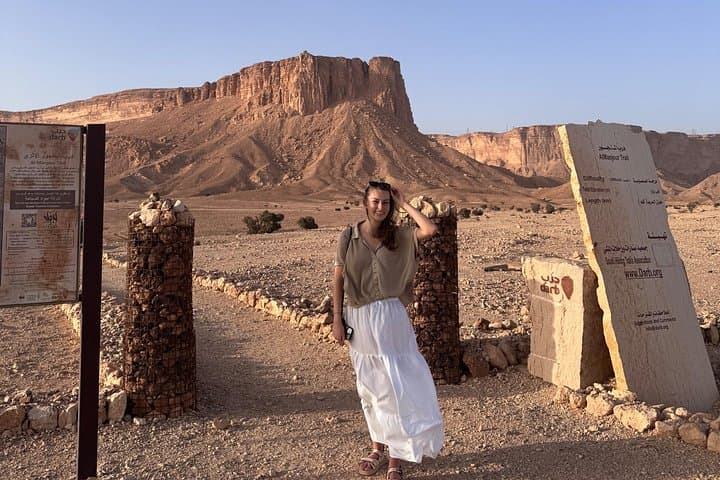


A wind-swept horizon opens as the trail crests the Manjour ridge—rock faces lean away and the world drops into a serrated line of cliffs known locally as the Edge of the World. Hikers move in small groups across stony scrub, the air carrying the dry warmth of the Riyadh plateau while the escarpment dares each step with sudden exposure.
A wind-swept horizon opens as the trail crests the Manjour ridge—rock faces lean away and the world drops into a serrated line of cliffs known locally as the Edge of the World. Hikers move in small groups across stony scrub, the air carrying the dry warmth of the Riyadh plateau while the escarpment dares each step with sudden exposure.
The Tuwaiq escarpment is the product of ancient sedimentary uplift and erosion; its sheer faces expose banded limestone and sandstone laid down millions of years ago. Human history in the area is sparse but tangible—Bedouin routes, grazing grounds, and small settlements like Dharmah Village speak to a culture long adapted to desert rhythm. After the hike, evenings shift from geology to culture: horseback rides and camel encounters recall traditional transport, and a barbecue under unpolluted stars gives a direct line to Saudi hospitality.
Practically, expect uneven, rocky terrain with short steep sections; the trail covers ground that can be dusty and hot by midday. Guides typically provide an air‑conditioned transfer from Riyadh and set up a basic, well-equipped camp for dinner and photography. Bring at least 2–3 liters of water, sturdy boots with good grip, sun protection, and a small daypack. Plan to arrive early or late afternoon to avoid peak heat and to catch golden light along the escarpment. Respect cultural norms—modest dress in shared spaces—and follow the guide’s instructions around animals and the campfire. The experience balances a clear sense of place—raw cliffs and desert night—with accessible logistics for first-time visitors.