THE ADVENTURE COLLECTIVE® · Independent discovery and booking for outdoor travel

Walk the edge of Telluride’s box canyon on a guided, private Via Ferrata traverse with eye-level views of Bridal Veil Falls and the San Juan summits. Expect big exposure, solid cables, and a focused, unforgettable line high above town.
Walk the edge of Telluride’s box canyon on a guided, private Via Ferrata traverse with eye-level views of Bridal Veil Falls and the San Juan summits. Expect big exposure, solid cables, and a focused, unforgettable line high above town.
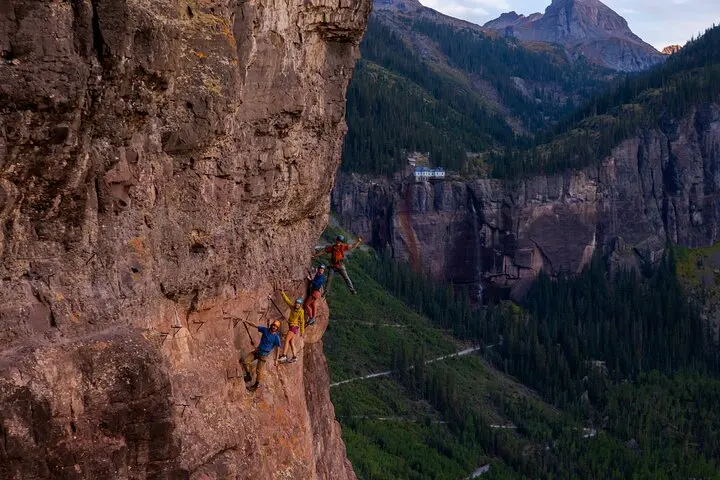
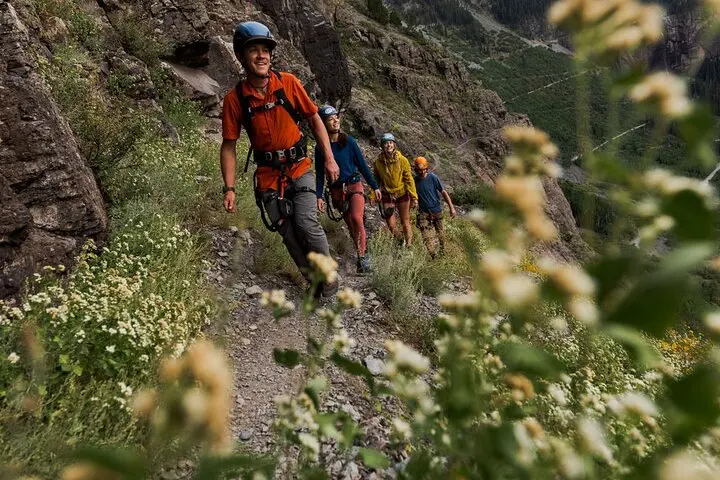
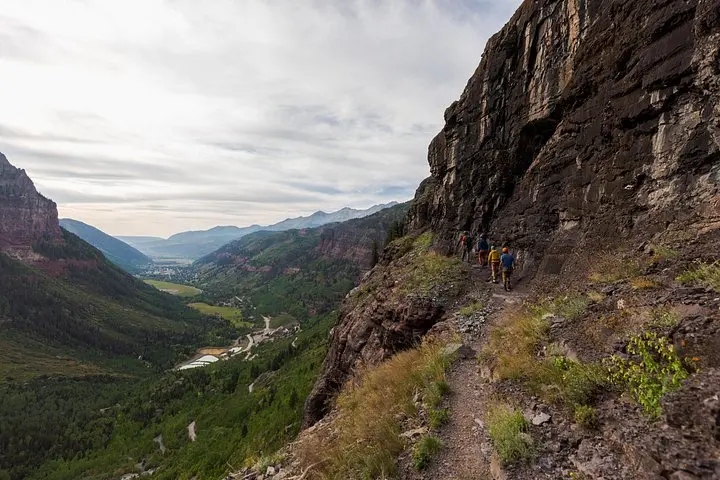
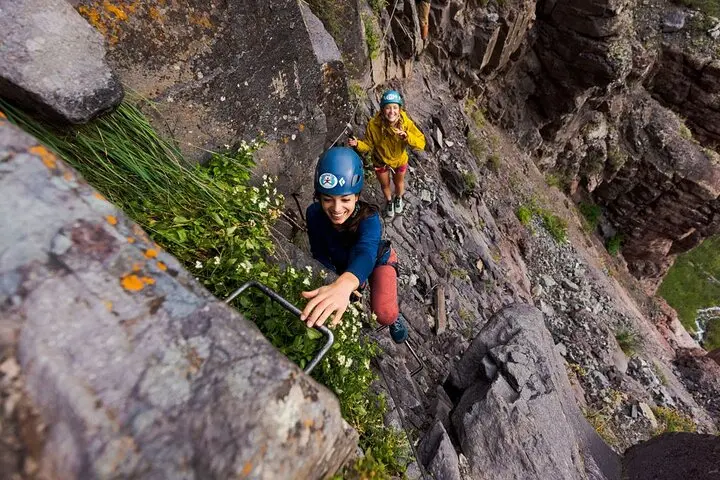
Morning light pours into Telluride’s box canyon as the cliffs wake, casting long shadows that drift toward town. Above the pines, a ribbon of steel fixtures traces the wall—an improbable path that dares you to step out. The Via Ferrata starts with a steady hike up Black Bear Pass Road, the kind of climb that lets your lungs find their rhythm at 10,000 feet while Bridal Veil Falls thunders beside you, flinging spray that catches the sun like sparks. The route then turns west across the face, where exposure is the game and the cables keep it honest. The rock leans out, the valley drops away, and every step is measured—hands on rungs, lanyards clipped, eyes up. Below, Telluride is a neat grid, the San Juans push forward like a range of serrated blades, and the water keeps talking.
Verified experiences and guided adventures in the surrounding area.
Operated by Mountain Trip · Telluride, Colorado
Morning light pours into Telluride’s box canyon as the cliffs wake, casting long shadows that drift toward town. Above the pines, a ribbon of steel fixtures traces the wall—an improbable path that dares you to step out. The Via Ferrata starts with a steady hike up Black Bear Pass Road, the kind of climb that lets your lungs find their rhythm at 10,000 feet while Bridal Veil Falls thunders beside you, flinging spray that catches the sun like sparks. The route then turns west across the face, where exposure is the game and the cables keep it honest. The rock leans out, the valley drops away, and every step is measured—hands on rungs, lanyards clipped, eyes up. Below, Telluride is a neat grid, the San Juans push forward like a range of serrated blades, and the water keeps talking.
This is no amusement ride. It’s a high-alpine traverse—up to 600 feet above the valley floor—born from the vision of local climber Chuck Kroger, whose early-2000s handiwork evolved into a legal, professionally maintained line. The canyon’s geology, shaped by volcanic upheaval and glacial carve, offers solid holds and sharp relief. Cultural history is everywhere: the restored 1907 Bridal Veil Powerhouse perches above the falls, a relic of the mining era that once drove life in Pandora and up Tomboy Road. Today, conservation groups and local partners keep the route safe and access-friendly, asking only that visitors move carefully and leave no trace.
Guided, private outings keep the logistics simple. Helmets, harnesses, and Via Ferrata lanyards are provided. After a gear check at the trailhead, you’ll follow your guide onto the stone—east to west—through airy traverses and the “main event” rung sections where the void hums in your peripheral vision. Expect a total of 4–5 hours round trip, including approach and descent, with roughly 500–800 feet of cumulative elevation gain on uneven terrain. Monsoon season (July–August) can build fast-moving storms; guides watch the sky like hawks and pivot if thunder threatens.
Bring approach shoes with sticky soles, light gloves, layers for alpine wind, and at least two liters of water. Acclimatize if you can; the altitude has a way of negotiating with your legs. Start early for calmer weather and quieter cables. The route rewards steady pacing and a clear head—clip, step, breathe. In return, the canyon offers angles most people only see in postcards: the plume of Bridal Veil, town shrinking beneath your boots, and peaks lined up like an audience as you edge west toward the trees. When you touch dirt again, the cliff falls silent behind you—and you’ll swear it’s smiling.
Several sections are very exposed with 400–600 feet of air underfoot. You are protected by a cable and Via Ferrata lanyards, and a guide manages spacing and clipping.
No technical climbing experience is required with a guide, but comfort with heights and surefooted movement on rock are important.
Helmet, harness, Via Ferrata-specific lanyards, and a small pack if needed are provided. You bring clothing, footwear, water, and snacks.
Most operators require participants to be at least 10 years old and approximately 5'0" or taller to reach rungs and manage clips safely.
Guides monitor forecasts and sky conditions; trips may start early, pause, reroute, or cancel for lightning, heavy rain, or unsafe winds. Refund policies apply per operator.
Expect a short but steep hike on Black Bear Pass Road to the start, roughly 4–5 hours total for approach, traverse, and exit with about 500–800 feet of cumulative gain.
Mountain Trip operates guided outdoor trips and adventures with an emphasis on safety, stewardship, and memorable experiences.
Morning light pours into Telluride’s box canyon as the cliffs wake, casting long shadows that drift toward town. Above the pines, a ribbon of steel fixtures traces the wall—an improbable path that dares you to step out. The Via Ferrata starts with a steady hike up Black Bear Pass Road, the kind of climb that lets your lungs find their rhythm at 10,000 feet while Bridal Veil Falls thunders beside you, flinging spray that catches the sun like sparks. The route then turns west across the face, where exposure is the game and the cables keep it honest. The rock leans out, the valley drops away, and every step is measured—hands on rungs, lanyards clipped, eyes up. Below, Telluride is a neat grid, the San Juans push forward like a range of serrated blades, and the water keeps talking.
Morning light pours into Telluride’s box canyon as the cliffs wake, casting long shadows that drift toward town. Above the pines, a ribbon of steel fixtures traces the wall—an improbable path that dares you to step out. The Via Ferrata starts with a steady hike up Black Bear Pass Road, the kind of climb that lets your lungs find their rhythm at 10,000 feet while Bridal Veil Falls thunders beside you, flinging spray that catches the sun like sparks. The route then turns west across the face, where exposure is the game and the cables keep it honest. The rock leans out, the valley drops away, and every step is measured—hands on rungs, lanyards clipped, eyes up. Below, Telluride is a neat grid, the San Juans push forward like a range of serrated blades, and the water keeps talking.
This is no amusement ride. It’s a high-alpine traverse—up to 600 feet above the valley floor—born from the vision of local climber Chuck Kroger, whose early-2000s handiwork evolved into a legal, professionally maintained line. The canyon’s geology, shaped by volcanic upheaval and glacial carve, offers solid holds and sharp relief. Cultural history is everywhere: the restored 1907 Bridal Veil Powerhouse perches above the falls, a relic of the mining era that once drove life in Pandora and up Tomboy Road. Today, conservation groups and local partners keep the route safe and access-friendly, asking only that visitors move carefully and leave no trace.
Guided, private outings keep the logistics simple. Helmets, harnesses, and Via Ferrata lanyards are provided. After a gear check at the trailhead, you’ll follow your guide onto the stone—east to west—through airy traverses and the “main event” rung sections where the void hums in your peripheral vision. Expect a total of 4–5 hours round trip, including approach and descent, with roughly 500–800 feet of cumulative elevation gain on uneven terrain. Monsoon season (July–August) can build fast-moving storms; guides watch the sky like hawks and pivot if thunder threatens.
Bring approach shoes with sticky soles, light gloves, layers for alpine wind, and at least two liters of water. Acclimatize if you can; the altitude has a way of negotiating with your legs. Start early for calmer weather and quieter cables. The route rewards steady pacing and a clear head—clip, step, breathe. In return, the canyon offers angles most people only see in postcards: the plume of Bridal Veil, town shrinking beneath your boots, and peaks lined up like an audience as you edge west toward the trees. When you touch dirt again, the cliff falls silent behind you—and you’ll swear it’s smiling.