THE ADVENTURE COLLECTIVE® · Independent discovery and booking for outdoor travel

Watch southern right whales from the sand at El Doradillo—one of the world’s best shore-based whale‑watching sites. This half‑day tour from Puerto Madryn pairs close-up wildlife viewing with local natural history and easy logistics.
Watch southern right whales from the sand at El Doradillo—one of the world’s best shore-based whale‑watching sites. This half‑day tour from Puerto Madryn pairs close-up wildlife viewing with local natural history and easy logistics.
Standing on the low, wind-scoured sands at El Doradillo, the sea pushes and pulls like a living thing, and every so often a dark back or a splinter of spray announces a southern right whale close to shore. The beach at Playa Las Canteras offers wide, unobstructed views; here the ocean often brings giants within arm’s reach of the shoreline, breaching, tail‑slapping and rolling in shallow bays.
Verified experiences and guided adventures in the surrounding area.
Operated by ARNEZ TRAVEL · Puerto Madryn, Chubut
Standing on the low, wind-scoured sands at El Doradillo, the sea pushes and pulls like a living thing, and every so often a dark back or a splinter of spray announces a southern right whale close to shore. The beach at Playa Las Canteras offers wide, unobstructed views; here the ocean often brings giants within arm’s reach of the shoreline, breaching, tail‑slapping and rolling in shallow bays.
This coastline is part of the greater Península Valdés region, a glacially carved shelf where ocean currents and protected bays create ideal nursery grounds for southern right whales between June and October. The geology is simple—low cliffs, sandy beaches and tidal flats—while human history ties to coastal fishing communities and conservation efforts that helped protect marine mammals in the latter 20th century.
Local guides combine natural history with practical observation: watch for callosities on whale heads, track blows with binoculars, and listen for the sea as it frames each surface display. Nearby Puerto Madryn supplies the visitor services—hotels, seafood, and the Ecocentro science museum—so this half‑day excursion plugs easily into a longer wildlife itinerary.
Practical guidance: arrive layered against wind and sun, bring binoculars or a telephoto lens, and follow guide instructions to minimize disturbance. The tour runs about 2–3 hours including pick‑up from Puerto Madryn, is accessible for most fitness levels, and is best scheduled between mid‑June and October when whales are most active. Stay patient; the payoff is an intimate, ethical shore‑side encounter with one of the ocean’s most charismatic residents.
Whales are most reliably present June through October, with peak sightings often in July–September.
El Doradillo is famous for shore-based sightings; many southern right whales come close enough to view without a boat.
Yes—this excursion is rated easy and is stroller accessible, though expect some walking on sand and exposure to wind.
Tours may be canceled with full refund if sea or weather conditions make viewing unsafe or visibility poor; check cancellation policy when booking.
ARNEZ TRAVEL operates guided outdoor trips and adventures with an emphasis on safety, stewardship, and memorable experiences.
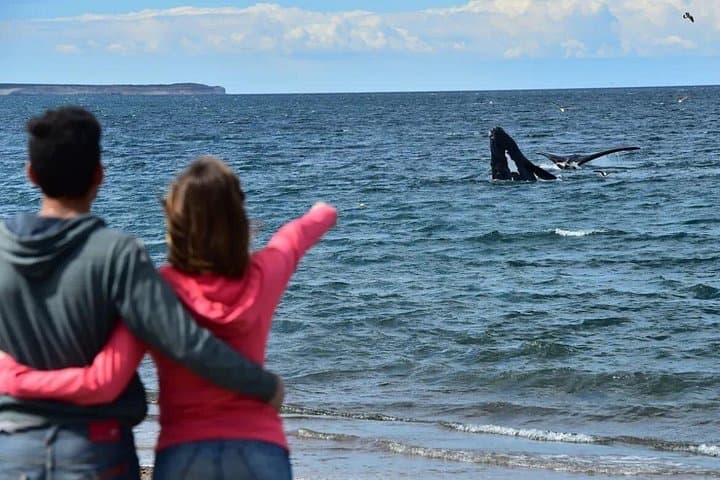


Standing on the low, wind-scoured sands at El Doradillo, the sea pushes and pulls like a living thing, and every so often a dark back or a splinter of spray announces a southern right whale close to shore. The beach at Playa Las Canteras offers wide, unobstructed views; here the ocean often brings giants within arm’s reach of the shoreline, breaching, tail‑slapping and rolling in shallow bays.
Standing on the low, wind-scoured sands at El Doradillo, the sea pushes and pulls like a living thing, and every so often a dark back or a splinter of spray announces a southern right whale close to shore. The beach at Playa Las Canteras offers wide, unobstructed views; here the ocean often brings giants within arm’s reach of the shoreline, breaching, tail‑slapping and rolling in shallow bays.
This coastline is part of the greater Península Valdés region, a glacially carved shelf where ocean currents and protected bays create ideal nursery grounds for southern right whales between June and October. The geology is simple—low cliffs, sandy beaches and tidal flats—while human history ties to coastal fishing communities and conservation efforts that helped protect marine mammals in the latter 20th century.
Local guides combine natural history with practical observation: watch for callosities on whale heads, track blows with binoculars, and listen for the sea as it frames each surface display. Nearby Puerto Madryn supplies the visitor services—hotels, seafood, and the Ecocentro science museum—so this half‑day excursion plugs easily into a longer wildlife itinerary.
Practical guidance: arrive layered against wind and sun, bring binoculars or a telephoto lens, and follow guide instructions to minimize disturbance. The tour runs about 2–3 hours including pick‑up from Puerto Madryn, is accessible for most fitness levels, and is best scheduled between mid‑June and October when whales are most active. Stay patient; the payoff is an intimate, ethical shore‑side encounter with one of the ocean’s most charismatic residents.