THE ADVENTURE COLLECTIVE® · Independent discovery and booking for outdoor travel

A full-day private tour from Cairo into El Fayoum’s otherworldly landscapes — visit Wadi Hitan’s fossil fields, Egypt’s rare waterfalls at Wadi El Rayan, and the ancient ruins of Medinet Madi with a local Egyptologist.
A full-day private tour from Cairo into El Fayoum’s otherworldly landscapes — visit Wadi Hitan’s fossil fields, Egypt’s rare waterfalls at Wadi El Rayan, and the ancient ruins of Medinet Madi with a local Egyptologist.
The morning light off the Nile fades as your private vehicle slips west toward the desert; miles of cultivated fields give way to ochre dunes and the road narrows toward El Fayoum.
Verified experiences and guided adventures in the surrounding area.
Operated by Tamer Safari · Faiyum, Faiyum Governorate
The morning light off the Nile fades as your private vehicle slips west toward the desert; miles of cultivated fields give way to ochre dunes and the road narrows toward El Fayoum.
You arrive in Wadi El Rayan and the landscape changes tone — broad, low bowls carved into the western desert, lakes that dared to form waterfalls in the 1970s, and the fossil-strewn plains of Wadi Hitan where ancient whales lie in quiet rows. Walking here feels like moving through deep time: the weathered ribs of ancient cetaceans point from sand like a slow, geological punctuation.
History threads through each stop. Medinet Madi’s brick temples recall Middle Kingdom irrigation and Amenemhat III’s drive to tame the Fayoum basin. Geology explains the depression — the basin sits well below sea level and preserves riverine, lacustrine and marine layers that fossil hunters first exposed a century ago.
Culturally, Fayoum mixes farming communities, pottery villages, and oasis life; Tunis village’s painted houses and local ceramics offer low-key stops near the main sites.
Practical guidance: plan a full 10–12 hour day, start early to avoid midday heat, and expect short walks over sandy, uneven ground and along wooden walkways at the paleontological sites. Wear sun protection and sturdy shoes, carry extra water, and keep to marked paths — Wadi Hitan is a protected UNESCO zone with strict fossil preservation rules.
A private Egyptologist guide and 4x4 transfer simplify logistics: permits, entrance fees and lunch are typically included, leaving you to focus on the odd serenity of desert lakes and whale bones under a flat, endless sky.
Yes; this tour typically includes entrance fees to the mentioned sites and a late lunch at a local restaurant as part of the itinerary.
Expect about 1.5–2 hours each way depending on traffic; the round trip and site visits make it a full 10–12 hour day.
Wadi Hitan has wooden walkways in places but terrain is largely uneven sand and rock, so it may be difficult for travelers with significant mobility limitations.
Autumn through spring (October–April) offers milder temperatures; avoid the peak summer midday heat for outdoor exploration.
Tamer Safari operates guided outdoor trips and adventures with an emphasis on safety, stewardship, and memorable experiences.
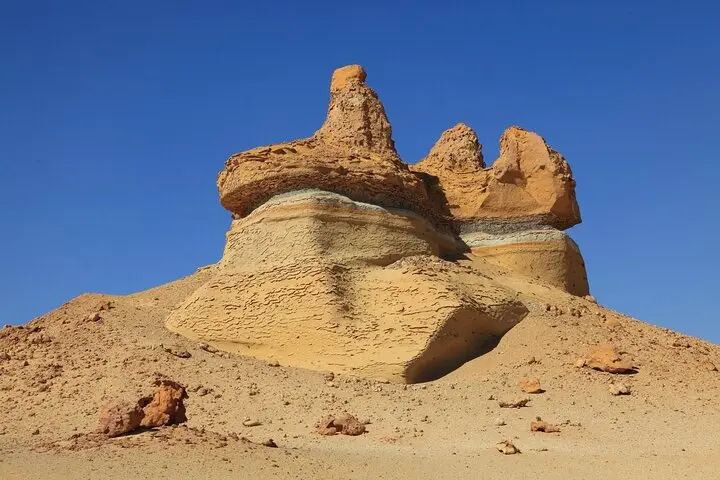
The morning light off the Nile fades as your private vehicle slips west toward the desert; miles of cultivated fields give way to ochre dunes and the road narrows toward El Fayoum.
The morning light off the Nile fades as your private vehicle slips west toward the desert; miles of cultivated fields give way to ochre dunes and the road narrows toward El Fayoum.
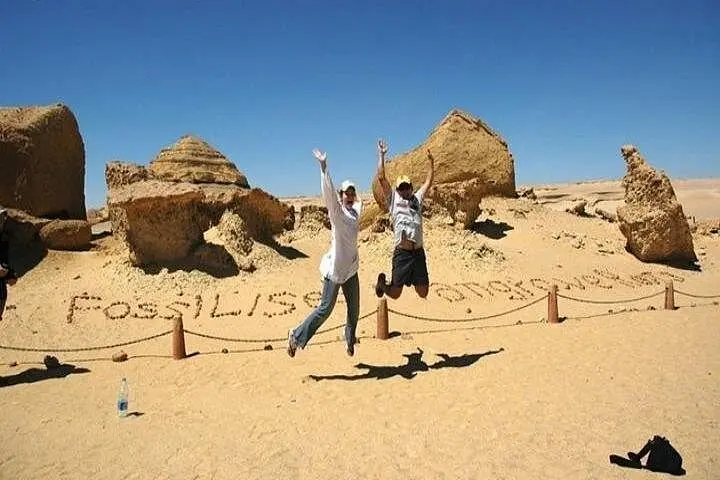
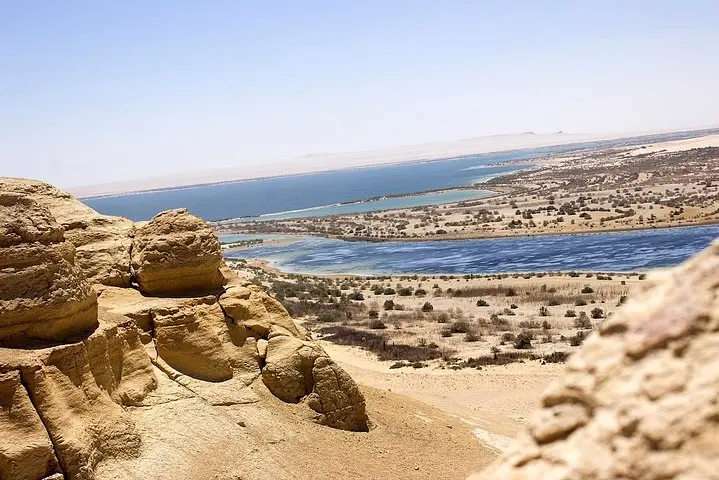
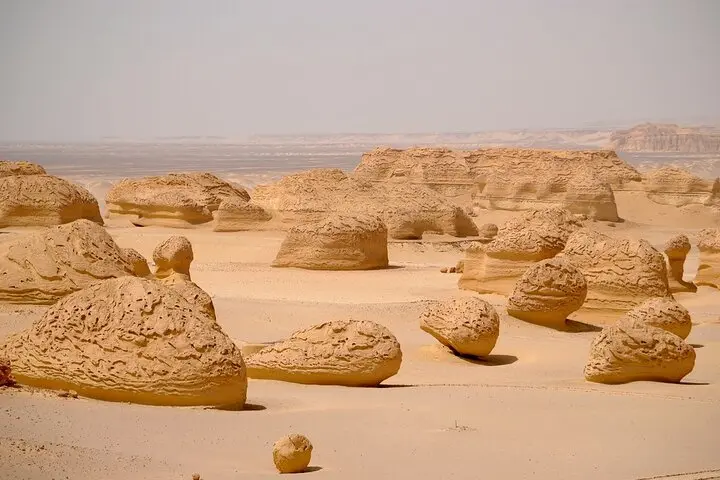
You arrive in Wadi El Rayan and the landscape changes tone — broad, low bowls carved into the western desert, lakes that dared to form waterfalls in the 1970s, and the fossil-strewn plains of Wadi Hitan where ancient whales lie in quiet rows. Walking here feels like moving through deep time: the weathered ribs of ancient cetaceans point from sand like a slow, geological punctuation.
History threads through each stop. Medinet Madi’s brick temples recall Middle Kingdom irrigation and Amenemhat III’s drive to tame the Fayoum basin. Geology explains the depression — the basin sits well below sea level and preserves riverine, lacustrine and marine layers that fossil hunters first exposed a century ago.
Culturally, Fayoum mixes farming communities, pottery villages, and oasis life; Tunis village’s painted houses and local ceramics offer low-key stops near the main sites.
Practical guidance: plan a full 10–12 hour day, start early to avoid midday heat, and expect short walks over sandy, uneven ground and along wooden walkways at the paleontological sites. Wear sun protection and sturdy shoes, carry extra water, and keep to marked paths — Wadi Hitan is a protected UNESCO zone with strict fossil preservation rules.
A private Egyptologist guide and 4x4 transfer simplify logistics: permits, entrance fees and lunch are typically included, leaving you to focus on the odd serenity of desert lakes and whale bones under a flat, endless sky.