THE ADVENTURE COLLECTIVE® · Independent discovery and booking for outdoor travel

Leave Cairo for a full-day escape to El Fayoum’s lakes, waterfalls and the UNESCO-listed Wadi El Hitan. See fossilized whales in a desert setting, stroll lakeside viewpoints, and learn the geology that turned ocean floor into sand.
Leave Cairo for a full-day escape to El Fayoum’s lakes, waterfalls and the UNESCO-listed Wadi El Hitan. See fossilized whales in a desert setting, stroll lakeside viewpoints, and learn the geology that turned ocean floor into sand.
The road out of Cairo unwinds under a low, dry sky as the city’s noise thins; after an hour and a half the landscape opens to ochre plains, ragged dunes and the sudden, reflective calm of desert lakes. At Wadi El Hitan the earth itself seems to hold its breath—giant whale bones lie exposed on the sand, ancient ocean bones reintroduced into the sun.
Verified experiences and guided adventures in the surrounding area.
Operated by Fifth Pillar Tours · El Fayoum, Fayoum Governorate
The road out of Cairo unwinds under a low, dry sky as the city’s noise thins; after an hour and a half the landscape opens to ochre plains, ragged dunes and the sudden, reflective calm of desert lakes. At Wadi El Hitan the earth itself seems to hold its breath—giant whale bones lie exposed on the sand, ancient ocean bones reintroduced into the sun.
Wadi El Hitan (Valley of the Whales) is a UNESCO World Heritage Site with Eocene-era archaeocete fossils that document the transition from sea to land some 40 million years ago. Nearby Wadi El Rayan showcases Egypt’s only waterfalls, born from engineered lake connections that now feed wetlands and migratory bird havens. Local culture in El Fayoum has long mixed agriculture with water management: irrigation channels and small lakes shape village life here.
Expect short, mostly flat walks between viewpoints, sandy tracks around fossil outcrops and photo stops at the lakes. The day is long—10–12 hours including round-trip transfers—so plan for sustained vehicle time, intense sun, and sudden gusts over open desert. Practical tips: go early to avoid peak heat, carry at least 2–3 liters of water, wear closed-toe shoes to protect against sharp fossil fragments, and don’t climb on specimens or remove anything from the site. A knowledgeable guide will point out key bones, explain the geology, and time a relaxed lakeside lunch before the afternoon drive back to Cairo.
This tour is best for travelers who want a compact mix of natural history, easy field walking and wide desert light—an accessible, vivid day away from the city.
Expect about 1.5–2 hours each way depending on traffic; the full tour runs roughly 10–12 hours door-to-door.
Yes—entrance to Wadi El Hitan and Wadi El Rayan and visits described are included with this private tour.
Walking is light: short interpretive walks around fossil displays and lakes, typically under 3 km total on sandy or packed-earth surfaces.
Children can join but infants must sit on laps; the operator does not recommend the tour for pregnant travelers or those with significant spinal/heart problems.
Fifth Pillar Tours operates guided outdoor trips and adventures with an emphasis on safety, stewardship, and memorable experiences.
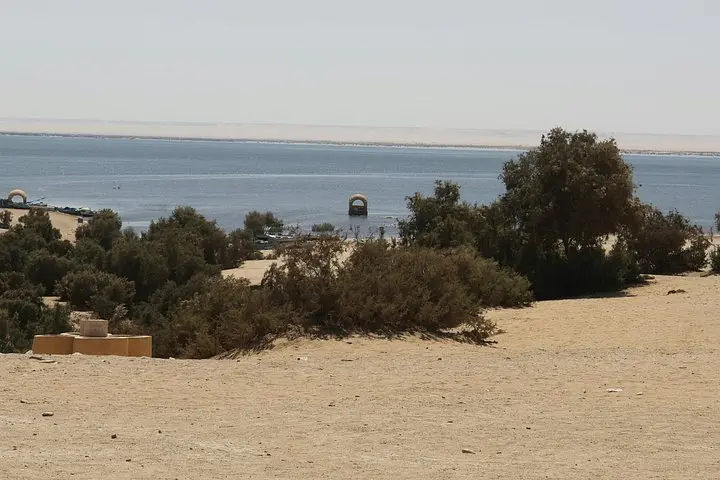
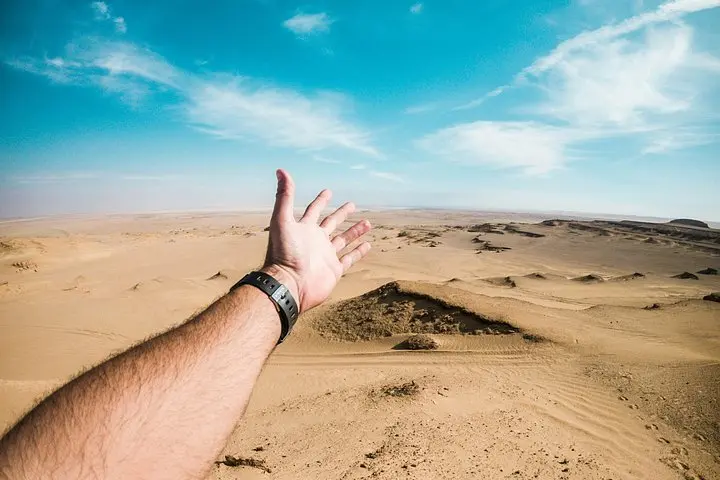
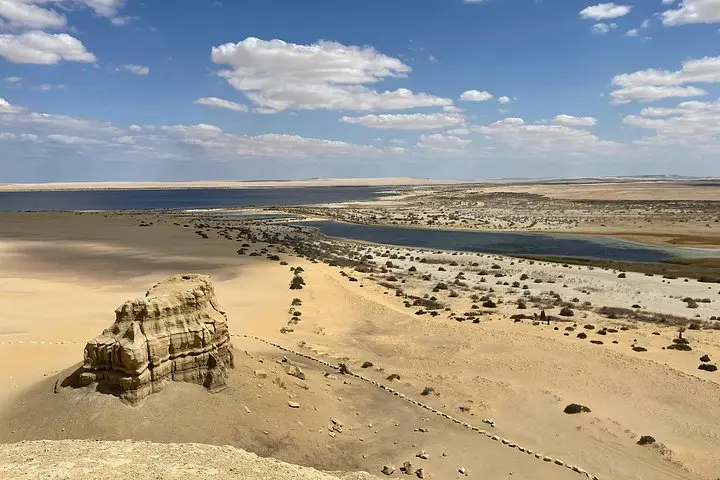
The road out of Cairo unwinds under a low, dry sky as the city’s noise thins; after an hour and a half the landscape opens to ochre plains, ragged dunes and the sudden, reflective calm of desert lakes. At Wadi El Hitan the earth itself seems to hold its breath—giant whale bones lie exposed on the sand, ancient ocean bones reintroduced into the sun.
The road out of Cairo unwinds under a low, dry sky as the city’s noise thins; after an hour and a half the landscape opens to ochre plains, ragged dunes and the sudden, reflective calm of desert lakes. At Wadi El Hitan the earth itself seems to hold its breath—giant whale bones lie exposed on the sand, ancient ocean bones reintroduced into the sun.
Wadi El Hitan (Valley of the Whales) is a UNESCO World Heritage Site with Eocene-era archaeocete fossils that document the transition from sea to land some 40 million years ago. Nearby Wadi El Rayan showcases Egypt’s only waterfalls, born from engineered lake connections that now feed wetlands and migratory bird havens. Local culture in El Fayoum has long mixed agriculture with water management: irrigation channels and small lakes shape village life here.
Expect short, mostly flat walks between viewpoints, sandy tracks around fossil outcrops and photo stops at the lakes. The day is long—10–12 hours including round-trip transfers—so plan for sustained vehicle time, intense sun, and sudden gusts over open desert. Practical tips: go early to avoid peak heat, carry at least 2–3 liters of water, wear closed-toe shoes to protect against sharp fossil fragments, and don’t climb on specimens or remove anything from the site. A knowledgeable guide will point out key bones, explain the geology, and time a relaxed lakeside lunch before the afternoon drive back to Cairo.
This tour is best for travelers who want a compact mix of natural history, easy field walking and wide desert light—an accessible, vivid day away from the city.