THE ADVENTURE COLLECTIVE® · Independent discovery and booking for outdoor travel

See Wroclaw’s islanded center by low-emission electric car: a compact way to hit Market Square, Cathedral Island and Szczytnicki Park in one outing. Choose a 1‑hour overview or a 2‑hour stop‑and-explore option—year‑round, wheelchair accessible and guided by licensed local guides.
See Wroclaw’s islanded center by low-emission electric car: a compact way to hit Market Square, Cathedral Island and Szczytnicki Park in one outing. Choose a 1‑hour overview or a 2‑hour stop‑and-explore option—year‑round, wheelchair accessible and guided by licensed local guides.
Morning light cuts across the Oder as an electric car hums through Wroclaw's stone arteries. The tour slips from the Market Square past Saint Elizabeth Church, across Piasek Bridge to Cathedral Island, and into leafy Szczytnicki Park if you choose the two‑hour route. Guides—licensed by the city—point out architectural layers from Gothic cathedrals on Ostrów Tumski to the interwar modernism of Centennial Hall, and the small, odd details: the Jatki butcher stalls, the salt market facades, and the backward-facing bench that shapes conversation on the vehicle.
Verified experiences and guided adventures in the surrounding area.
Operated by Best City Tours · Wrocław, Lower Silesian Voivodeship
Morning light cuts across the Oder as an electric car hums through Wroclaw's stone arteries. The tour slips from the Market Square past Saint Elizabeth Church, across Piasek Bridge to Cathedral Island, and into leafy Szczytnicki Park if you choose the two‑hour route. Guides—licensed by the city—point out architectural layers from Gothic cathedrals on Ostrów Tumski to the interwar modernism of Centennial Hall, and the small, odd details: the Jatki butcher stalls, the salt market facades, and the backward-facing bench that shapes conversation on the vehicle.
Wroclaw sits on islands and bridges carved by the Oder; its urban geology is river-borne alluvium and human-made embankments shaping narrow cobbled streets and expansive parks. Cultural memory here is Silesian and Polish, visibly rebuilt after wartime destruction and animated by a lively university population.
Practicalities: choose the 1‑hour option for a compact panorama; take 2 hours to stop 20 minutes each on Cathedral and Szczytnicki Park/Japanese Garden highlights. Vehicles run year-round with protective curtains and accommodate wheelchairs; benches seat three, and guests may be split between forward and rear-facing seats. Bring a jacket—wind from the river can bite—carry headphones if you want a quieter guide experience, and plan for quick photo stops. Tours accept mobile tickets, allow infants (on laps), and refund full price if cancelled more than 24 hours in advance. Expect easy walking at stops, close access to public transit, and a relaxed pace ideal for travelers who want high-impact sightseeing without the miles.
Best light is morning and late afternoon.
Yes—vehicles and most stop locations are wheelchair accessible; indicate needs when booking so staff can accommodate.
Not necessarily—benches seat three and one bench faces backward, so seating may be split on shared tours.
The 1‑hour option is a condensed drive-by of central sights; the 2‑hour tour includes two scheduled 20‑minute stops (Cathedral Island and the parks/Japanese Garden area).
Full refund available if cancelled at least 24 hours before the scheduled departure; no refund within 24 hours.
Best City Tours operates guided outdoor trips and adventures with an emphasis on safety, stewardship, and memorable experiences.
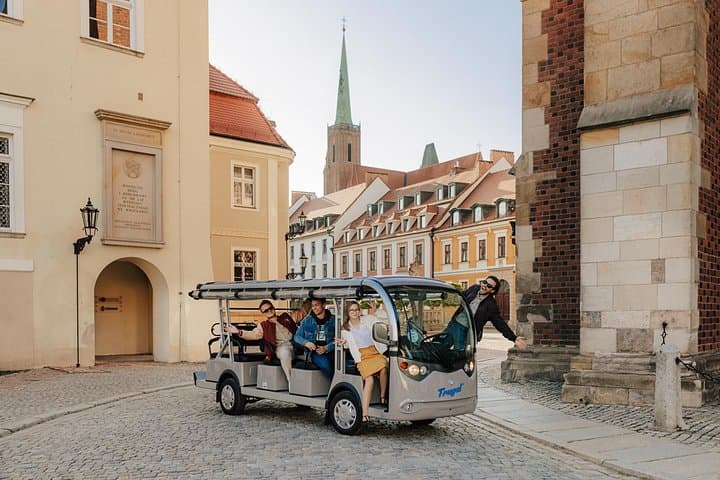


Morning light cuts across the Oder as an electric car hums through Wroclaw's stone arteries. The tour slips from the Market Square past Saint Elizabeth Church, across Piasek Bridge to Cathedral Island, and into leafy Szczytnicki Park if you choose the two‑hour route. Guides—licensed by the city—point out architectural layers from Gothic cathedrals on Ostrów Tumski to the interwar modernism of Centennial Hall, and the small, odd details: the Jatki butcher stalls, the salt market facades, and the backward-facing bench that shapes conversation on the vehicle.
Morning light cuts across the Oder as an electric car hums through Wroclaw's stone arteries. The tour slips from the Market Square past Saint Elizabeth Church, across Piasek Bridge to Cathedral Island, and into leafy Szczytnicki Park if you choose the two‑hour route. Guides—licensed by the city—point out architectural layers from Gothic cathedrals on Ostrów Tumski to the interwar modernism of Centennial Hall, and the small, odd details: the Jatki butcher stalls, the salt market facades, and the backward-facing bench that shapes conversation on the vehicle.
Wroclaw sits on islands and bridges carved by the Oder; its urban geology is river-borne alluvium and human-made embankments shaping narrow cobbled streets and expansive parks. Cultural memory here is Silesian and Polish, visibly rebuilt after wartime destruction and animated by a lively university population.
Practicalities: choose the 1‑hour option for a compact panorama; take 2 hours to stop 20 minutes each on Cathedral and Szczytnicki Park/Japanese Garden highlights. Vehicles run year-round with protective curtains and accommodate wheelchairs; benches seat three, and guests may be split between forward and rear-facing seats. Bring a jacket—wind from the river can bite—carry headphones if you want a quieter guide experience, and plan for quick photo stops. Tours accept mobile tickets, allow infants (on laps), and refund full price if cancelled more than 24 hours in advance. Expect easy walking at stops, close access to public transit, and a relaxed pace ideal for travelers who want high-impact sightseeing without the miles.
Best light is morning and late afternoon.