THE ADVENTURE COLLECTIVE® · Independent discovery and booking for outdoor travel

Glide through Kraków’s medieval Market Square, the historic Jewish quarter of Kazimierz and the haunting sites of the wartime ghetto in a quiet electric cart. This 2.5-hour tour covers narrow streets and major sights with narrated context and accessible transport.
Glide through Kraków’s medieval Market Square, the historic Jewish quarter of Kazimierz and the haunting sites of the wartime ghetto in a quiet electric cart. This 2.5-hour tour covers narrow streets and major sights with narrated context and accessible transport.
You ease into a compact electric cart and the city opens in quick succession: cobbled Market Square, the bugle call from St. Mary’s, then narrow lanes where bicycles and foot traffic claim the space. The cart’s soft whir lets you glide past stone façades and under low archways, audio narration filling the pauses between sights.
Verified experiences and guided adventures in the surrounding area.
Operated by excursions.city · Krakow, Lesser Poland Voivodeship
You ease into a compact electric cart and the city opens in quick succession: cobbled Market Square, the bugle call from St. Mary’s, then narrow lanes where bicycles and foot traffic claim the space. The cart’s soft whir lets you glide past stone façades and under low archways, audio narration filling the pauses between sights.
Kraków’s centre grew around trade routes and the Vistula, its limestone Wawel Hill a geological spine crowned by the castle. The Market Square and Cloth Hall reflect medieval commerce; Kazimierz preserves centuries of Jewish life, now punctuated by cafés, synagogues and festival stages. Across the river in Podgórze, plac Zgody and the preserved ghetto wall point to wartime history and the memory of deportations—Schindler’s Factory is a short stop on that modern map of remembrance.
The electric tour is practical: it navigates pedestrian zones and narrow streets not served by buses, covering more ground than a walking tour without taxing your legs. Expect a 2.5-hour loop with up to eight passengers, commentary on architecture and history, and brief photo pauses. Vehicles are wheelchair- and stroller-accessible but space for luggage is minimal.
Plan for changing light—late afternoon shows the square at its most cinematic—and respectful silence at memorials. Bring a charged phone, a lightweight jacket for breezy evenings, and wear shoes you can step out of quickly for brief walks. The ride balances efficient city coverage with moments to step off and let the places speak for themselves.
The tour lasts approximately 150 minutes (about 2.5 hours) and includes photo stops and narrated sights.
Yes—the electric carts are wheelchair-accessible, but space is limited so notify the operator when booking.
Strollers are allowed, but large baggage cannot be accommodated inside the small vehicles—travel light.
The itinerary passes key sites and may stop for photos; admissions to museums are typically not included and require separate tickets.
excursions.city operates guided outdoor trips and adventures with an emphasis on safety, stewardship, and memorable experiences.
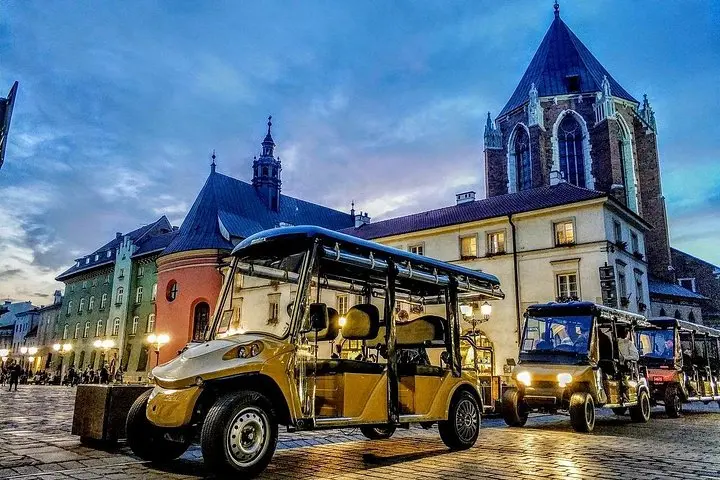
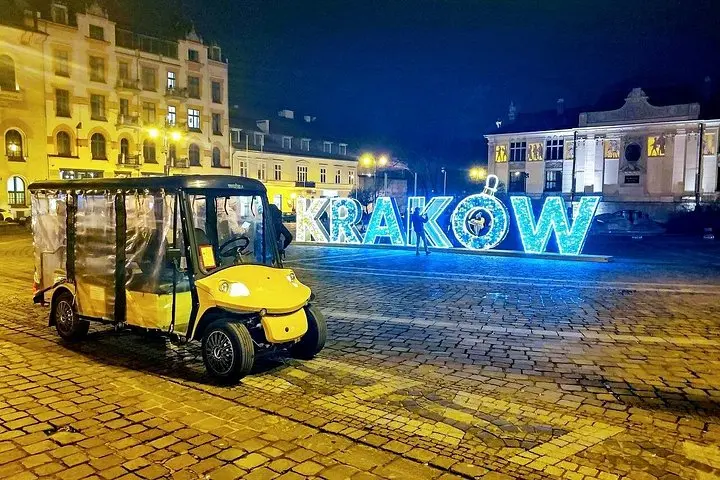
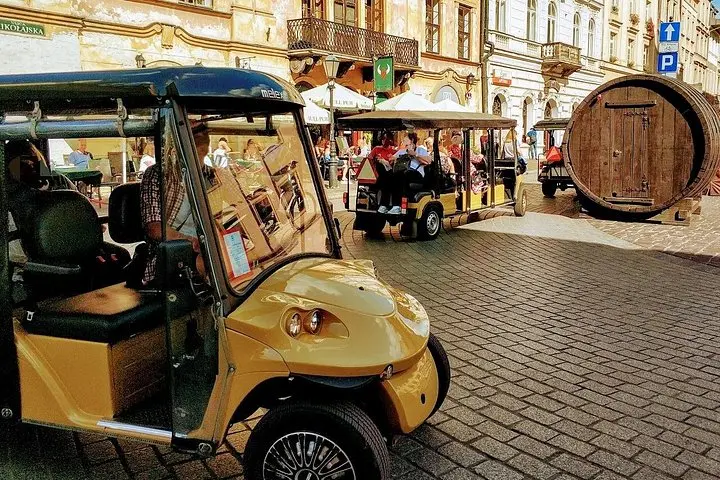
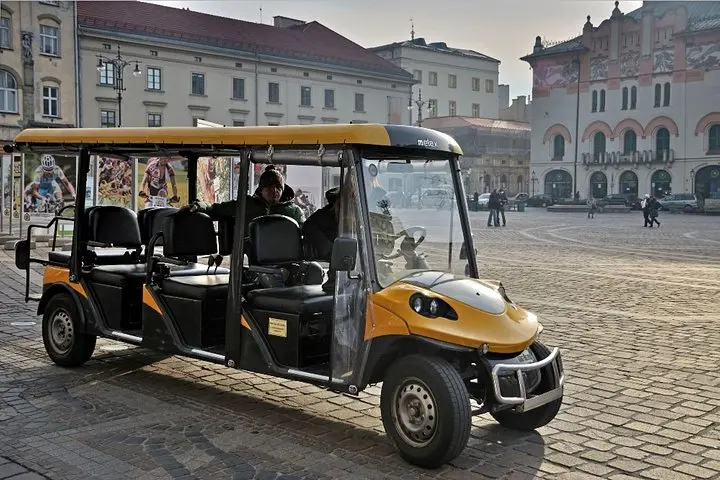
You ease into a compact electric cart and the city opens in quick succession: cobbled Market Square, the bugle call from St. Mary’s, then narrow lanes where bicycles and foot traffic claim the space. The cart’s soft whir lets you glide past stone façades and under low archways, audio narration filling the pauses between sights.
You ease into a compact electric cart and the city opens in quick succession: cobbled Market Square, the bugle call from St. Mary’s, then narrow lanes where bicycles and foot traffic claim the space. The cart’s soft whir lets you glide past stone façades and under low archways, audio narration filling the pauses between sights.
Kraków’s centre grew around trade routes and the Vistula, its limestone Wawel Hill a geological spine crowned by the castle. The Market Square and Cloth Hall reflect medieval commerce; Kazimierz preserves centuries of Jewish life, now punctuated by cafés, synagogues and festival stages. Across the river in Podgórze, plac Zgody and the preserved ghetto wall point to wartime history and the memory of deportations—Schindler’s Factory is a short stop on that modern map of remembrance.
The electric tour is practical: it navigates pedestrian zones and narrow streets not served by buses, covering more ground than a walking tour without taxing your legs. Expect a 2.5-hour loop with up to eight passengers, commentary on architecture and history, and brief photo pauses. Vehicles are wheelchair- and stroller-accessible but space for luggage is minimal.
Plan for changing light—late afternoon shows the square at its most cinematic—and respectful silence at memorials. Bring a charged phone, a lightweight jacket for breezy evenings, and wear shoes you can step out of quickly for brief walks. The ride balances efficient city coverage with moments to step off and let the places speak for themselves.