THE ADVENTURE COLLECTIVE® · Independent discovery and booking for outdoor travel

Ride an electric rickshaw through Split’s Roman streets and along the Riva for a compact, customizable tour of Diocletian’s Palace, bronze gates, and a coastal park with island views. Private, accessible, and perfect for first-time visitors.
Ride an electric rickshaw through Split’s Roman streets and along the Riva for a compact, customizable tour of Diocletian’s Palace, bronze gates, and a coastal park with island views. Private, accessible, and perfect for first-time visitors.
The rickshaw glides onto the Riva at golden hour, tires whispering on stone as the Adriatic edges close enough to touch. Riders feel the city pull them through narrow Roman streets, past sun-warmed walls and the small crowds that gather around street musicians. The vehicle pauses; a local guide points out the Bronze Gate, the curve of Diocletian’s Palace, and a stairwell where centuries overlap in carved stone.
Verified experiences and guided adventures in the surrounding area.
Operated by Riva Ride · Split, Split-Dalmatia County
The rickshaw glides onto the Riva at golden hour, tires whispering on stone as the Adriatic edges close enough to touch. Riders feel the city pull them through narrow Roman streets, past sun-warmed walls and the small crowds that gather around street musicians. The vehicle pauses; a local guide points out the Bronze Gate, the curve of Diocletian’s Palace, and a stairwell where centuries overlap in carved stone.
Split’s story is Roman, medieval and seafaring. Diocletian built the palace here in the 4th century AD; later generations reused its blocks to shape a living old town. Geologically, the coastline is classic karst limestone — the same hard rock that throws up craggy promontories and clear, sheltered bays. Culture in Split reads in dialect, coffee rituals, and the easy pace along the waterfront where fishermen and ferries keep time with the tide.
Practicality governs the ride: tours typically run 60–80 minutes, are private, and can stop on request for photos or short walks — Marjan Park on the west offers sweeping island views and a breath of pine-scented shade. Expect flat, paved surfaces (no steep climbs), close-up history lessons, and frequent photo stops. Dress for sun and sea breeze; bring comfortable shoes if you plan short walks. The guide can adjust the route to avoid crowds or extend time at favorite viewpoints. This is a low-impact, accessible way to see Split’s core — fast enough to cover ground, slow enough to notice the small details.
Tours typically last between 60 and 80 minutes and are private, allowing flexible stopping times on request.
Yes—vehicles operate on paved streets and the tour notes stroller and limited-mobility accessibility; notify the operator when booking for accommodations.
Yes—guides can adjust stops and pacing during the private tour to match your interests, such as extra time at Diocletian’s Palace or Marjan Park.
Guides typically offer commentary in the language specified at booking; confirm language availability when you reserve the tour.
Riva Ride operates guided outdoor trips and adventures with an emphasis on safety, stewardship, and memorable experiences.
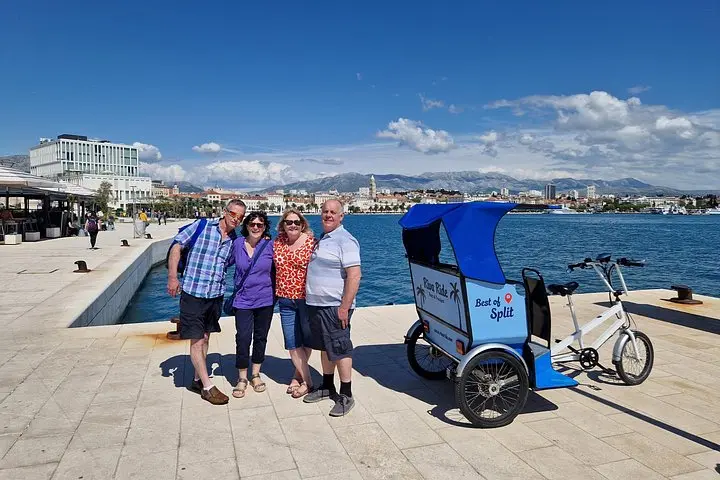
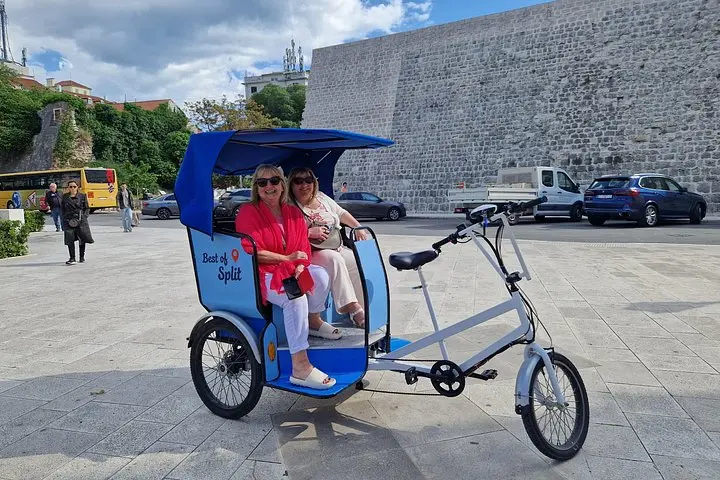
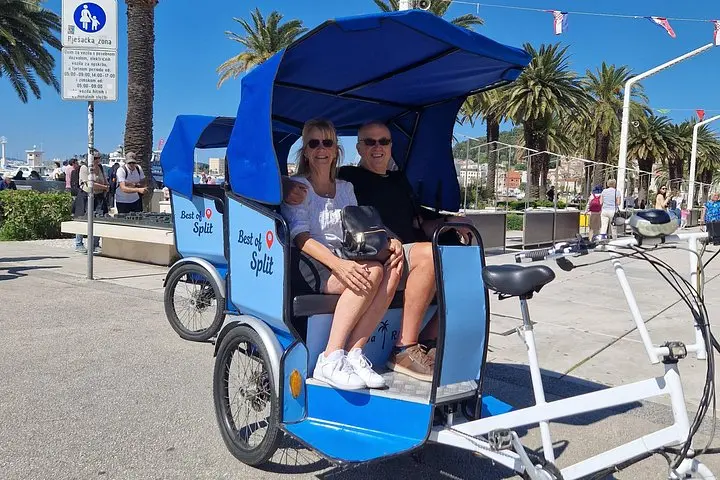

The rickshaw glides onto the Riva at golden hour, tires whispering on stone as the Adriatic edges close enough to touch. Riders feel the city pull them through narrow Roman streets, past sun-warmed walls and the small crowds that gather around street musicians. The vehicle pauses; a local guide points out the Bronze Gate, the curve of Diocletian’s Palace, and a stairwell where centuries overlap in carved stone.
The rickshaw glides onto the Riva at golden hour, tires whispering on stone as the Adriatic edges close enough to touch. Riders feel the city pull them through narrow Roman streets, past sun-warmed walls and the small crowds that gather around street musicians. The vehicle pauses; a local guide points out the Bronze Gate, the curve of Diocletian’s Palace, and a stairwell where centuries overlap in carved stone.
Split’s story is Roman, medieval and seafaring. Diocletian built the palace here in the 4th century AD; later generations reused its blocks to shape a living old town. Geologically, the coastline is classic karst limestone — the same hard rock that throws up craggy promontories and clear, sheltered bays. Culture in Split reads in dialect, coffee rituals, and the easy pace along the waterfront where fishermen and ferries keep time with the tide.
Practicality governs the ride: tours typically run 60–80 minutes, are private, and can stop on request for photos or short walks — Marjan Park on the west offers sweeping island views and a breath of pine-scented shade. Expect flat, paved surfaces (no steep climbs), close-up history lessons, and frequent photo stops. Dress for sun and sea breeze; bring comfortable shoes if you plan short walks. The guide can adjust the route to avoid crowds or extend time at favorite viewpoints. This is a low-impact, accessible way to see Split’s core — fast enough to cover ground, slow enough to notice the small details.