THE ADVENTURE COLLECTIVE® · Independent discovery and booking for outdoor travel

Glide through Matera’s Sassi in an electric rickshaw and watch carved cave houses and narrow alleys unfold in two hours. This accessible, low-effort tour pairs local audio guides with a visit to a furnished cave dwelling and a free walk through the cathedral.
Glide through Matera’s Sassi in an electric rickshaw and watch carved cave houses and narrow alleys unfold in two hours. This accessible, low-effort tour pairs local audio guides with a visit to a furnished cave dwelling and a free walk through the cathedral.
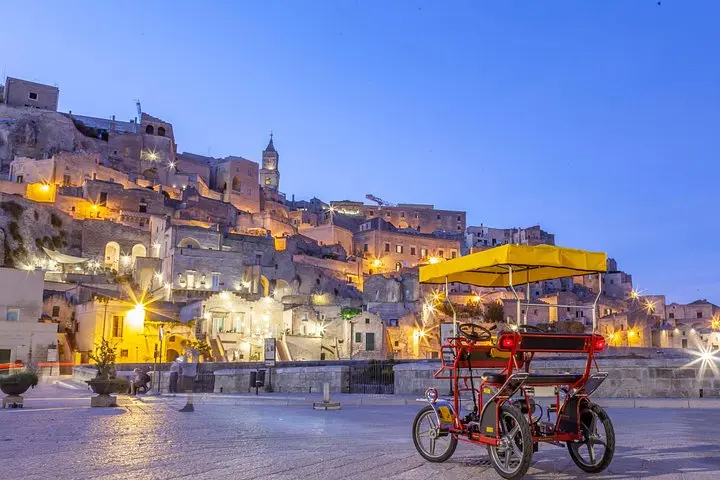
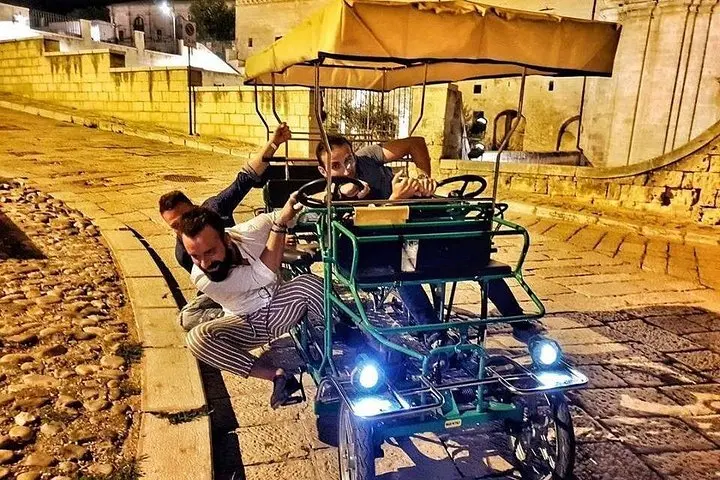
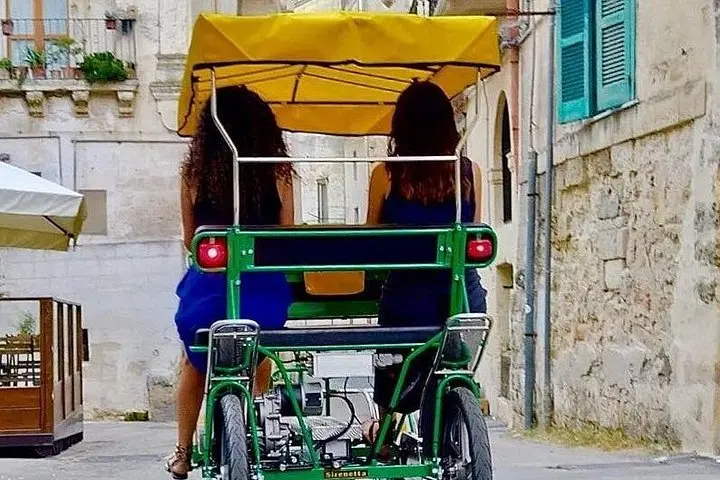
The rickshaw hums to life and you roll forward beneath pale limestone facades, cobbles clicking like a slow metronome. Sunlight slides across carved doorways as the Gravina gorge dares you to look over its edge; above, the Murgia plateau holds its wind like a patient watcher. In an electric rickshaw, this two-hour sweep of Matera’s historic center and the twin Sassi districts feels intimate and immediate—streets narrow, views sudden, history obvious in every weathered lintel.
Verified experiences and guided adventures in the surrounding area.
Operated by Matera Bike Tour · Matera, Basilicata
The rickshaw hums to life and you roll forward beneath pale limestone facades, cobbles clicking like a slow metronome. Sunlight slides across carved doorways as the Gravina gorge dares you to look over its edge; above, the Murgia plateau holds its wind like a patient watcher. In an electric rickshaw, this two-hour sweep of Matera’s historic center and the twin Sassi districts feels intimate and immediate—streets narrow, views sudden, history obvious in every weathered lintel.
Geology here is readable: soft calcarenite (local stone) has been carved and inhabited for millennia, creating the cave houses that lent the city its name. The Sassi—Sasso Barisano and Sasso Caveoso—are an urban palimpsest of rock-cut dwellings, churches hollowed from the hill, and terraces that record human improvisation against a karst landscape. Matera’s UNESCO designation recognizes that continuous human story and the 20th-century rebirth that turned abandonment into conservation and tourism.
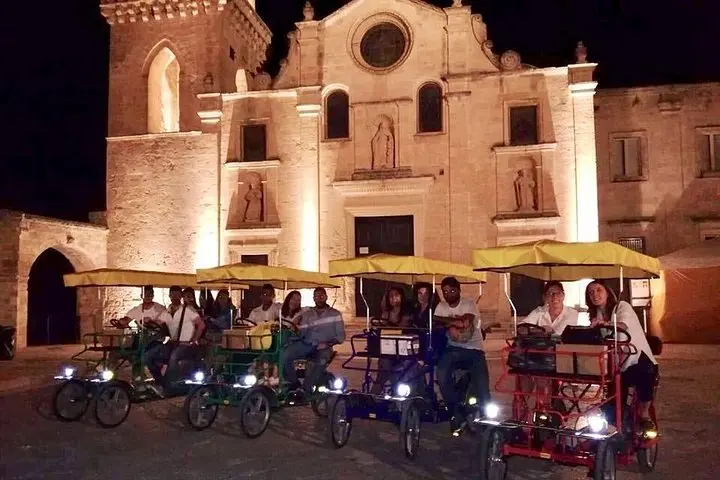
Culturally, the city pivots around its cathedral and local festivals; audio guides (English/Italian) add context while a lead attendant keeps the rickshaw column moving and handles any technical needs. The tour includes a visit to a furnished cave house and a free walk through the cathedral; paid guided entries to other sites are not included.
Practical guidance: wear stiff-soled shoes for brief standing and steps, carry water and sun protection, and plan morning or late-afternoon slots to avoid the strongest sun. The experience is low-impact physically but high in sensory detail—bring a charged phone for photos and respect private property and fragile stonework.
Yes—personal audio guides in Italian and English are provided at departure to accompany the tour.
The tour and vehicles are described as wheelchair accessible, though some historic sites have steps—check with the operator for specific access needs.
The ticket includes a visit to a cave house and a free walk through the cathedral; guided or paid entries to other sites are generally excluded unless specified.
Shared tours are limited to small groups; typical maximum group size is around 10 participants with a leader available for technical support.
Matera Bike Tour operates guided outdoor trips and adventures with an emphasis on safety, stewardship, and memorable experiences.
The rickshaw hums to life and you roll forward beneath pale limestone facades, cobbles clicking like a slow metronome. Sunlight slides across carved doorways as the Gravina gorge dares you to look over its edge; above, the Murgia plateau holds its wind like a patient watcher. In an electric rickshaw, this two-hour sweep of Matera’s historic center and the twin Sassi districts feels intimate and immediate—streets narrow, views sudden, history obvious in every weathered lintel.
The rickshaw hums to life and you roll forward beneath pale limestone facades, cobbles clicking like a slow metronome. Sunlight slides across carved doorways as the Gravina gorge dares you to look over its edge; above, the Murgia plateau holds its wind like a patient watcher. In an electric rickshaw, this two-hour sweep of Matera’s historic center and the twin Sassi districts feels intimate and immediate—streets narrow, views sudden, history obvious in every weathered lintel.
Geology here is readable: soft calcarenite (local stone) has been carved and inhabited for millennia, creating the cave houses that lent the city its name. The Sassi—Sasso Barisano and Sasso Caveoso—are an urban palimpsest of rock-cut dwellings, churches hollowed from the hill, and terraces that record human improvisation against a karst landscape. Matera’s UNESCO designation recognizes that continuous human story and the 20th-century rebirth that turned abandonment into conservation and tourism.
Culturally, the city pivots around its cathedral and local festivals; audio guides (English/Italian) add context while a lead attendant keeps the rickshaw column moving and handles any technical needs. The tour includes a visit to a furnished cave house and a free walk through the cathedral; paid guided entries to other sites are not included.
Practical guidance: wear stiff-soled shoes for brief standing and steps, carry water and sun protection, and plan morning or late-afternoon slots to avoid the strongest sun. The experience is low-impact physically but high in sensory detail—bring a charged phone for photos and respect private property and fragile stonework.