THE ADVENTURE COLLECTIVE® · Independent discovery and booking for outdoor travel

Board a short ferry from the Gateway of India for a half-day cultural walk led by local island guides. Explore 5th–7th century rock-cut temples, climb basalt steps to the Trimurti, and learn the living history of Elephanta Island.
Board a short ferry from the Gateway of India for a half-day cultural walk led by local island guides. Explore 5th–7th century rock-cut temples, climb basalt steps to the Trimurti, and learn the living history of Elephanta Island.
You step off the ferry as salt-slick wind pushes across Mumbai Harbour and a low, forested bluff rises ahead — Elephanta’s stone mouths and carved faces waiting beyond a busy landing. Local guides from the island’s original community lead the way through sun-cut paths toward cool rock chambers where shadow meets carved granite.
Verified experiences and guided adventures in the surrounding area.
Operated by The Mumbai Tours · Mumbai, Maharashtra
You step off the ferry as salt-slick wind pushes across Mumbai Harbour and a low, forested bluff rises ahead — Elephanta’s stone mouths and carved faces waiting beyond a busy landing. Local guides from the island’s original community lead the way through sun-cut paths toward cool rock chambers where shadow meets carved granite.
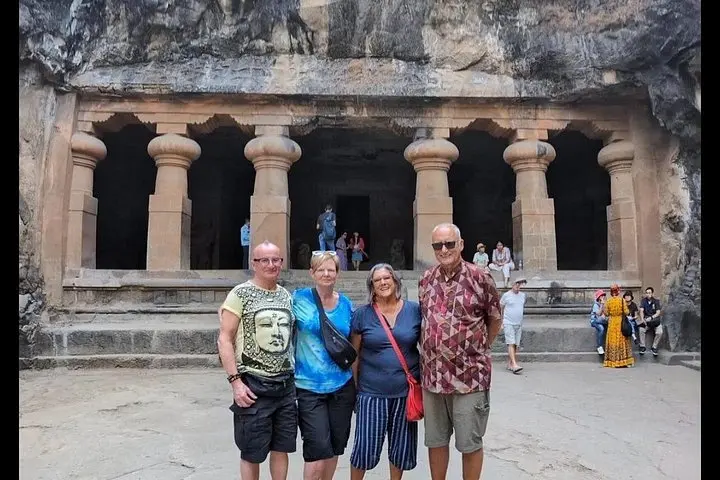
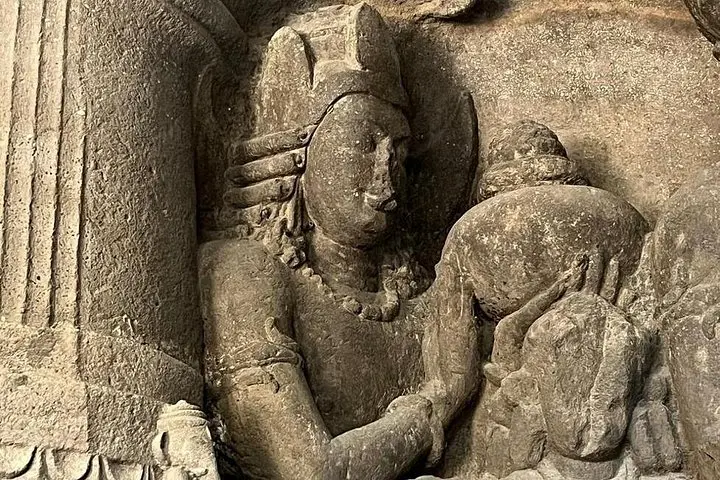
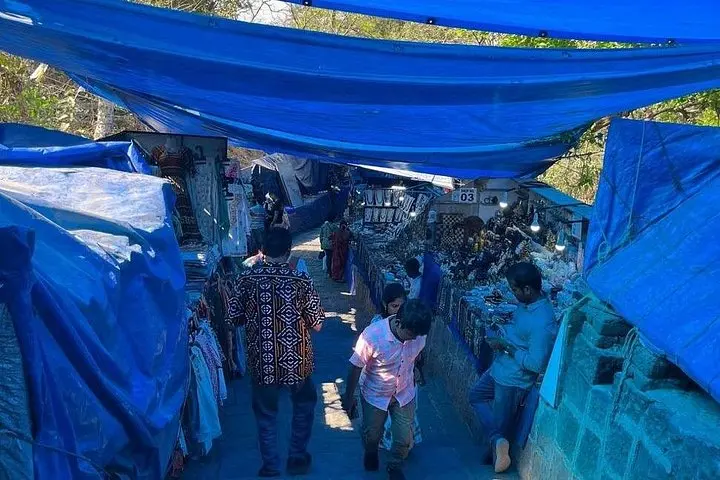
The caves at Gharapuri (Elephanta) date largely to the 5th–7th centuries CE and center on Shaiva iconography. Geological forces left dense basalt that artisans hollowed into temples and reliefs; chief among them is the Trimurti, a three-headed Shiva that dominates the main hall. The island also bears colonial-era relics, fishing-village life, and a layered cultural presence that visitors witness in daily rhythms: fishermen mending nets, children racing the headland, vendors selling chai near the stairs.
Practically, the experience is a half-day outing: a 60-minute ferry crossing from the Gateway of India, an uphill stair approach to the cave complex, two hours among the sculptures, then time to explore shoreline trails. The caves are closed Mondays; check ferry schedules during the monsoon when services can be limited. Wear sturdy shoes for uneven stone, carry water and sun protection, and bring small-change cash for ferry tickets and local stalls. Guides born and raised on Elephanta offer context most visitors miss — linguistic cues, carving techniques, and the island’s conservation needs.
This is a short, tactile adventure that pairs outdoor movement with deep history: tactile basalt steps, wind-edged views of the city, and sculptures that still command quiet attention.
Policies vary — many bookings ask guests to buy the public ferry and entry at Gateway of India; confirm with your operator whether a ferry transfer or entry is explicitly included.
The archaeological site is generally closed on Mondays; check local notices and ferry schedules before planning your trip.
Some paths are stroller-accessible to the landing area, but the main route to the caves includes roughly 100–120 stone steps and uneven surfaces that limit accessibility.
Photography is allowed in most outdoor and cave areas, but avoid flash on delicate carvings and follow any onsite signage or guide instructions.
The Mumbai Tours operates guided outdoor trips and adventures with an emphasis on safety, stewardship, and memorable experiences.

You step off the ferry as salt-slick wind pushes across Mumbai Harbour and a low, forested bluff rises ahead — Elephanta’s stone mouths and carved faces waiting beyond a busy landing. Local guides from the island’s original community lead the way through sun-cut paths toward cool rock chambers where shadow meets carved granite.
You step off the ferry as salt-slick wind pushes across Mumbai Harbour and a low, forested bluff rises ahead — Elephanta’s stone mouths and carved faces waiting beyond a busy landing. Local guides from the island’s original community lead the way through sun-cut paths toward cool rock chambers where shadow meets carved granite.
The caves at Gharapuri (Elephanta) date largely to the 5th–7th centuries CE and center on Shaiva iconography. Geological forces left dense basalt that artisans hollowed into temples and reliefs; chief among them is the Trimurti, a three-headed Shiva that dominates the main hall. The island also bears colonial-era relics, fishing-village life, and a layered cultural presence that visitors witness in daily rhythms: fishermen mending nets, children racing the headland, vendors selling chai near the stairs.
Practically, the experience is a half-day outing: a 60-minute ferry crossing from the Gateway of India, an uphill stair approach to the cave complex, two hours among the sculptures, then time to explore shoreline trails. The caves are closed Mondays; check ferry schedules during the monsoon when services can be limited. Wear sturdy shoes for uneven stone, carry water and sun protection, and bring small-change cash for ferry tickets and local stalls. Guides born and raised on Elephanta offer context most visitors miss — linguistic cues, carving techniques, and the island’s conservation needs.
This is a short, tactile adventure that pairs outdoor movement with deep history: tactile basalt steps, wind-edged views of the city, and sculptures that still command quiet attention.