THE ADVENTURE COLLECTIVE® · Independent discovery and booking for outdoor travel

Chase Slovenia’s most vivid waters from Vršič Pass to Lake Bohinj on a full-day, small-group circuit from Bled. Short hikes to waterfalls, WWI history, a car-train through the Bohinj tunnel, and the option to add rafting or ziplining keep the day moving—and the Soča’s emerald glow never lets go.
Chase Slovenia’s most vivid waters from Vršič Pass to Lake Bohinj on a full-day, small-group circuit from Bled. Short hikes to waterfalls, WWI history, a car-train through the Bohinj tunnel, and the option to add rafting or ziplining keep the day moving—and the Soča’s emerald glow never lets go.
Dawn at Bled’s bus station and the mountains are already awake—larches stretching, limestone warming, the day gathering itself for movement. A small group slips into a minivan and points toward the Julian Alps. The road begins to coil up Vršič Pass, and every switchback frames new stone giants. By the time the van eases to a stop at Lake Jasna, the water is glassy and cold-looking, a stag statue holding its ground while alpine peaks toy with the first light.
Verified experiences and guided adventures in the surrounding area.
Operated by Mamut Slovenia · Bled, Upper Carniola
Dawn at Bled’s bus station and the mountains are already awake—larches stretching, limestone warming, the day gathering itself for movement. A small group slips into a minivan and points toward the Julian Alps. The road begins to coil up Vršič Pass, and every switchback frames new stone giants. By the time the van eases to a stop at Lake Jasna, the water is glassy and cold-looking, a stag statue holding its ground while alpine peaks toy with the first light.
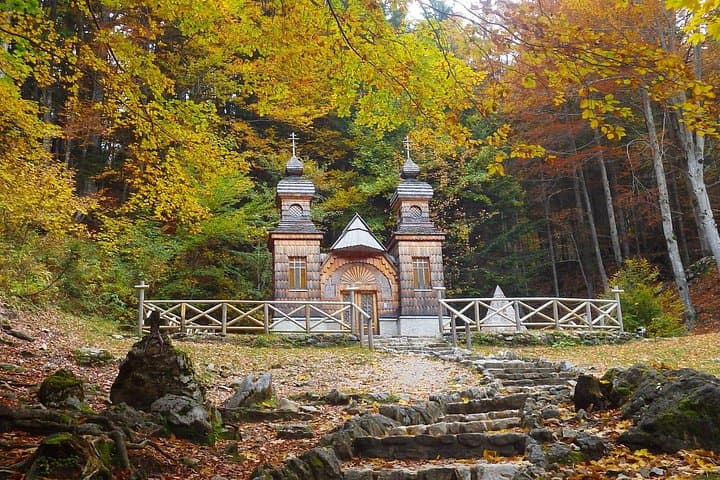
This day rolls on in short hikes and wide views. At Vršič (1,611 m), the wind nudges, and history steps forward: the Russian Chapel, built by POWs in WWI, stands among spruce as a quiet witness to the hard road beneath your feet. Soon the tour meets the source of the Soča—a karst spring pressed into a narrow chute. The final approach is a brief, cable-aided path; the river breathes from the mountain, a neon thread daring you to trace it downstream.
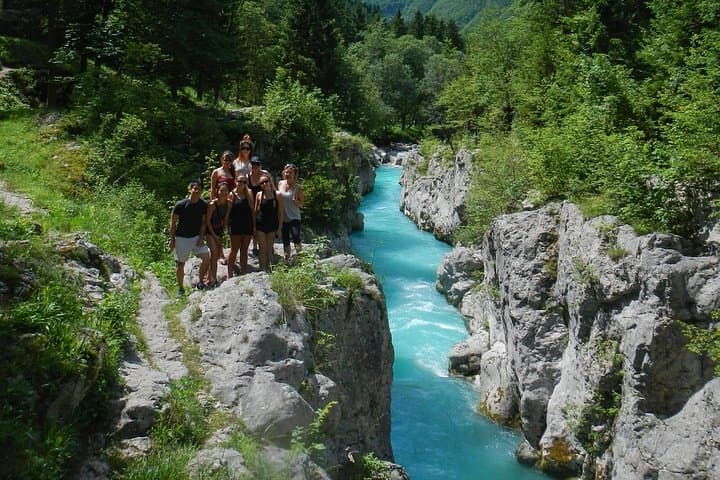
The valley loosens and the Soča shows its full color—emerald, electric, unmistakable. Boka waterfall thunders from 106 meters, flexing after rain; Kozjak hides in a cavern of green light, a short walk through cool forest to a pool that looks painted. Stone bridges—some Napoleonic-era—arc over clear currents that keep pushing, intent on the Adriatic. In Bovec, you can ramp the day up with optional rafting, ziplining, or even a skydive while others chase one more waterfall. Either way, the Soča keeps pace, chattering beside the road.
Later, the tour glides to Most na Soči, where a hydro dam has drawn a lake into the valley’s elbow. A historic car-train ferries the van through the Bohinj tunnel (6.3 km), a clever time-saver that swaps canyon for alpine meadows in minutes. The last stop is Lake Bohinj, Slovenia’s largest natural lake. It sits at 526 meters, quiet but not passive, mirroring Vogel’s shoulders and offering flat lakeside paths that unwind legs used on gravel, roots, and the occasional stone stair.
Expect 11–12 hours door-to-door with several 15–60 minute walks to viewpoints and waterfalls. Terrain is mixed: compact dirt, rock, footbridges, and one short secured section at the Soča source. Bring trail shoes with grip, layers for the pass, and rain protection—the Alps change moods fast. There are cafes and bakeries in Kranjska Gora, Bovec, and Kobarid for coffee and snacks; guides handle national park fees and the classic car-train. It’s a greatest-hits reel of Triglav National Park and the Soča Valley—fast-paced but measured—letting the river set the rhythm while the mountains keep time.
You’ll do multiple short walks of 0.5–2 km each on varied terrain, plus a brief cable-secured section to view the Soča source. No long continuous hikes are required.
Yes for active kids; guides can suggest alternatives if the Soča source path feels too exposed. Infant seats are available on request.
Tours run in light rain, and the scenery can be excellent after showers. If conditions become unsafe (storms, road closures), the itinerary may adjust or the tour may be canceled with a refund.
Yes. Triglav National Park fees, transport by air‑conditioned minivan, professional guiding, and the car‑train ride are included.
Short dips may be possible at designated spots, but the water is cold year‑round and swimming is restricted at the Soča source and some protected areas. Ask your guide before entering the water.
Carry some euros for coffee, snacks, or optional activities in Bovec/Kobarid. Most cafes accept cards, but small vendors may not.
Mamut Slovenia operates guided outdoor trips and adventures with an emphasis on safety, stewardship, and memorable experiences.
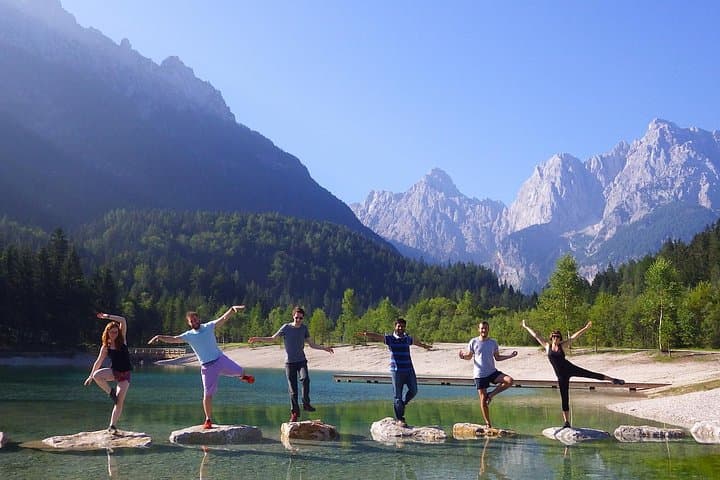
Dawn at Bled’s bus station and the mountains are already awake—larches stretching, limestone warming, the day gathering itself for movement. A small group slips into a minivan and points toward the Julian Alps. The road begins to coil up Vršič Pass, and every switchback frames new stone giants. By the time the van eases to a stop at Lake Jasna, the water is glassy and cold-looking, a stag statue holding its ground while alpine peaks toy with the first light.
Dawn at Bled’s bus station and the mountains are already awake—larches stretching, limestone warming, the day gathering itself for movement. A small group slips into a minivan and points toward the Julian Alps. The road begins to coil up Vršič Pass, and every switchback frames new stone giants. By the time the van eases to a stop at Lake Jasna, the water is glassy and cold-looking, a stag statue holding its ground while alpine peaks toy with the first light.
This day rolls on in short hikes and wide views. At Vršič (1,611 m), the wind nudges, and history steps forward: the Russian Chapel, built by POWs in WWI, stands among spruce as a quiet witness to the hard road beneath your feet. Soon the tour meets the source of the Soča—a karst spring pressed into a narrow chute. The final approach is a brief, cable-aided path; the river breathes from the mountain, a neon thread daring you to trace it downstream.
The valley loosens and the Soča shows its full color—emerald, electric, unmistakable. Boka waterfall thunders from 106 meters, flexing after rain; Kozjak hides in a cavern of green light, a short walk through cool forest to a pool that looks painted. Stone bridges—some Napoleonic-era—arc over clear currents that keep pushing, intent on the Adriatic. In Bovec, you can ramp the day up with optional rafting, ziplining, or even a skydive while others chase one more waterfall. Either way, the Soča keeps pace, chattering beside the road.
Later, the tour glides to Most na Soči, where a hydro dam has drawn a lake into the valley’s elbow. A historic car-train ferries the van through the Bohinj tunnel (6.3 km), a clever time-saver that swaps canyon for alpine meadows in minutes. The last stop is Lake Bohinj, Slovenia’s largest natural lake. It sits at 526 meters, quiet but not passive, mirroring Vogel’s shoulders and offering flat lakeside paths that unwind legs used on gravel, roots, and the occasional stone stair.
Expect 11–12 hours door-to-door with several 15–60 minute walks to viewpoints and waterfalls. Terrain is mixed: compact dirt, rock, footbridges, and one short secured section at the Soča source. Bring trail shoes with grip, layers for the pass, and rain protection—the Alps change moods fast. There are cafes and bakeries in Kranjska Gora, Bovec, and Kobarid for coffee and snacks; guides handle national park fees and the classic car-train. It’s a greatest-hits reel of Triglav National Park and the Soča Valley—fast-paced but measured—letting the river set the rhythm while the mountains keep time.