THE ADVENTURE COLLECTIVE® · Independent discovery and booking for outdoor travel

Drive from Salalah through frankincense groves and the Ubar ruins to reach the towering dunes of the Empty Quarter in time for a dramatic desert sunset. This full-day tour mixes short walks, cultural history, and wide-open sandscapes—ideal for photographers and travelers seeking a compact desert experience.
Drive from Salalah through frankincense groves and the Ubar ruins to reach the towering dunes of the Empty Quarter in time for a dramatic desert sunset. This full-day tour mixes short walks, cultural history, and wide-open sandscapes—ideal for photographers and travelers seeking a compact desert experience.
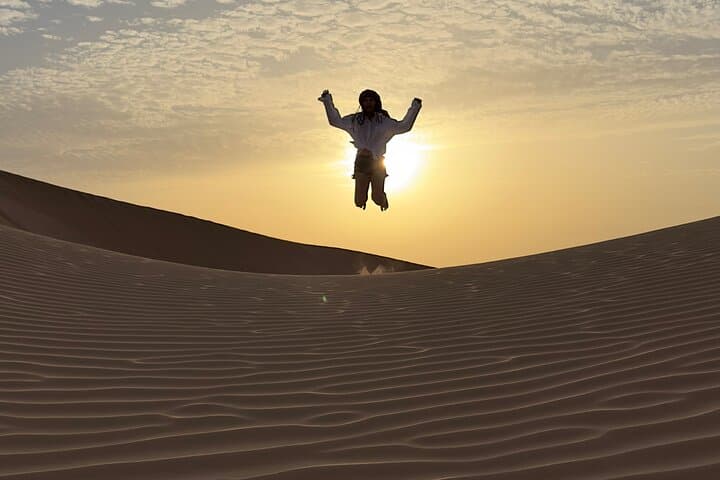
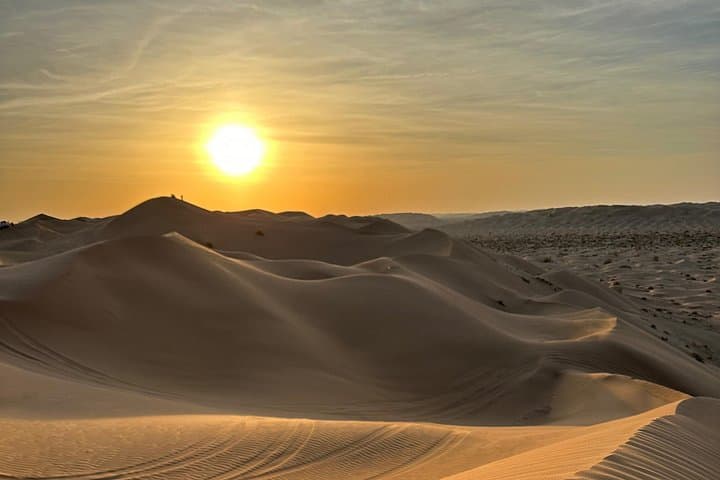
You arrive as the heat eases and the desert begins to change color: ochre dunes deepen into bronze, and wind-carved ridges throw long, sharp shadows. Vehicles thread a pale track across the sand, the air carrying an earthy, resinous scent from nearby frankincense trees that have anchored this landscape for millennia.
Verified experiences and guided adventures in the surrounding area.
Operated by Salalah Premium Tours · Salalah, Dhofar
You arrive as the heat eases and the desert begins to change color: ochre dunes deepen into bronze, and wind-carved ridges throw long, sharp shadows. Vehicles thread a pale track across the sand, the air carrying an earthy, resinous scent from nearby frankincense trees that have anchored this landscape for millennia.
The route links three distinct chapters of Dhofar’s story. Wadi Dawkah is a UNESCO frankincense reserve where Boswellia sacra trees bear the resin that fueled ancient trade routes; the Ubar (Shisr) archaeological site offers crumbling walls and wells that hint at a once-thriving caravan stop; finally, the Rub' al Khali’s outer dunes rise—some reaching 200–240 meters—shaping a living, shifting geology of wind and sand.
Culturally this area is tied to caravan commerce and the frankincense economy; local guides often point out harvesting scars on trunks and explain traditional uses. Geologically, the dunes are composite and star-shaped in places, formed by multidirectional winds that can change the walking underfoot within hours.
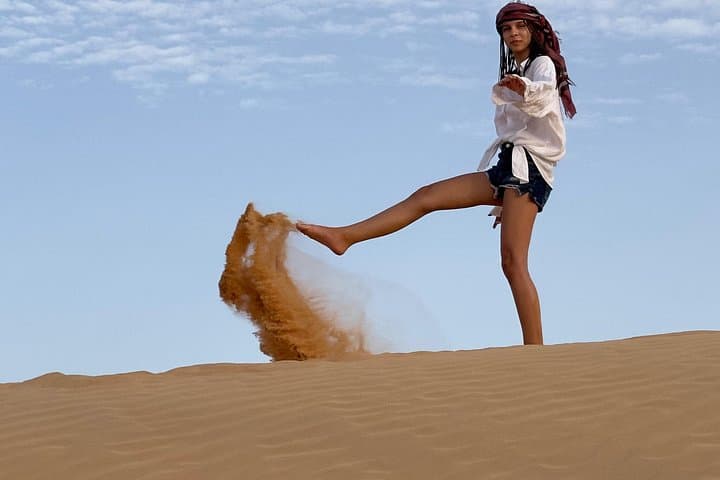
Practically, the tour runs about eight hours from Salalah and mixes soft-roof vehicle drives with short walks (under 3 km at each stop). Expect sandy, uneven terrain and periods of strong sun or cool breeze after sundown. Bring layered sun protection, closed-toe shoes suited to sand, and a good camera with a telephoto option for wildlife and distant ridgelines. The sunset here is the payoff: a slow, color-driven show where light sculpts the dunes and the desert seems to breathe before night.
Depending on the exact itinerary and stops, expect roughly 1–1.5 hours of driving between Salalah and the outer Empty Quarter access points, with additional short drives between sites.
The provider lists the tour as suitable for all fitness levels and wheelchair accessible for transport; however, dune walks and uneven archaeological sites may be challenging—check with the operator about specific mobility needs.
Bring your ID and some OMR for small purchases; entrance fees are typically included, but snacks or souvenirs may require cash or card depending on the vendor.
Facilities are limited in remote sites; operators usually plan short stops at established areas with restrooms before heading into the more remote dunes.
Salalah Premium Tours operates guided outdoor trips and adventures with an emphasis on safety, stewardship, and memorable experiences.

You arrive as the heat eases and the desert begins to change color: ochre dunes deepen into bronze, and wind-carved ridges throw long, sharp shadows. Vehicles thread a pale track across the sand, the air carrying an earthy, resinous scent from nearby frankincense trees that have anchored this landscape for millennia.
You arrive as the heat eases and the desert begins to change color: ochre dunes deepen into bronze, and wind-carved ridges throw long, sharp shadows. Vehicles thread a pale track across the sand, the air carrying an earthy, resinous scent from nearby frankincense trees that have anchored this landscape for millennia.
The route links three distinct chapters of Dhofar’s story. Wadi Dawkah is a UNESCO frankincense reserve where Boswellia sacra trees bear the resin that fueled ancient trade routes; the Ubar (Shisr) archaeological site offers crumbling walls and wells that hint at a once-thriving caravan stop; finally, the Rub' al Khali’s outer dunes rise—some reaching 200–240 meters—shaping a living, shifting geology of wind and sand.
Culturally this area is tied to caravan commerce and the frankincense economy; local guides often point out harvesting scars on trunks and explain traditional uses. Geologically, the dunes are composite and star-shaped in places, formed by multidirectional winds that can change the walking underfoot within hours.
Practically, the tour runs about eight hours from Salalah and mixes soft-roof vehicle drives with short walks (under 3 km at each stop). Expect sandy, uneven terrain and periods of strong sun or cool breeze after sundown. Bring layered sun protection, closed-toe shoes suited to sand, and a good camera with a telephoto option for wildlife and distant ridgelines. The sunset here is the payoff: a slow, color-driven show where light sculpts the dunes and the desert seems to breathe before night.