THE ADVENTURE COLLECTIVE® · Independent discovery and booking for outdoor travel

From the painted faces of Kathakali in Kochi to mist-soft tea terraces in Munnar and the hushed lanes of Kerala’s backwaters, this seven-day private tour stitches culture, wildlife, and culinary discovery into a single, manageable loop. Expect hill walks, spice gardens, a Periyar boat safari, and an overnight houseboat through Alleppey.
From the painted faces of Kathakali in Kochi to mist-soft tea terraces in Munnar and the hushed lanes of Kerala’s backwaters, this seven-day private tour stitches culture, wildlife, and culinary discovery into a single, manageable loop. Expect hill walks, spice gardens, a Periyar boat safari, and an overnight houseboat through Alleppey.
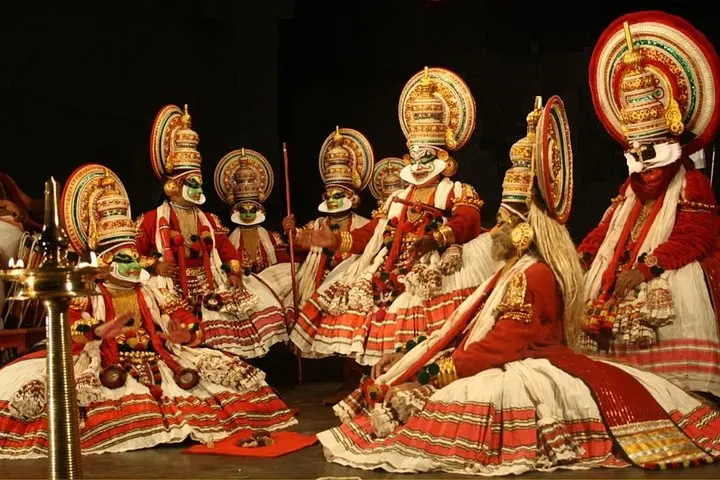
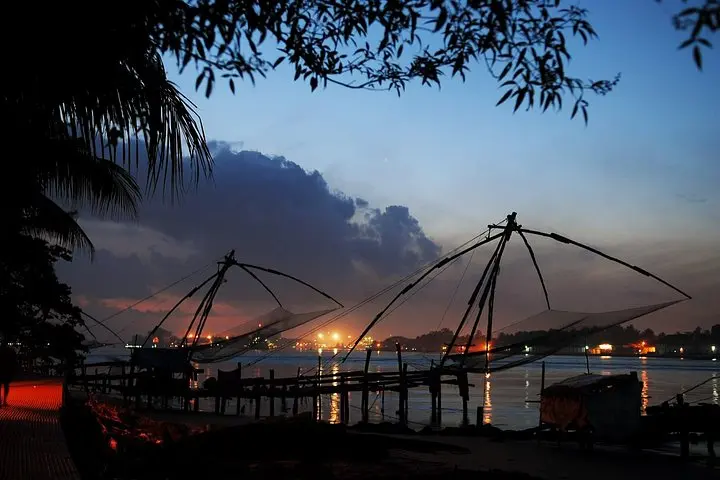
You step out of Kochi’s humid air into a world that rearranges speed and sound: the clack of Chinese fishing nets against the harbor, a Kathakali actor’s slow, deliberate blink, and the car’s engine easing uphill toward Munnar. The tour moves like a photographer’s pan — wide vistas in one frame, close-up textures in the next — from coastal forts to wind-sculpted tea terraces and, finally, to the houseboat-still backwaters where time seems to row itself.
Verified experiences and guided adventures in the surrounding area.
Operated by Agora Voyages Pvt. Ltd. · Kochi, Kerala
You step out of Kochi’s humid air into a world that rearranges speed and sound: the clack of Chinese fishing nets against the harbor, a Kathakali actor’s slow, deliberate blink, and the car’s engine easing uphill toward Munnar. The tour moves like a photographer’s pan — wide vistas in one frame, close-up textures in the next — from coastal forts to wind-sculpted tea terraces and, finally, to the houseboat-still backwaters where time seems to row itself.
Kerala’s story is written in layers: Portuguese and Dutch masonry at Fort Kochi, spices that rewired global trade, and the British-era tea plantations that shaped Munnar’s geometry. Geologically, the Western Ghats lift the region to cool altitudes (Munnar sits around 1,500–1,700 m), creating the mist, peat-like soils, and biodiversity that let tea, cardamom, and rare species like the Nilgiri tahr survive.
Culturally, the itinerary threads performance and production — Kathakali’s mythic narratives, spice-planter lore in Thekkady, and centuries of fishing craft on Vembanad Lake. Periyar’s lake dares you to look closely: elephants cross in silhouette, sambar deer graze, and river otters slip like punctuation along the bank.
The practical architecture of this trip is straightforward: seven days, beginning and ending in Kochi. Expect road legs of roughly 140 km / 4 hrs to Munnar, 110 km / 3 hrs to Thekkady, another 140 km / 4 hrs to Kumarakom, and a short 60 km / 1.5 hr transfer from Alleppey back to Kochi. In Munnar, hikes to Rajamala and Top Station are cool and steep in places; bring layers for early sun and fog.
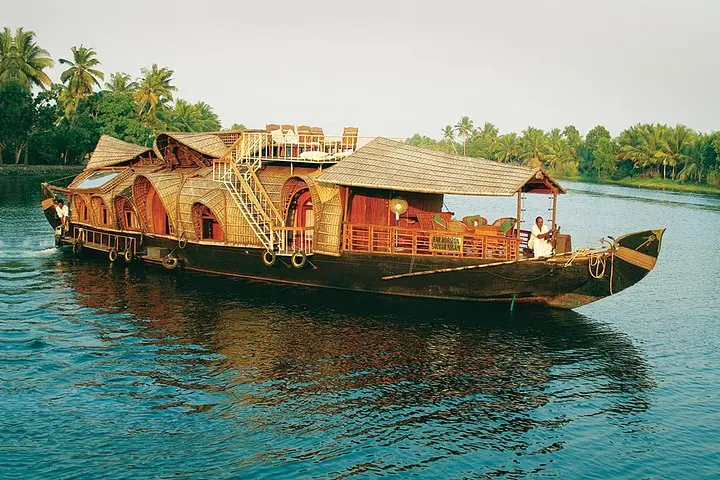
Houseboat nights are the highlight — traditional kettuvallams glide through narrow canals with a local chef preparing coconut-forward meals onboard. For wildlife, book the Periyar boat safari early (wildlife is most active at dawn); for photos, aim for golden hour at Top Station or the backwater fringes.
Plan for practicalities: carry water and sunscreen, wear grippy shoes for tea estate paths, and keep a lightweight rain shell during monsoon months. Respect local customs—remove shoes in temples and accept hospitality with two hands. Tipping drivers and local guides is customary and helps sustain small tourism economies.
This itinerary balances sensory immersion with logistics: cultural evenings in Kochi, cool-highland days in Munnar, spice-scented afternoons in Thekkady, and slow, reflective water time between Kumarakom and Alleppey. It’s a compact portrait of Kerala — scenic, sensory, and quietly generous to those who arrive ready to listen.
Cochin International Airport (COK) is the primary arrival point; pickup from the airport is included per itinerary options.
Yes—houseboats range from basic to luxury; choose AC and private bathroom options for infants or older travelers.
Breakfast is included daily; some lunches and dinners are included per itinerary and on the houseboat; confirm specifics when booking.
Common sightings include elephants, sambar deer, gaurs (Indian bison), and a variety of water and forest birds—sightings aren’t guaranteed but the boat safari improves chances.
No special vaccinations are universally required for Kerala, but check with your doctor for routine shots and regional guidance; standard mosquito precautions are advised.
Monsoon (June–September) brings intense rains that can affect road travel and outdoor plans; the landscape is lush but consider travel flexibility or choose drier months.
Agora Voyages Pvt. Ltd. operates guided outdoor trips and adventures with an emphasis on safety, stewardship, and memorable experiences.
You step out of Kochi’s humid air into a world that rearranges speed and sound: the clack of Chinese fishing nets against the harbor, a Kathakali actor’s slow, deliberate blink, and the car’s engine easing uphill toward Munnar. The tour moves like a photographer’s pan — wide vistas in one frame, close-up textures in the next — from coastal forts to wind-sculpted tea terraces and, finally, to the houseboat-still backwaters where time seems to row itself.
You step out of Kochi’s humid air into a world that rearranges speed and sound: the clack of Chinese fishing nets against the harbor, a Kathakali actor’s slow, deliberate blink, and the car’s engine easing uphill toward Munnar. The tour moves like a photographer’s pan — wide vistas in one frame, close-up textures in the next — from coastal forts to wind-sculpted tea terraces and, finally, to the houseboat-still backwaters where time seems to row itself.
Kerala’s story is written in layers: Portuguese and Dutch masonry at Fort Kochi, spices that rewired global trade, and the British-era tea plantations that shaped Munnar’s geometry. Geologically, the Western Ghats lift the region to cool altitudes (Munnar sits around 1,500–1,700 m), creating the mist, peat-like soils, and biodiversity that let tea, cardamom, and rare species like the Nilgiri tahr survive.
Culturally, the itinerary threads performance and production — Kathakali’s mythic narratives, spice-planter lore in Thekkady, and centuries of fishing craft on Vembanad Lake. Periyar’s lake dares you to look closely: elephants cross in silhouette, sambar deer graze, and river otters slip like punctuation along the bank.
The practical architecture of this trip is straightforward: seven days, beginning and ending in Kochi. Expect road legs of roughly 140 km / 4 hrs to Munnar, 110 km / 3 hrs to Thekkady, another 140 km / 4 hrs to Kumarakom, and a short 60 km / 1.5 hr transfer from Alleppey back to Kochi. In Munnar, hikes to Rajamala and Top Station are cool and steep in places; bring layers for early sun and fog.
Houseboat nights are the highlight — traditional kettuvallams glide through narrow canals with a local chef preparing coconut-forward meals onboard. For wildlife, book the Periyar boat safari early (wildlife is most active at dawn); for photos, aim for golden hour at Top Station or the backwater fringes.
Plan for practicalities: carry water and sunscreen, wear grippy shoes for tea estate paths, and keep a lightweight rain shell during monsoon months. Respect local customs—remove shoes in temples and accept hospitality with two hands. Tipping drivers and local guides is customary and helps sustain small tourism economies.
This itinerary balances sensory immersion with logistics: cultural evenings in Kochi, cool-highland days in Munnar, spice-scented afternoons in Thekkady, and slow, reflective water time between Kumarakom and Alleppey. It’s a compact portrait of Kerala — scenic, sensory, and quietly generous to those who arrive ready to listen.