THE ADVENTURE COLLECTIVE® · Independent discovery and booking for outdoor travel

Stand where the Pan-American Highway ends and the continent exhales. This private half-day shore excursion from Ushuaia to Tierra del Fuego National Park pairs short, easy walks with dramatic coastal and glacial scenery — perfect for travelers wanting a concentrated taste of Patagonia’s far south.
Stand where the Pan-American Highway ends and the continent exhales. This private half-day shore excursion from Ushuaia to Tierra del Fuego National Park pairs short, easy walks with dramatic coastal and glacial scenery — perfect for travelers wanting a concentrated taste of Patagonia’s far south.
You arrive through a drenching Patagonia light: a low sky pressing down, spruce and lenga trees leaning as if listening. A private van eases off Ruta 3 and the road narrows into wind-swept tracks. In a small clearing, the sign reads End of the Pan-American Highway — the moment most travelers want to photograph. The sea ahead is flat and silvery; the forest behind smells like wet bark. The guide says little, letting the place do the talking; the park answers in gusts and birdcalls.
Verified experiences and guided adventures in the surrounding area.
Operated by Latitud Ushuaia Travel · Ushuaia, Tierra del Fuego
You arrive through a drenching Patagonia light: a low sky pressing down, spruce and lenga trees leaning as if listening. A private van eases off Ruta 3 and the road narrows into wind-swept tracks. In a small clearing, the sign reads End of the Pan-American Highway — the moment most travelers want to photograph. The sea ahead is flat and silvery; the forest behind smells like wet bark. The guide says little, letting the place do the talking; the park answers in gusts and birdcalls.
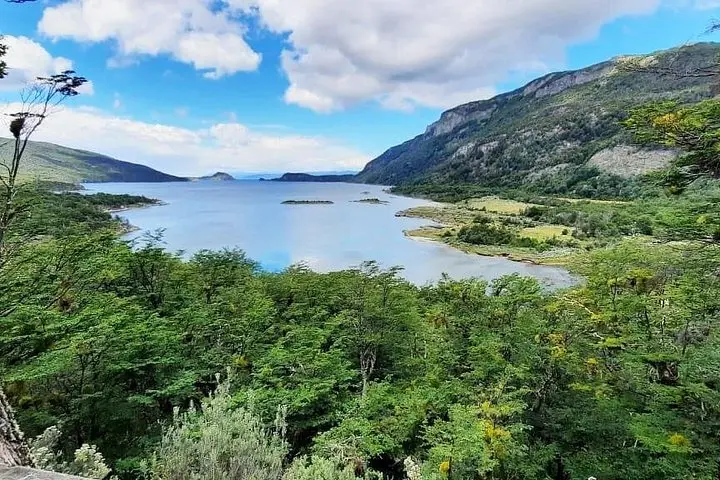
Tierra del Fuego National Park feels geologically young and restless. Glacial scouring left rounded valleys, shallow lakes and moraine ridges; Lago Acigami (Lago Roca) sits like a blue eye carved by past ice. The park was created in 1960 to protect these southernmost Valdivian cold-temperate forests and peat bogs. Culturally, this coastline has been home to Yaghan communities for millennia; their small boats and coastal trails shaped how people moved across channels long before roads existed.
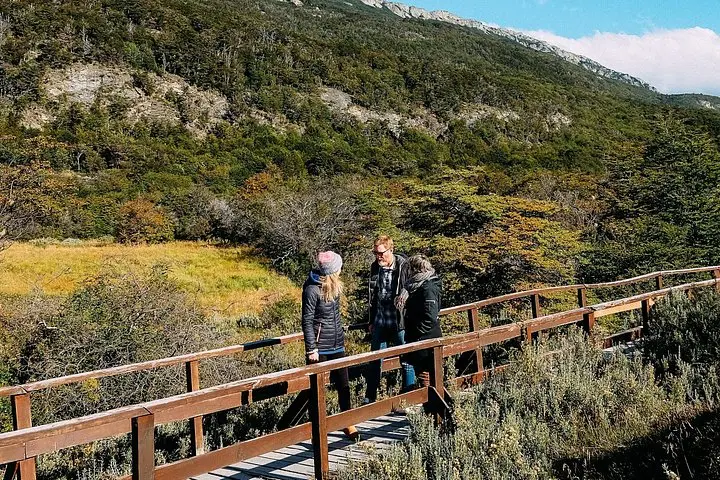
The half-day private excursion balances short, accessible walks with curated viewpoints. Expect 1–3 kilometers of walking on well-marked, mostly flat trails with occasional roots and boardwalks; total elevation gain seldom exceeds 150 meters. Stops typically include Lago Acigami for reflective water shots, a coastal stroll toward Bahía Lapataia, and the Pan-American terminus sign for the classic photograph. Wildlife keeps its distance but offers presence: Fuegian foxes ghost across open ground and Magellanic cormorants huddle on rocks offshore. The wind is an active character here — it nudges you toward the next view and demands a tight jacket.
Practicalities are straightforward: the tour runs about four hours and picks up at Ushuaia’s port or hotel. Admission to the national park is usually paid at the park entrance and is not included in many shore excursions; check with your operator. The terrain is forgiving, but weather changes fast — summer days can be sun-splashed then sleet-softened within an hour.
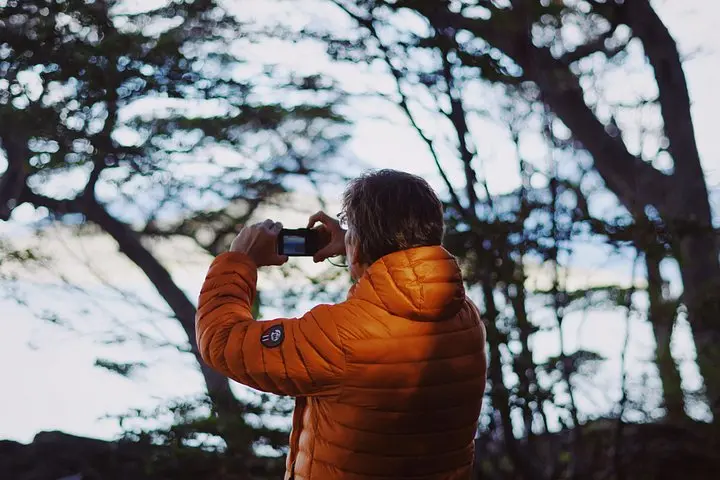
For photographers, the sign and the lake are primary frames; a telephoto will compress coves and wildlife, while a wide-angle catches the tree-line against ocean. Hydrate and layer: even short walks feel longer with wind. If you have time, ask the guide about the invasive beaver issue — introduced animals have reshaped wetlands here, and conservation work is ongoing.
This is a trip built around edges: the edge of a continent, the edge of a road, and the edge between human stories and raw, southern nature. It’s intimate, efficient, and immediately clarifying — a shore excursion that gives travelers a compact, honest taste of Patagonia’s far south.
The tour is a half-day experience lasting approximately four hours, including transfers and short guided walks.
Admission is often not included — most operators advise guests to pay the park fee at the entrance; confirm with your booking.
Yes—operators typically pick up at Ushuaia port or hotels; the listing notes pickup at the port and allows custom pickup requests.
Yes—this private shore excursion is described as stroller-accessible and suitable for all fitness levels, though some paths may have boardwalks or steps.
Common sightings include Fuegian foxes near open areas and coastal birds such as Magellanic cormorants; sightings are never guaranteed.
Dress in layers with a windproof outer shell, sturdy shoes, and bring sun protection — weather changes rapidly in this region.
Latitud Ushuaia Travel operates guided outdoor trips and adventures with an emphasis on safety, stewardship, and memorable experiences.
You arrive through a drenching Patagonia light: a low sky pressing down, spruce and lenga trees leaning as if listening. A private van eases off Ruta 3 and the road narrows into wind-swept tracks. In a small clearing, the sign reads End of the Pan-American Highway — the moment most travelers want to photograph. The sea ahead is flat and silvery; the forest behind smells like wet bark. The guide says little, letting the place do the talking; the park answers in gusts and birdcalls.
You arrive through a drenching Patagonia light: a low sky pressing down, spruce and lenga trees leaning as if listening. A private van eases off Ruta 3 and the road narrows into wind-swept tracks. In a small clearing, the sign reads End of the Pan-American Highway — the moment most travelers want to photograph. The sea ahead is flat and silvery; the forest behind smells like wet bark. The guide says little, letting the place do the talking; the park answers in gusts and birdcalls.
Tierra del Fuego National Park feels geologically young and restless. Glacial scouring left rounded valleys, shallow lakes and moraine ridges; Lago Acigami (Lago Roca) sits like a blue eye carved by past ice. The park was created in 1960 to protect these southernmost Valdivian cold-temperate forests and peat bogs. Culturally, this coastline has been home to Yaghan communities for millennia; their small boats and coastal trails shaped how people moved across channels long before roads existed.
The half-day private excursion balances short, accessible walks with curated viewpoints. Expect 1–3 kilometers of walking on well-marked, mostly flat trails with occasional roots and boardwalks; total elevation gain seldom exceeds 150 meters. Stops typically include Lago Acigami for reflective water shots, a coastal stroll toward Bahía Lapataia, and the Pan-American terminus sign for the classic photograph. Wildlife keeps its distance but offers presence: Fuegian foxes ghost across open ground and Magellanic cormorants huddle on rocks offshore. The wind is an active character here — it nudges you toward the next view and demands a tight jacket.
Practicalities are straightforward: the tour runs about four hours and picks up at Ushuaia’s port or hotel. Admission to the national park is usually paid at the park entrance and is not included in many shore excursions; check with your operator. The terrain is forgiving, but weather changes fast — summer days can be sun-splashed then sleet-softened within an hour.
For photographers, the sign and the lake are primary frames; a telephoto will compress coves and wildlife, while a wide-angle catches the tree-line against ocean. Hydrate and layer: even short walks feel longer with wind. If you have time, ask the guide about the invasive beaver issue — introduced animals have reshaped wetlands here, and conservation work is ongoing.
This is a trip built around edges: the edge of a continent, the edge of a road, and the edge between human stories and raw, southern nature. It’s intimate, efficient, and immediately clarifying — a shore excursion that gives travelers a compact, honest taste of Patagonia’s far south.