THE ADVENTURE COLLECTIVE® · Independent discovery and booking for outdoor travel

In a single, intense day from Istanbul you can walk Ephesus’s marble avenues and stand on Pamukkale’s white terraces. This private tour pairs deep archaeological history with dramatic geothermal scenery—plan for a long day and plenty of walking.
In a single, intense day from Istanbul you can walk Ephesus’s marble avenues and stand on Pamukkale’s white terraces. This private tour pairs deep archaeological history with dramatic geothermal scenery—plan for a long day and plenty of walking.
You step off the morning flight and into a landscape that shifts from Ottoman lowlands to marble-paved Roman streets within hours.
Verified experiences and guided adventures in the surrounding area.
Operated by Booking Guide Turkey · Pamukkale, Denizli
You step off the morning flight and into a landscape that shifts from Ottoman lowlands to marble-paved Roman streets within hours.
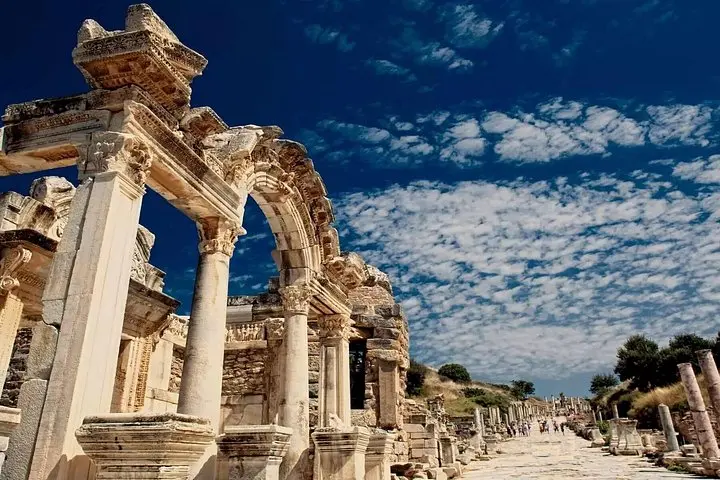
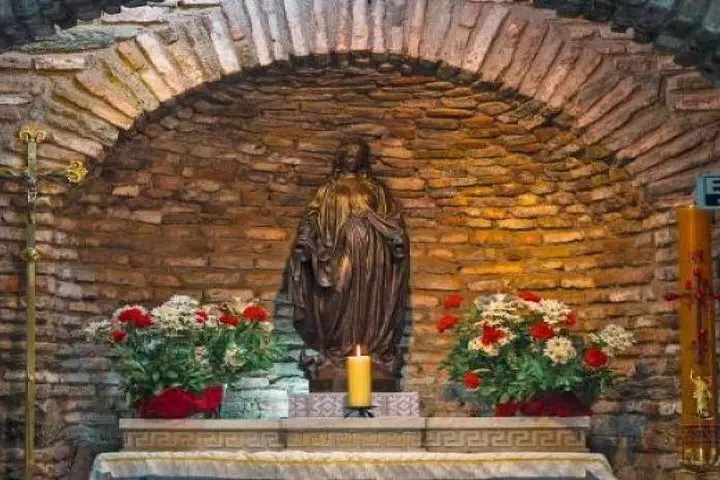
At Ephesus the stone underfoot is worn smooth by centuries of traffic; columns and the soaring façade of the Library of Celsus frame a city that once bustled with merchants and pilgrims. The House of the Virgin Mary perches higher on the ridge, a quiet place of pilgrimage with views back across the plain toward the Aegean.
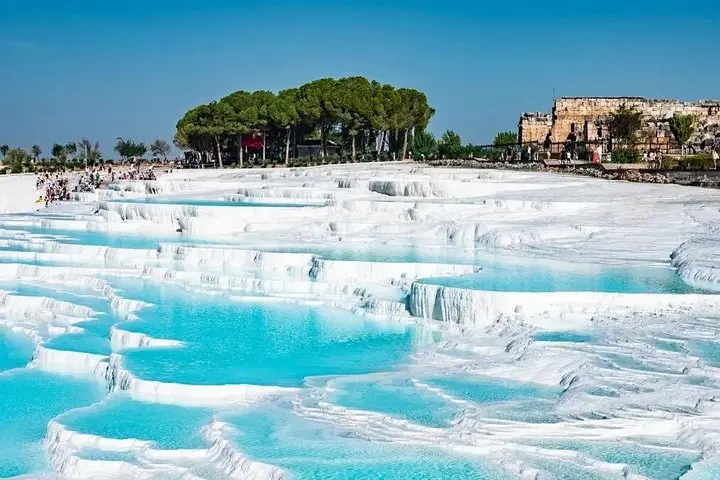
Then the tour moves east, where Pamukkale’s bright white travertines catch the light. These calcium terraces formed over millennia as thermal waters cooled and deposited minerals; above them, the ruined spa city of Hierapolis spreads along a ridge, its theater and necropolis hinting at a Roman outpost built around healing springs.
Travelers will feel both history and geology: tectonic activity feeds the thermal flows, while Roman engineering reshaped springs into baths and promenades. Locally, these sites tie into a long continuum of trade and faith—from Ionian Greek poleis to Byzantine and Ottoman eras—so modest dress and respectful behavior at the House of Mary and religious sites are common courtesies.
Practical notes: this is a very long day—expect 12–15 hours including short domestic flights and airport transfers. Walking across uneven marble, stone steps and boardwalks adds up to a few kilometers and a modest elevation gain at Hierapolis; bring sturdy shoes, sun protection and a refillable bottle. Confirm domestic flight windows with the operator, arrive early at each site to avoid the busiest hours, and leave room in your schedule for airport drop-offs at Izmir or Denizli.
Typical duration is 12–15 hours including domestic flight time; it generally includes private vehicle transfers, guided visits to Ephesus, the House of Virgin Mary and Pamukkale/Hierapolis, and airport drop-offs in Izmir or Denizli—confirm exact inclusions when booking.
Swimming in the terraces is restricted in most areas to protect the formations; use designated pools if available and follow onsite rules.
Sites have uneven surfaces and steps; while the tour is labeled suitable for most fitness levels, it’s not recommended for those with serious spinal or heart conditions—check accessibility and bring any mobility aids.
Operators often advise coordinating domestic flights with the tour; confirm whether they handle flights or provide timing guidance before you book independent connections.
Booking Guide Turkey operates guided outdoor trips and adventures with an emphasis on safety, stewardship, and memorable experiences.
You step off the morning flight and into a landscape that shifts from Ottoman lowlands to marble-paved Roman streets within hours.
You step off the morning flight and into a landscape that shifts from Ottoman lowlands to marble-paved Roman streets within hours.
At Ephesus the stone underfoot is worn smooth by centuries of traffic; columns and the soaring façade of the Library of Celsus frame a city that once bustled with merchants and pilgrims. The House of the Virgin Mary perches higher on the ridge, a quiet place of pilgrimage with views back across the plain toward the Aegean.
Then the tour moves east, where Pamukkale’s bright white travertines catch the light. These calcium terraces formed over millennia as thermal waters cooled and deposited minerals; above them, the ruined spa city of Hierapolis spreads along a ridge, its theater and necropolis hinting at a Roman outpost built around healing springs.
Travelers will feel both history and geology: tectonic activity feeds the thermal flows, while Roman engineering reshaped springs into baths and promenades. Locally, these sites tie into a long continuum of trade and faith—from Ionian Greek poleis to Byzantine and Ottoman eras—so modest dress and respectful behavior at the House of Mary and religious sites are common courtesies.
Practical notes: this is a very long day—expect 12–15 hours including short domestic flights and airport transfers. Walking across uneven marble, stone steps and boardwalks adds up to a few kilometers and a modest elevation gain at Hierapolis; bring sturdy shoes, sun protection and a refillable bottle. Confirm domestic flight windows with the operator, arrive early at each site to avoid the busiest hours, and leave room in your schedule for airport drop-offs at Izmir or Denizli.