THE ADVENTURE COLLECTIVE® · Independent discovery and booking for outdoor travel

See two of Turkey’s most iconic sites in one full day: stroll the marble streets of Ephesus, then soak in Pamukkale’s chalk-white terraces and the ruins of Hierapolis. This private tour blends history, geology, and a relaxed countryside lunch—ideal for cruise passengers or short-stay travelers.
See two of Turkey’s most iconic sites in one full day: stroll the marble streets of Ephesus, then soak in Pamukkale’s chalk-white terraces and the ruins of Hierapolis. This private tour blends history, geology, and a relaxed countryside lunch—ideal for cruise passengers or short-stay travelers.
You step down from an air-conditioned van into a wind that carries salt from the Aegean and a dry heat from the Anatolian interior. The marble street of Ephesus unfurls at your feet — worn by chariot wheels, now echoing with the clicks of modern cameras — and the Celsus Library’s carved faces watch visitors pass as if keeping time.
Verified experiences and guided adventures in the surrounding area.
Operated by Guide of Ephesus · Pamukkale, Denizli Province
You step down from an air-conditioned van into a wind that carries salt from the Aegean and a dry heat from the Anatolian interior. The marble street of Ephesus unfurls at your feet — worn by chariot wheels, now echoing with the clicks of modern cameras — and the Celsus Library’s carved faces watch visitors pass as if keeping time.
Ephesus was a coastal powerhouse in the Roman era, home to the Artemis cult and later a bustling provincial capital. Three hours’ drive inland the landscape pitches into limestone and hot springs; Pamukkale’s white travertine terraces—deposits of calcium carbonate from thermal water—cascade like frozen waterfalls above the ruins of Hierapolis, a spa town founded in the Hellenistic period.
Culture here is layered: Greco-Roman theaters and Byzantine churches sit above rural Anatolian villages where lunch might be a slow, savory respite in the countryside. The terraces demand gentle respect—bare feet, soft steps—because water flow and visitor behavior shape how these formations grow.
Practical guide: expect a long day (roughly 13–14 hours including drives), about 2 km of uneven walking at Ephesus with staircases at the theater, and up to 1 km on the calcite slopes at Pamukkale. Bring swimwear for thermal pools, sturdy shoes for ruins, sun protection, and a refillable water bottle. For cruise guests, timing is critical—coordinate pickup and return precisely. Travel between sites is mostly highway; motion-sickness remedies help. Pace yourself: hydrate early, eat a light lunch in the countryside, and leave time to remove shoes and cool off on the terraces before the return drive.
The road transfer is roughly 3 hours (about 190–200 km) each way depending on traffic, so expect significant time on the van.
This private tour typically does not include admission fees; guides can arrange skip-the-line tickets on request for an extra cash fee paid locally.
Yes—pick-up and guaranteed return to Kuşadası port are included, but you must confirm docking times and allow margin for traffic when booking.
Some designated pools (and Cleopatra’s Pool at Hierapolis) permit bathing for a fee; other terraces are protected and only accessible barefoot for walking.
Guide of Ephesus operates guided outdoor trips and adventures with an emphasis on safety, stewardship, and memorable experiences.
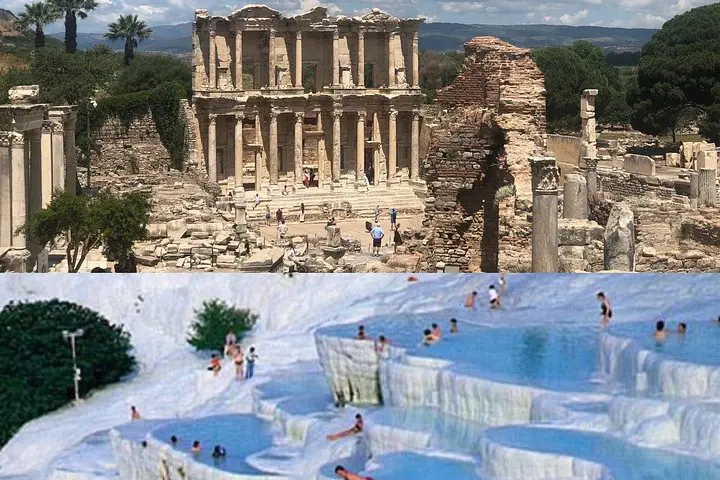
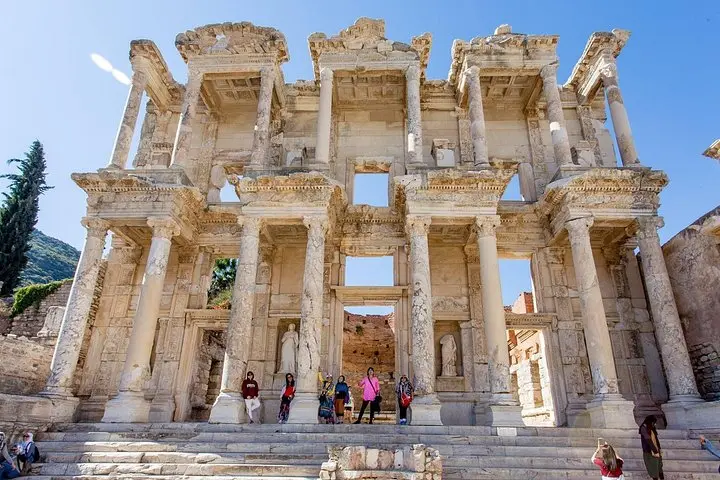
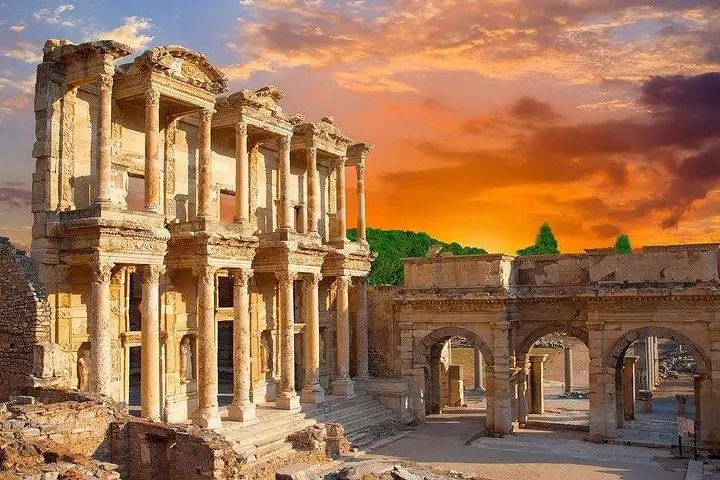
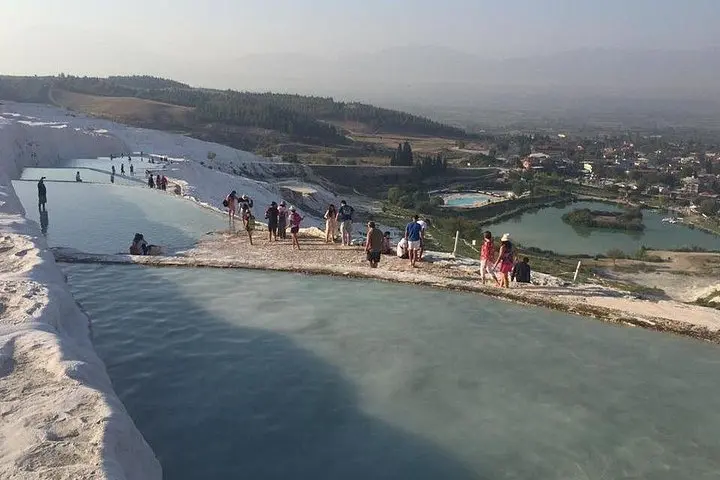
You step down from an air-conditioned van into a wind that carries salt from the Aegean and a dry heat from the Anatolian interior. The marble street of Ephesus unfurls at your feet — worn by chariot wheels, now echoing with the clicks of modern cameras — and the Celsus Library’s carved faces watch visitors pass as if keeping time.
You step down from an air-conditioned van into a wind that carries salt from the Aegean and a dry heat from the Anatolian interior. The marble street of Ephesus unfurls at your feet — worn by chariot wheels, now echoing with the clicks of modern cameras — and the Celsus Library’s carved faces watch visitors pass as if keeping time.
Ephesus was a coastal powerhouse in the Roman era, home to the Artemis cult and later a bustling provincial capital. Three hours’ drive inland the landscape pitches into limestone and hot springs; Pamukkale’s white travertine terraces—deposits of calcium carbonate from thermal water—cascade like frozen waterfalls above the ruins of Hierapolis, a spa town founded in the Hellenistic period.
Culture here is layered: Greco-Roman theaters and Byzantine churches sit above rural Anatolian villages where lunch might be a slow, savory respite in the countryside. The terraces demand gentle respect—bare feet, soft steps—because water flow and visitor behavior shape how these formations grow.
Practical guide: expect a long day (roughly 13–14 hours including drives), about 2 km of uneven walking at Ephesus with staircases at the theater, and up to 1 km on the calcite slopes at Pamukkale. Bring swimwear for thermal pools, sturdy shoes for ruins, sun protection, and a refillable water bottle. For cruise guests, timing is critical—coordinate pickup and return precisely. Travel between sites is mostly highway; motion-sickness remedies help. Pace yourself: hydrate early, eat a light lunch in the countryside, and leave time to remove shoes and cool off on the terraces before the return drive.