THE ADVENTURE COLLECTIVE® · Independent discovery and booking for outdoor travel

Drive across Erg Chebbi’s vast dunes, hear Gnawa rhythms in Khamlia and meet nomad families on a compact 4x4 and camel excursion from Merzouga. This short tour combines geology, culture and classic desert transport options with practical, experience-focused guidance.
Drive across Erg Chebbi’s vast dunes, hear Gnawa rhythms in Khamlia and meet nomad families on a compact 4x4 and camel excursion from Merzouga. This short tour combines geology, culture and classic desert transport options with practical, experience-focused guidance.
The day begins with pistons and sand: a Toyota pulls away from a low-slung guesthouse as light skims the crests of Erg Chebbi. Wind gouges slow arcs across orange dunes that shift with each breath of air, and the desert’s scale becomes a motion picture of ridgelines and soft shadows.
Verified experiences and guided adventures in the surrounding area.
Operated by Visit Merzouga · Merzouga, Drâa-Tafilalet
The day begins with pistons and sand: a Toyota pulls away from a low-slung guesthouse as light skims the crests of Erg Chebbi. Wind gouges slow arcs across orange dunes that shift with each breath of air, and the desert’s scale becomes a motion picture of ridgelines and soft shadows.
This short 4x4 excursion threads cultural stops into a geological playground. Erg Chebbi is the eastern Sahara’s large dune sea—sand deposited and sculpted by centuries of northerly and easterly winds. Nearby Mefes holds old mineral workings from the French colonial era; its scars are a reminder of the region’s extractive past. The village of Khamlia introduces Gnawa rhythm, a living West African musical tradition brought over centuries that remains central to local identity.
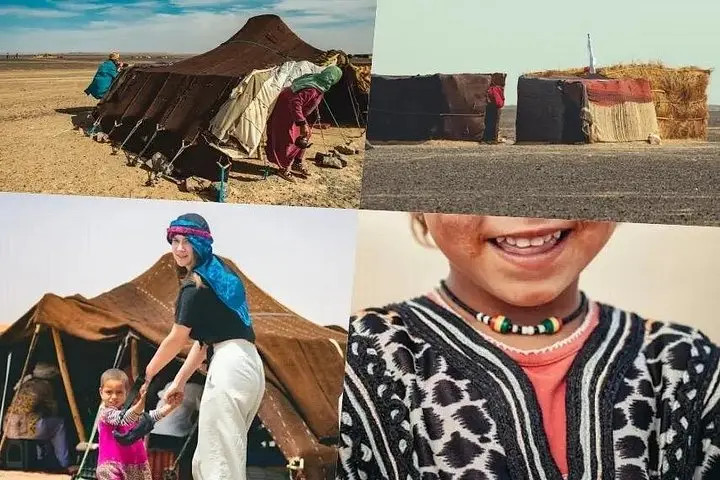
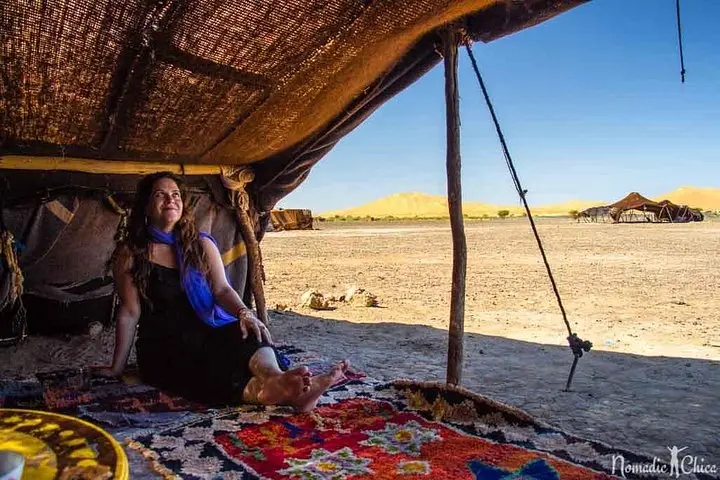
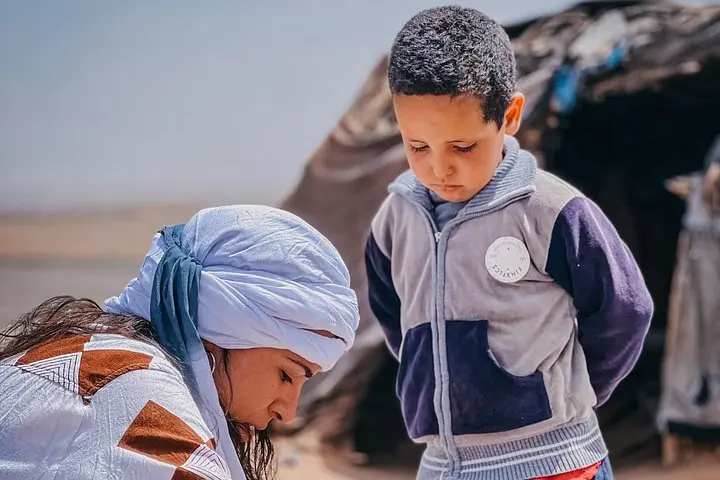
Expect quick transitions: open-road driving across hardpan, a stop at a seasonal saline lake if recent rains have filled it, a brief visit with nomad families in berber-style tents, and a photo-op on the Paris–Dakar rally line. Camel rides and optional quad segments offer different ways to read the dunes—the camel’s patient gait contrasts with the sudden lift of a quad across a wind-scoured slope.
Practical guidance: go early or late to avoid extreme heat; carry 1–2 liters of water per person for a short tour and a lightweight sun layer; wear closed-toe shoes for walking on coarse sand and around village compounds. Bring cash for tea, tips or a Gnawa performance. The route is driven by experienced guides; still, expect dust, sun, and rapidly changing conditions—plan for sun protection, a charged phone, and flexible timing if you’ll transfer to or from a desert camp.
The listed excursion is approximately two hours, with pickup/drop-off included; timing can vary slightly depending on stops and camp transfers.
No, the visit to Khamlia and a Gnawa performance is optional but customary to support local musicians; small tips are expected if you attend.
Yes — operators commonly provide hotel and desert camp pickup and drop-off within the Merzouga area; confirm your exact location when booking.
The tour is family-friendly and marked as suitable for all fitness levels, though parents should secure infants on camels and keep young children hydrated and shaded.
Visit Merzouga operates guided outdoor trips and adventures with an emphasis on safety, stewardship, and memorable experiences.
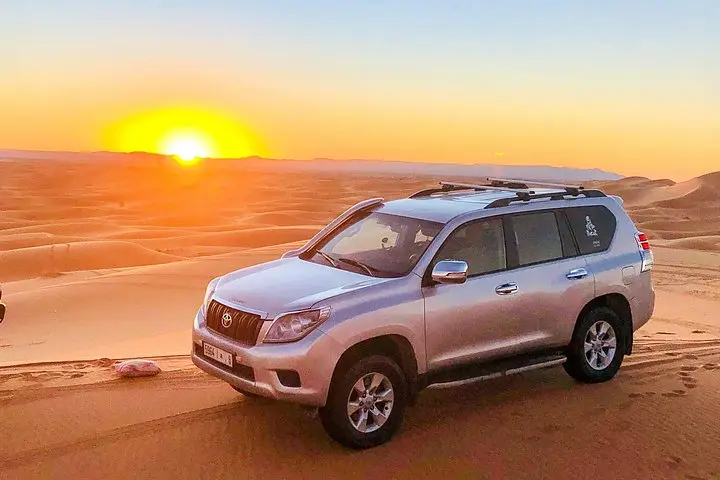
The day begins with pistons and sand: a Toyota pulls away from a low-slung guesthouse as light skims the crests of Erg Chebbi. Wind gouges slow arcs across orange dunes that shift with each breath of air, and the desert’s scale becomes a motion picture of ridgelines and soft shadows.
The day begins with pistons and sand: a Toyota pulls away from a low-slung guesthouse as light skims the crests of Erg Chebbi. Wind gouges slow arcs across orange dunes that shift with each breath of air, and the desert’s scale becomes a motion picture of ridgelines and soft shadows.
This short 4x4 excursion threads cultural stops into a geological playground. Erg Chebbi is the eastern Sahara’s large dune sea—sand deposited and sculpted by centuries of northerly and easterly winds. Nearby Mefes holds old mineral workings from the French colonial era; its scars are a reminder of the region’s extractive past. The village of Khamlia introduces Gnawa rhythm, a living West African musical tradition brought over centuries that remains central to local identity.
Expect quick transitions: open-road driving across hardpan, a stop at a seasonal saline lake if recent rains have filled it, a brief visit with nomad families in berber-style tents, and a photo-op on the Paris–Dakar rally line. Camel rides and optional quad segments offer different ways to read the dunes—the camel’s patient gait contrasts with the sudden lift of a quad across a wind-scoured slope.
Practical guidance: go early or late to avoid extreme heat; carry 1–2 liters of water per person for a short tour and a lightweight sun layer; wear closed-toe shoes for walking on coarse sand and around village compounds. Bring cash for tea, tips or a Gnawa performance. The route is driven by experienced guides; still, expect dust, sun, and rapidly changing conditions—plan for sun protection, a charged phone, and flexible timing if you’ll transfer to or from a desert camp.