THE ADVENTURE COLLECTIVE® · Independent discovery and booking for outdoor travel

A full-day 4x4 and camel excursion from Zagora to the Erg Chigaga dunes that pairs off-road desert driving with a camel trek, sand-boarding and lunch in Berber tents. Ideal for first-time Sahara visitors seeking high-impact desert time without camping overnight.
A full-day 4x4 and camel excursion from Zagora to the Erg Chigaga dunes that pairs off-road desert driving with a camel trek, sand-boarding and lunch in Berber tents. Ideal for first-time Sahara visitors seeking high-impact desert time without camping overnight.
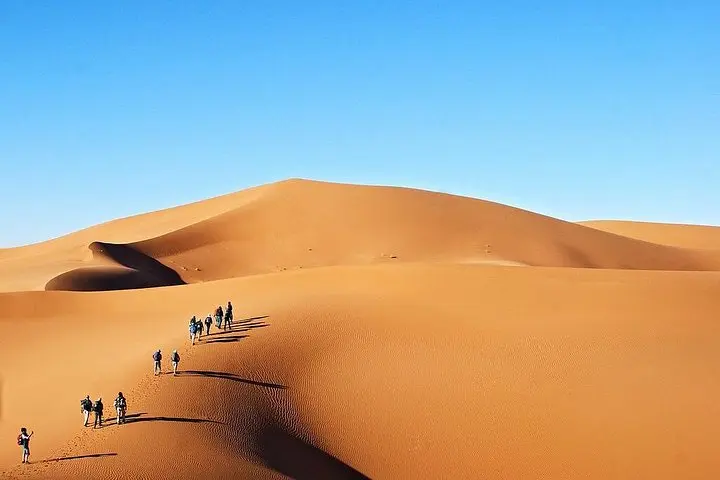
Dust lifts on the wind as the 4x4 drops off the paved road and the landscape opens into a sweep of ochre ridges. By midmorning the vehicle is climbing washboard tracks toward Chigaga, the Sahara’s vast erg where dunes rise like slow waves and the sky feels closer than at any town.
Verified experiences and guided adventures in the surrounding area.
Operated by Caravane Du Grand Erg · Zagora, Drâa-Tafilalet
Dust lifts on the wind as the 4x4 drops off the paved road and the landscape opens into a sweep of ochre ridges. By midmorning the vehicle is climbing washboard tracks toward Chigaga, the Sahara’s vast erg where dunes rise like slow waves and the sky feels closer than at any town.
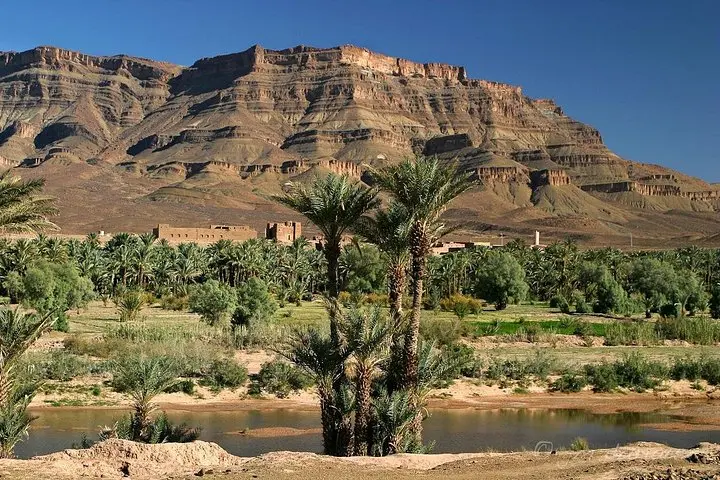
The dunes here are geologically young—wind-blown Saharan sand pushed against rocky outcrops—shaping vast crescent crests and hard-packed corridors. The route out of Zagora follows the Draa Valley, once a caravan artery between sub-Saharan oases; you’ll pass mud-brick villages, palm groves and Tamgroute, a 16th-century site known for its small Qur’anic library and distinctive underground kasbah.
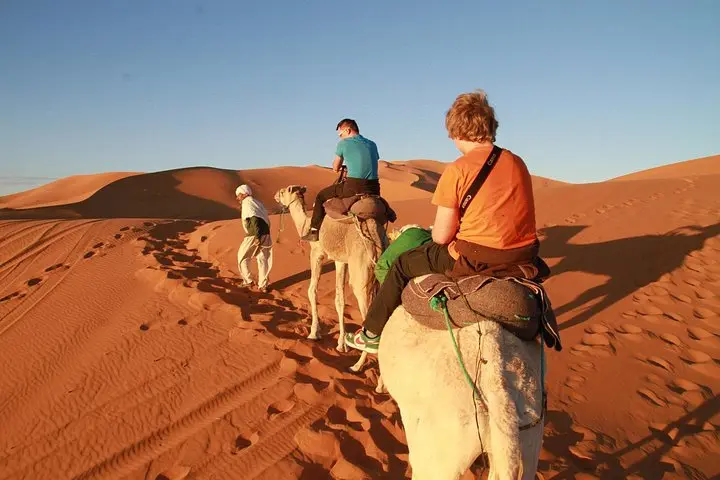
Culture arrives in small, human-scale ways: a Berber tent offering mint tea, a local guide pointing out pottery styles, camel handlers who read sand and wind as tools of travel. The dunes themselves have character—the leeward faces whisper with shifting sand, the wind carves brief sculptures, and late-afternoon light throws sharp relief across each crest.
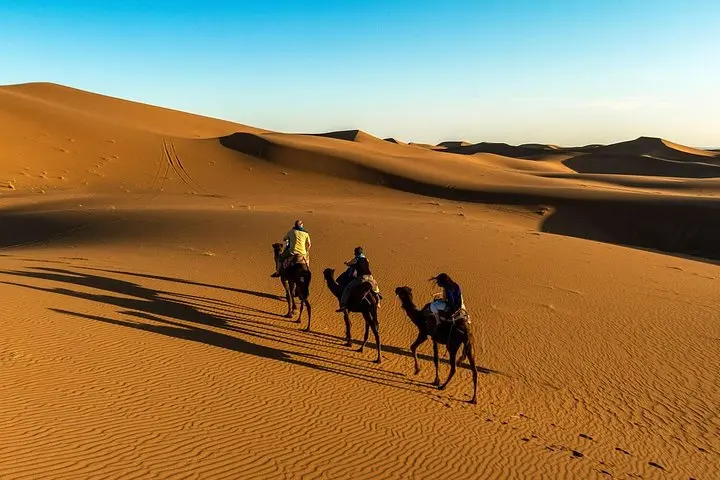
Practicalities: most trips leave Zagora early and return by evening, combining a two-hour off-road section, a short camel ride and optional sand-boarding runs. Wear closed shoes and sunscreen; bring water, a wind layer and sunglasses. Expect dry heat by day and a marked temperature drop after sunset. Photography windows are best at golden hour when shadows reveal dune texture.
For first-time visitors this day trip packs accessible desert exposure—thrilling 4x4 terrain, quiet camel time and the chance to learn local craft and history—without overnight logistics, making it an efficient way to stand on Sahara sand and feel how the desert moves you.
Expect about 1.5–2 hours of off-road driving after leaving paved roads; the tour includes scenic stops en route.
Camel rides on this day trip are short and gentle—meant for photo opportunities and a taste of traditional travel, not multi-day trekking.
Yes; sand-boarding is typically offered and uses simple boards—bring closed shoes and be prepared for soft sand landings.
Tours generally include an English-speaking driver/guide and a midday lunch in a Berber tent as part of the package.
Caravane Du Grand Erg operates guided outdoor trips and adventures with an emphasis on safety, stewardship, and memorable experiences.
Dust lifts on the wind as the 4x4 drops off the paved road and the landscape opens into a sweep of ochre ridges. By midmorning the vehicle is climbing washboard tracks toward Chigaga, the Sahara’s vast erg where dunes rise like slow waves and the sky feels closer than at any town.
Dust lifts on the wind as the 4x4 drops off the paved road and the landscape opens into a sweep of ochre ridges. By midmorning the vehicle is climbing washboard tracks toward Chigaga, the Sahara’s vast erg where dunes rise like slow waves and the sky feels closer than at any town.
The dunes here are geologically young—wind-blown Saharan sand pushed against rocky outcrops—shaping vast crescent crests and hard-packed corridors. The route out of Zagora follows the Draa Valley, once a caravan artery between sub-Saharan oases; you’ll pass mud-brick villages, palm groves and Tamgroute, a 16th-century site known for its small Qur’anic library and distinctive underground kasbah.
Culture arrives in small, human-scale ways: a Berber tent offering mint tea, a local guide pointing out pottery styles, camel handlers who read sand and wind as tools of travel. The dunes themselves have character—the leeward faces whisper with shifting sand, the wind carves brief sculptures, and late-afternoon light throws sharp relief across each crest.
Practicalities: most trips leave Zagora early and return by evening, combining a two-hour off-road section, a short camel ride and optional sand-boarding runs. Wear closed shoes and sunscreen; bring water, a wind layer and sunglasses. Expect dry heat by day and a marked temperature drop after sunset. Photography windows are best at golden hour when shadows reveal dune texture.
For first-time visitors this day trip packs accessible desert exposure—thrilling 4x4 terrain, quiet camel time and the chance to learn local craft and history—without overnight logistics, making it an efficient way to stand on Sahara sand and feel how the desert moves you.