THE ADVENTURE COLLECTIVE® · Independent discovery and booking for outdoor travel

Spend eight days moving from Asmara’s modernist avenues to the Red Sea port of Massawa, sampling Eritrea’s history, architecture, and coastal scenery. This guided multi‑day tour blends city walks, rural markets, and birding opportunities on a private‑vehicle circuit.
Spend eight days moving from Asmara’s modernist avenues to the Red Sea port of Massawa, sampling Eritrea’s history, architecture, and coastal scenery. This guided multi‑day tour blends city walks, rural markets, and birding opportunities on a private‑vehicle circuit.
You step off the transfer van into Asmara’s morning light: flat‑roofed modernist façades and café tables full of cappuccino-drinkers frame a city that still moves to the cadence of its Italian-era streets. Over eight days you cross Eritrea’s contrasts — the cool highland plateaus, terraced farms, the ochre hills around Keren, then a sudden descent to the Red Sea port of Massawa where salt and wind sharpen every sense.
Verified experiences and guided adventures in the surrounding area.
Operated by Across Africa Tours LLC · Asmara, Maekel
You step off the transfer van into Asmara’s morning light: flat‑roofed modernist façades and café tables full of cappuccino-drinkers frame a city that still moves to the cadence of its Italian-era streets. Over eight days you cross Eritrea’s contrasts — the cool highland plateaus, terraced farms, the ochre hills around Keren, then a sudden descent to the Red Sea port of Massawa where salt and wind sharpen every sense.
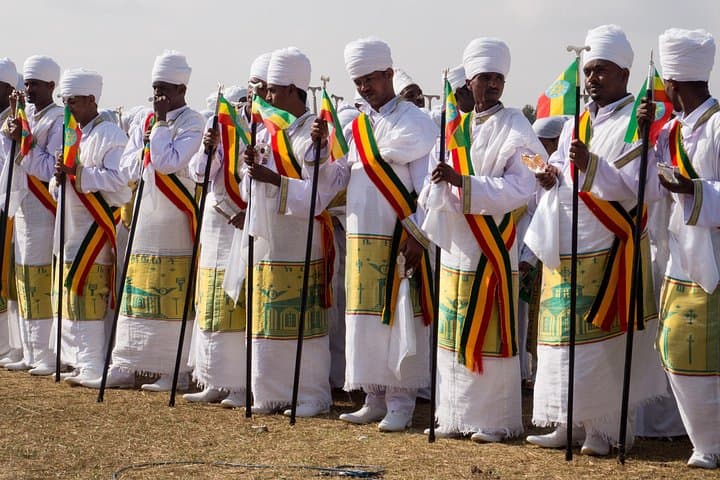
The route maps threads of history: Italian colonial architecture and Orthodox and Coptic churches in Asmara, Ottoman and Turkish influences on Massawa’s shoreline, and wartime cemeteries around Keren that recall North Africa’s 20th‑century battles. Geology shifts with the journey — fertile highlands give way to semiarid coastal plains and coral-fringed shoals. Local culture is equally layered: farmers in traditional dress, lively markets, mosque courtyards, and coastal fishing communities whose livelihoods are tied to the Red Sea.
Practically, expect long but manageable drives in a private vehicle and daily guided walks through towns and markets. Accommodation is city hotels with included breakfast and dinner most nights. Bring sturdy walking shoes for uneven streets and a light layer for cool highland evenings; sunscreen, a refillable water bottle, and a small daypack will keep you mobile. Carry original passport documents for checkpoints and arrange travel insurance that covers medical evacuation. For photographers and birders, the Filfil stretch and Massawa’s waterfront are the richest windows into Eritrea’s natural and cultural contrasts.
Most nationalities require a visa; check Eritrean embassy guidance well before travel and ensure passport validity exceeds six months.
Daily activity typically includes guided city walks and short excursions; long drives connect locations but hiking is minimal.
Breakfast and dinner are provided on most nights as noted in the itinerary; plan for occasional lunches at local cafés or en route stops.
The tour is listed as wheelchair and stroller accessible, but some historic sites have uneven surfaces—confirm specifics with the operator before booking.
Across Africa Tours LLC operates guided outdoor trips and adventures with an emphasis on safety, stewardship, and memorable experiences.


You step off the transfer van into Asmara’s morning light: flat‑roofed modernist façades and café tables full of cappuccino-drinkers frame a city that still moves to the cadence of its Italian-era streets. Over eight days you cross Eritrea’s contrasts — the cool highland plateaus, terraced farms, the ochre hills around Keren, then a sudden descent to the Red Sea port of Massawa where salt and wind sharpen every sense.
You step off the transfer van into Asmara’s morning light: flat‑roofed modernist façades and café tables full of cappuccino-drinkers frame a city that still moves to the cadence of its Italian-era streets. Over eight days you cross Eritrea’s contrasts — the cool highland plateaus, terraced farms, the ochre hills around Keren, then a sudden descent to the Red Sea port of Massawa where salt and wind sharpen every sense.
The route maps threads of history: Italian colonial architecture and Orthodox and Coptic churches in Asmara, Ottoman and Turkish influences on Massawa’s shoreline, and wartime cemeteries around Keren that recall North Africa’s 20th‑century battles. Geology shifts with the journey — fertile highlands give way to semiarid coastal plains and coral-fringed shoals. Local culture is equally layered: farmers in traditional dress, lively markets, mosque courtyards, and coastal fishing communities whose livelihoods are tied to the Red Sea.
Practically, expect long but manageable drives in a private vehicle and daily guided walks through towns and markets. Accommodation is city hotels with included breakfast and dinner most nights. Bring sturdy walking shoes for uneven streets and a light layer for cool highland evenings; sunscreen, a refillable water bottle, and a small daypack will keep you mobile. Carry original passport documents for checkpoints and arrange travel insurance that covers medical evacuation. For photographers and birders, the Filfil stretch and Massawa’s waterfront are the richest windows into Eritrea’s natural and cultural contrasts.