THE ADVENTURE COLLECTIVE® · Independent discovery and booking for outdoor travel

A three-day overland loop into the Danakil Depression to see Dallol’s acid springs, Lake Assale’s salt flats, and Erta Ale’s persistent lava lake. Expect long drives, desert heat, simple camps, and a short night scramble to the crater rim for unforgettable molten views.
A three-day overland loop into the Danakil Depression to see Dallol’s acid springs, Lake Assale’s salt flats, and Erta Ale’s persistent lava lake. Expect long drives, desert heat, simple camps, and a short night scramble to the crater rim for unforgettable molten views.
Night drives cut through heat-hazed plains and headlights pick out low stone huts as the convoy threads toward a rim of black rock. By late evening you’re approached by the glow — a permanent lava lake bubbling deep in the Erta Ale caldera — its orange surface throwing long, molten reflections across the otherwise starlit desert.
Verified experiences and guided adventures in the surrounding area.
Operated by Ethio Danakil Tours and Travel · Semera, Afar Region
Night drives cut through heat-hazed plains and headlights pick out low stone huts as the convoy threads toward a rim of black rock. By late evening you’re approached by the glow — a permanent lava lake bubbling deep in the Erta Ale caldera — its orange surface throwing long, molten reflections across the otherwise starlit desert.
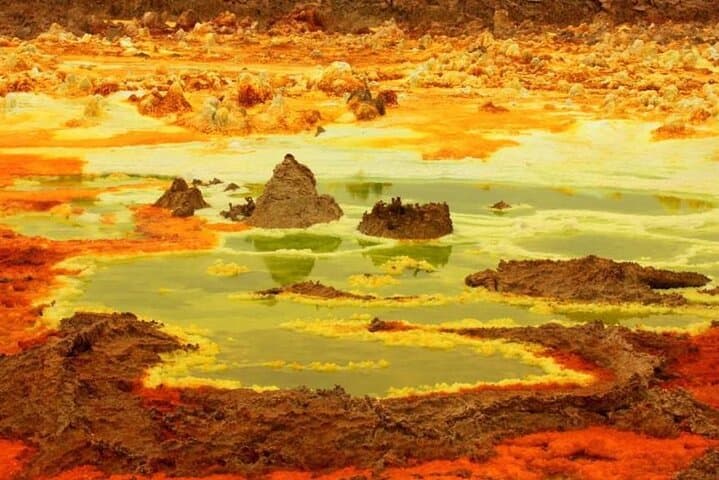
The Danakil Depression is geologic theatre: a spreading rift, salt flats scabbed white, and neon sulfur pools at Dallol where hydrothermal activity paints the ground acid-bright. Erta Ale itself is a basaltic shield volcano, roughly 613 m above sea level, sitting inside one of the lowest landscapes on Earth. Local Afar communities have harvested salt here for centuries; caravans still move slabs across flats in traditional fashion.
Expect long overland drives (several hours per day) on unpaved tracks, sandy corrugations, and salt-crusted plains. The approach to Erta Ale includes a final hike and scramble over uneven volcanic rock — short but technical at night — with elevation change measured in hundreds of meters between low desert camps and the crater rim. Temperatures commonly exceed 40–45 °C (104–113 °F) by day and drop markedly after sundown.
Practical guidance: travel with an experienced local guide, carry at least 3–4 liters of water per person per day, sun protection, and a headlamp for the night ascent. Camp facilities are basic — bring a sleeping pad and warm layer for cold desert nights. Respect fragile hydrothermal pools and follow guides’ instructions near the crater; volcanic terrain is unstable and conditions change rapidly.
This is raw, elemental travel: physically demanding, logistically remote, and uniquely rewarding for those ready to trade comfort for incandescent views and a firsthand look at active Earth.
No — the tour involves long overland driving, desert heat, and short but rocky night hikes; travelers with cardiovascular or spinal issues are advised not to join.
Entry and travel through the Afar region are regulated; organized tours handle local permits and liaison with authorities — independent travel is not recommended.
Accommodation is basic desert camping in provided tents or local-style camps; expect minimal facilities and bring a sleeping pad and warm layer for cold nights.
Cooler months (November–March) are preferable to avoid peak daytime heat, but nights can still be chilly — plan accordingly.
Ethio Danakil Tours and Travel operates guided outdoor trips and adventures with an emphasis on safety, stewardship, and memorable experiences.
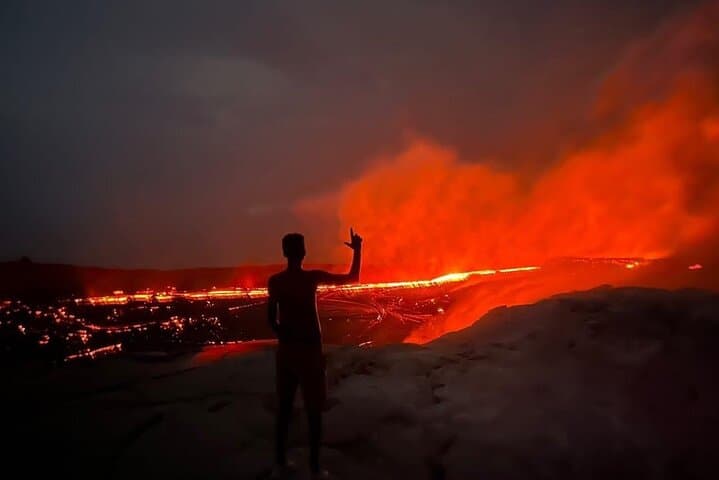
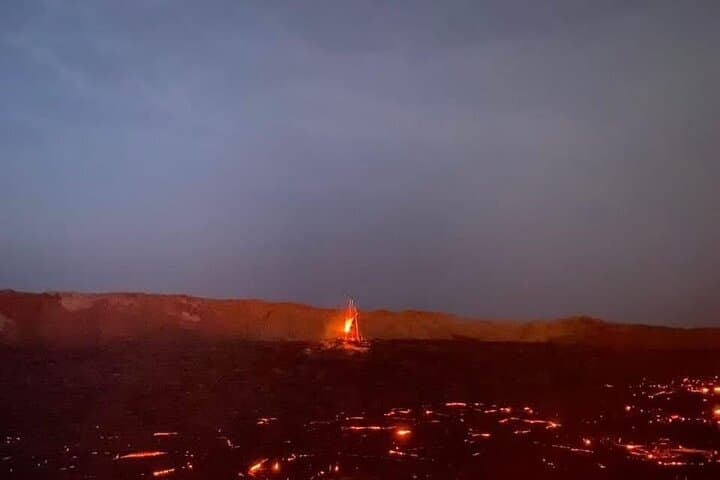
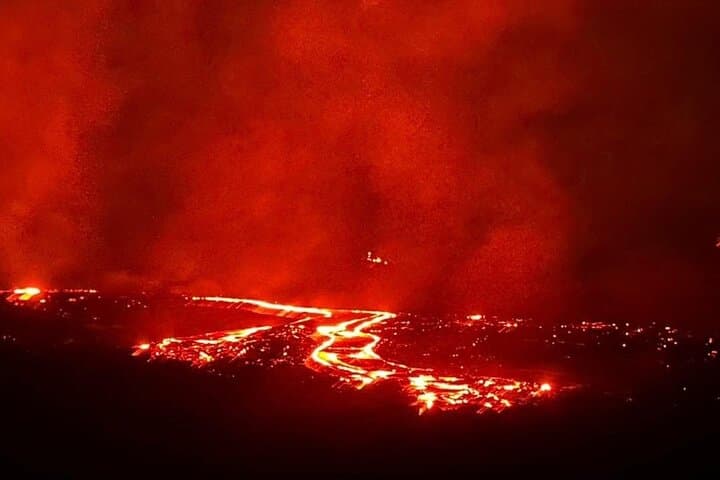
Night drives cut through heat-hazed plains and headlights pick out low stone huts as the convoy threads toward a rim of black rock. By late evening you’re approached by the glow — a permanent lava lake bubbling deep in the Erta Ale caldera — its orange surface throwing long, molten reflections across the otherwise starlit desert.
Night drives cut through heat-hazed plains and headlights pick out low stone huts as the convoy threads toward a rim of black rock. By late evening you’re approached by the glow — a permanent lava lake bubbling deep in the Erta Ale caldera — its orange surface throwing long, molten reflections across the otherwise starlit desert.
The Danakil Depression is geologic theatre: a spreading rift, salt flats scabbed white, and neon sulfur pools at Dallol where hydrothermal activity paints the ground acid-bright. Erta Ale itself is a basaltic shield volcano, roughly 613 m above sea level, sitting inside one of the lowest landscapes on Earth. Local Afar communities have harvested salt here for centuries; caravans still move slabs across flats in traditional fashion.
Expect long overland drives (several hours per day) on unpaved tracks, sandy corrugations, and salt-crusted plains. The approach to Erta Ale includes a final hike and scramble over uneven volcanic rock — short but technical at night — with elevation change measured in hundreds of meters between low desert camps and the crater rim. Temperatures commonly exceed 40–45 °C (104–113 °F) by day and drop markedly after sundown.
Practical guidance: travel with an experienced local guide, carry at least 3–4 liters of water per person per day, sun protection, and a headlamp for the night ascent. Camp facilities are basic — bring a sleeping pad and warm layer for cold desert nights. Respect fragile hydrothermal pools and follow guides’ instructions near the crater; volcanic terrain is unstable and conditions change rapidly.
This is raw, elemental travel: physically demanding, logistically remote, and uniquely rewarding for those ready to trade comfort for incandescent views and a firsthand look at active Earth.