THE ADVENTURE COLLECTIVE® · Independent discovery and booking for outdoor travel

White sand and shallow turquoise water define Es Trenc, a largely undeveloped stretch of Mallorca’s southern coast. This day tour with hotel pickup delivers easy access, historical salt pans, and wartime bunkers—bring water, sun protection and a light bag for a brief walk to the shore.
White sand and shallow turquoise water define Es Trenc, a largely undeveloped stretch of Mallorca’s southern coast. This day tour with hotel pickup delivers easy access, historical salt pans, and wartime bunkers—bring water, sun protection and a light bag for a brief walk to the shore.
You step off the bus onto a narrow scrub-lined track and the beach opens: a stretch of white sand that runs like a pale ribbon into the turquoise Mediterranean. Wind moves the dunes; a low chorus of waves and distant gulls fills the air. The walk from the parking is brief — roughly 400 meters — but it’s the small ritual that separates the shore from the road and the rest of the island.
Verified experiences and guided adventures in the surrounding area.
Operated by Fun and Tickets · Colònia de Sant Jordi, Balearic Islands
You step off the bus onto a narrow scrub-lined track and the beach opens: a stretch of white sand that runs like a pale ribbon into the turquoise Mediterranean. Wind moves the dunes; a low chorus of waves and distant gulls fills the air. The walk from the parking is brief — roughly 400 meters — but it’s the small ritual that separates the shore from the road and the rest of the island.
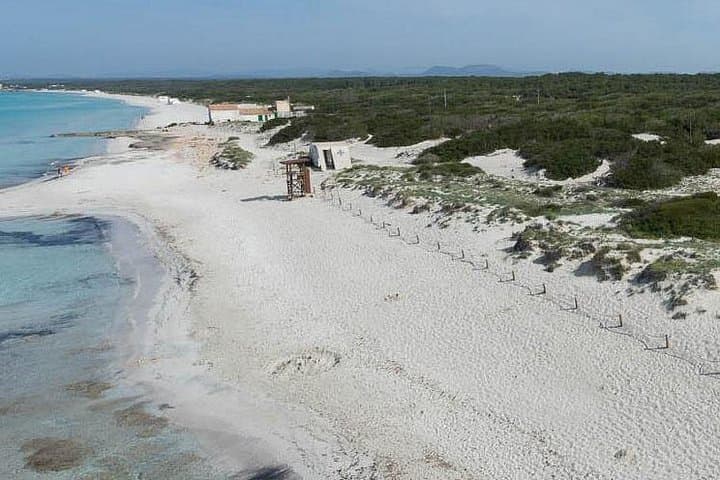
Es Trenc sits on Mallorca’s southern plain between Colònia de Sant Jordi and Sa Ràpita. Geologically it’s a coastal sediment system: longshore currents have piled fine carbonate sand across a 9‑km beach line while inland salt pans chronicle millennia of marine evaporation. The saltworks here date back to pre-Roman times, later reused by Phoenicians and Romans, and mid‑20th‑century concrete bunkers remain as stark, low-lying sentinels on the sand.
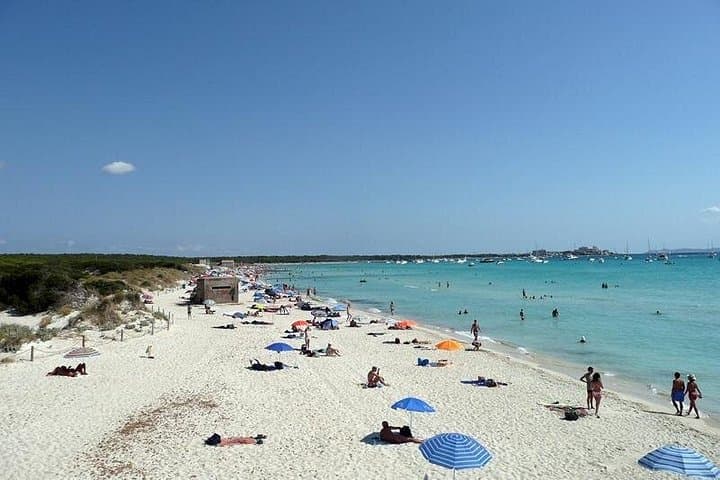
Expect an open, exposed coastline rather than commercial development — Es Trenc is part of a protected area so there are few permanent facilities. Practical tips: bring water, shade and sun protection; refreshments are available at nearby supermarkets at the access roundabout but not on the sands. There are no included beach loungers or umbrellas; plan on carrying what you need across the short dune walk.
Timing matters — mornings and late afternoons have softer light and fewer people; July–August is busiest. Respect signage around the salt pans and nesting birds, pack out waste, and keep to the visible paths. The simplicity of Es Trenc is the point: wide sky, clear water, and a coastline that still feels fundamentally natural.
No — the beach is undeveloped and sunbeds/umbrellas are not provided; bring your own or buy locally at beach shops in nearby towns.
About 400 meters across a sandy path from the parking to the beach entry; expect uneven sand underfoot.
Yes — the operator notes stroller accessibility, but sand limits mobility on the shore itself and infants must sit on laps during transit.
There are no facilities on the sand; small supermarkets and kiosks are available at the beach entrance roundabout where you can purchase refreshments before the short walk.
Fun and Tickets operates guided outdoor trips and adventures with an emphasis on safety, stewardship, and memorable experiences.
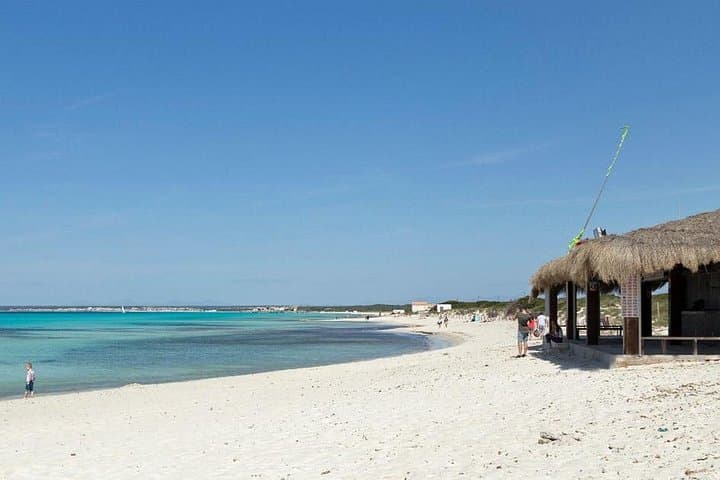

You step off the bus onto a narrow scrub-lined track and the beach opens: a stretch of white sand that runs like a pale ribbon into the turquoise Mediterranean. Wind moves the dunes; a low chorus of waves and distant gulls fills the air. The walk from the parking is brief — roughly 400 meters — but it’s the small ritual that separates the shore from the road and the rest of the island.
You step off the bus onto a narrow scrub-lined track and the beach opens: a stretch of white sand that runs like a pale ribbon into the turquoise Mediterranean. Wind moves the dunes; a low chorus of waves and distant gulls fills the air. The walk from the parking is brief — roughly 400 meters — but it’s the small ritual that separates the shore from the road and the rest of the island.
Es Trenc sits on Mallorca’s southern plain between Colònia de Sant Jordi and Sa Ràpita. Geologically it’s a coastal sediment system: longshore currents have piled fine carbonate sand across a 9‑km beach line while inland salt pans chronicle millennia of marine evaporation. The saltworks here date back to pre-Roman times, later reused by Phoenicians and Romans, and mid‑20th‑century concrete bunkers remain as stark, low-lying sentinels on the sand.
Expect an open, exposed coastline rather than commercial development — Es Trenc is part of a protected area so there are few permanent facilities. Practical tips: bring water, shade and sun protection; refreshments are available at nearby supermarkets at the access roundabout but not on the sands. There are no included beach loungers or umbrellas; plan on carrying what you need across the short dune walk.
Timing matters — mornings and late afternoons have softer light and fewer people; July–August is busiest. Respect signage around the salt pans and nesting birds, pack out waste, and keep to the visible paths. The simplicity of Es Trenc is the point: wide sky, clear water, and a coastline that still feels fundamentally natural.