THE ADVENTURE COLLECTIVE® · Independent discovery and booking for outdoor travel

Just over 100 km from Bangkok, Suphan Buri offers an unhurried blend of lowland landscapes, living history and craft traditions. This day trip pairs oversized temple art, a dragon-shaped history museum and a benjarong porcelain factory with easy walking and local color.
Just over 100 km from Bangkok, Suphan Buri offers an unhurried blend of lowland landscapes, living history and craft traditions. This day trip pairs oversized temple art, a dragon-shaped history museum and a benjarong porcelain factory with easy walking and local color.
You step out of Bangkok’s hum into a different tempo: rice fields flatten to the horizon, a slow river threads the plain, and temple roofs puncture the sky. Ninety minutes from the capital (about 102 km), Suphan Buri is a province where agriculture shapes the daily rhythm and history sits within everyday life.
Verified experiences and guided adventures in the surrounding area.
Operated by Sunleisure World · Suphan Buri, Suphan Buri Province
You step out of Bangkok’s hum into a different tempo: rice fields flatten to the horizon, a slow river threads the plain, and temple roofs puncture the sky. Ninety minutes from the capital (about 102 km), Suphan Buri is a province where agriculture shapes the daily rhythm and history sits within everyday life.
The route follows the Tha Chin River corridor — an old trade artery that helped the city rise in the medieval period — so you’ll encounter relics of Rattanakosin and Ayutthaya-era influence in its wihans and statues. Geologically the landscape is low-lying alluvial plain, which explains the network of canals, fish ponds and fertile paddies that feed local cottage industries like benjarong ceramics.
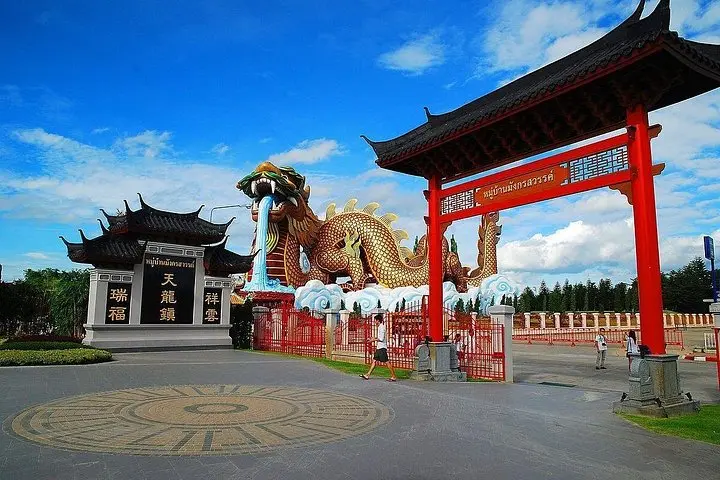
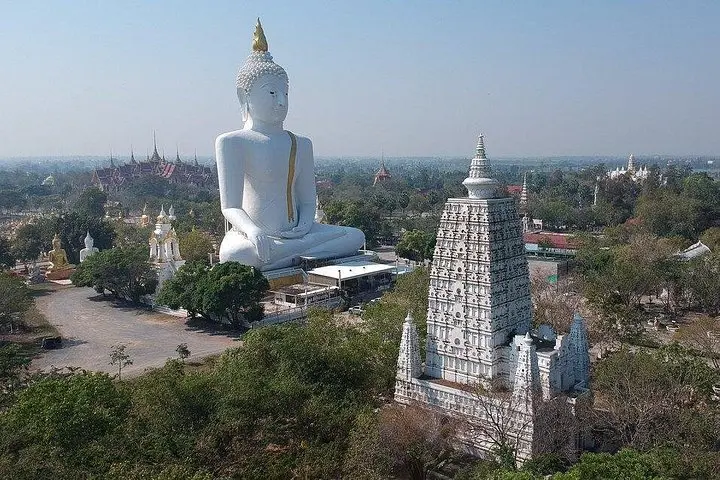
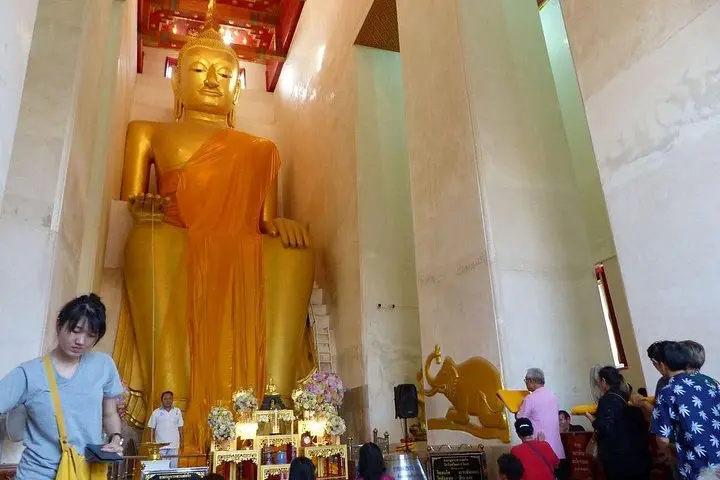
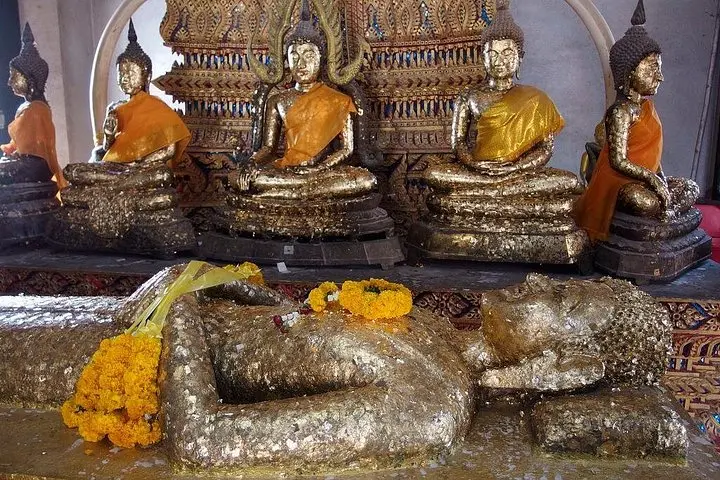
Culturally the trip balances devotional stops and hands-on craft: Wat Pa Laylai’s 23.46 m Luang Pho To, the giant fiberglass Dragon Descendants Village (135 m long) and the reclining granite Buddha at Wat Pra Non give different scales of Thai religious art, while a benjarong factory demonstrates five-color porcelain techniques passed between families.
Practically: this is a full-day, private, air‑conditioned circuit with hotel pickup and lunch included. Expect easy walking between temple grounds and factory floors; temple dress codes are enforced. Mornings are cooler and quieter for photos; the rainy season brings sudden showers that can muddy side roads. Bring cash for small donations and crafts, wear supportive shoes for uneven temple steps, and carry mosquito repellent and a refillable water bottle to stay comfortable.
For travelers wanting quiet cultural immersion without trekking or extreme activity, Suphan Buri delivers straightforward history, working landscapes and unhurried local life.
The drive is roughly 90–120 minutes each way depending on traffic; the full tour runs about 8–10 hours including stops.
Yes—shoulders and knees should be covered and revealing clothes may be refused entry; remove shoes when entering image halls unless signage says otherwise.
This tour typically includes hotel pickup, drop-off and a set lunch; confirm any dietary needs at booking.
Yes—the dragon’s interior is family-friendly and museum-style, though some tight corridors and steps may challenge small children.
Sunleisure World operates guided outdoor trips and adventures with an emphasis on safety, stewardship, and memorable experiences.
You step out of Bangkok’s hum into a different tempo: rice fields flatten to the horizon, a slow river threads the plain, and temple roofs puncture the sky. Ninety minutes from the capital (about 102 km), Suphan Buri is a province where agriculture shapes the daily rhythm and history sits within everyday life.
You step out of Bangkok’s hum into a different tempo: rice fields flatten to the horizon, a slow river threads the plain, and temple roofs puncture the sky. Ninety minutes from the capital (about 102 km), Suphan Buri is a province where agriculture shapes the daily rhythm and history sits within everyday life.
The route follows the Tha Chin River corridor — an old trade artery that helped the city rise in the medieval period — so you’ll encounter relics of Rattanakosin and Ayutthaya-era influence in its wihans and statues. Geologically the landscape is low-lying alluvial plain, which explains the network of canals, fish ponds and fertile paddies that feed local cottage industries like benjarong ceramics.
Culturally the trip balances devotional stops and hands-on craft: Wat Pa Laylai’s 23.46 m Luang Pho To, the giant fiberglass Dragon Descendants Village (135 m long) and the reclining granite Buddha at Wat Pra Non give different scales of Thai religious art, while a benjarong factory demonstrates five-color porcelain techniques passed between families.
Practically: this is a full-day, private, air‑conditioned circuit with hotel pickup and lunch included. Expect easy walking between temple grounds and factory floors; temple dress codes are enforced. Mornings are cooler and quieter for photos; the rainy season brings sudden showers that can muddy side roads. Bring cash for small donations and crafts, wear supportive shoes for uneven temple steps, and carry mosquito repellent and a refillable water bottle to stay comfortable.
For travelers wanting quiet cultural immersion without trekking or extreme activity, Suphan Buri delivers straightforward history, working landscapes and unhurried local life.