THE ADVENTURE COLLECTIVE® · Independent discovery and booking for outdoor travel

Ride a camel along Essaouira’s sweeping beach and dunes as the Atlantic paints the sky. This three‑hour tour mixes coastal scenery, local snacks and a gentle glimpse into the city’s seafaring culture.
Ride a camel along Essaouira’s sweeping beach and dunes as the Atlantic paints the sky. This three‑hour tour mixes coastal scenery, local snacks and a gentle glimpse into the city’s seafaring culture.
A slow, rhythmic procession of camels moves along wind-scoured sand as the Atlantic throws long light across the horizon. Salted breeze and the faint clatter of fishing boats set the tempo; you feel the animal’s steady sway beneath you while the shore stretches from pine forest to open dune.
Verified experiences and guided adventures in the surrounding area.
Operated by Diana Dromadaires · Essaouira, Marrakesh-Safi
A slow, rhythmic procession of camels moves along wind-scoured sand as the Atlantic throws long light across the horizon. Salted breeze and the faint clatter of fishing boats set the tempo; you feel the animal’s steady sway beneath you while the shore stretches from pine forest to open dune.
Essaouira’s shoreline tells a layered story: a fortified 18th-century port carved out under Alaouite rule, older Portuguese defensive works glazing the headlands, and a coastline shaped by Atlantic swells and wind that sweep sand into mobile dunes. Local life threads through the scene—fishers hauling blue-netted catches at the harbour, women preparing Amlou and mint tea, and shepherds guiding small flocks beyond the palms.
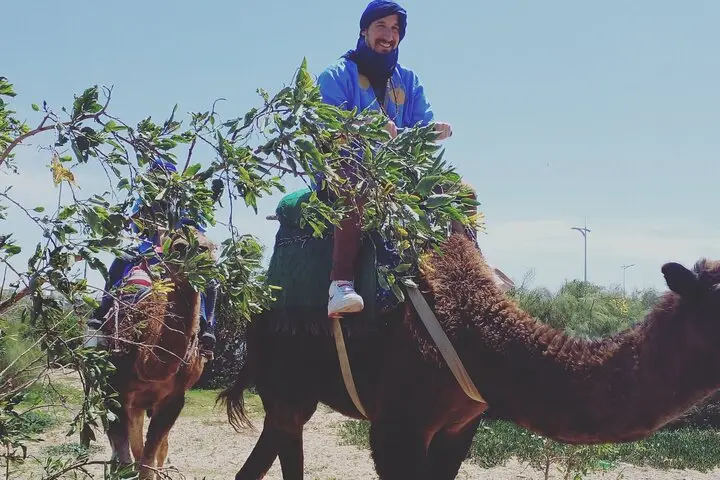
The camel route typically crosses packed beach, soft dunes and a stretch of maritime pine edge; expect mostly level terrain, about 5–8 km covered in three hours at a leisurely pace. Weather can shift quickly—sea wind sharpens in the afternoon and sunsets concentrate the chill once the sun slips.
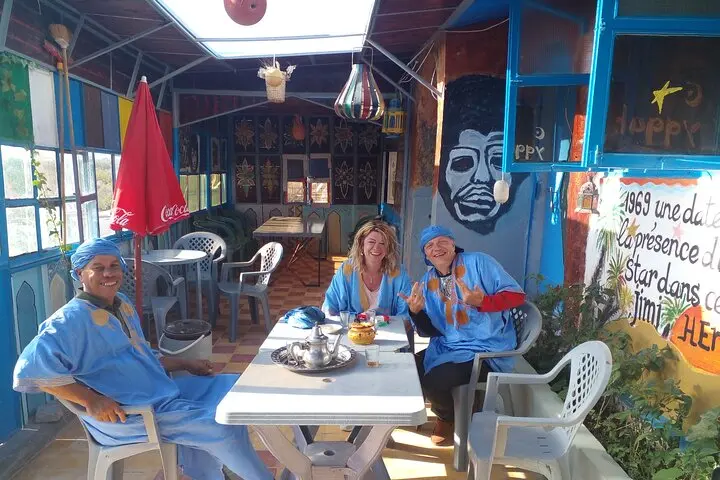
Practical guidance: book a small-group or private departure near late afternoon for the classic sunset light; wear closed-toe shoes for shifting sand, bring layered sun protection and at least 1–1.5 L of water. Cameras and phones are fine but secure them—cameras can swing on the animal. The operator usually provides bottled water, a short snack and a cultural pause for mint tea and homemade cake fronting the ocean.
This is an accessible, low-impact way to touch coastal Morocco’s landscape and rhythms—respect handlers’ directions and avoid approaching wildlife or fragile dune vegetation.
Yes—families commonly take this tour; infants must sit on an adult’s lap and guides will advise on safety during mounting.
Wear closed-toe shoes, sun protection (hat, sunscreen), and layers for cooler post-sunset breeze.
Meetings are usually near Essaouira beach access points; many operators offer hotel pickup—confirm at booking.
Local guides and handlers are experienced with beach rides; follow their directions and inform them of health concerns before departure.
Diana Dromadaires operates guided outdoor trips and adventures with an emphasis on safety, stewardship, and memorable experiences.
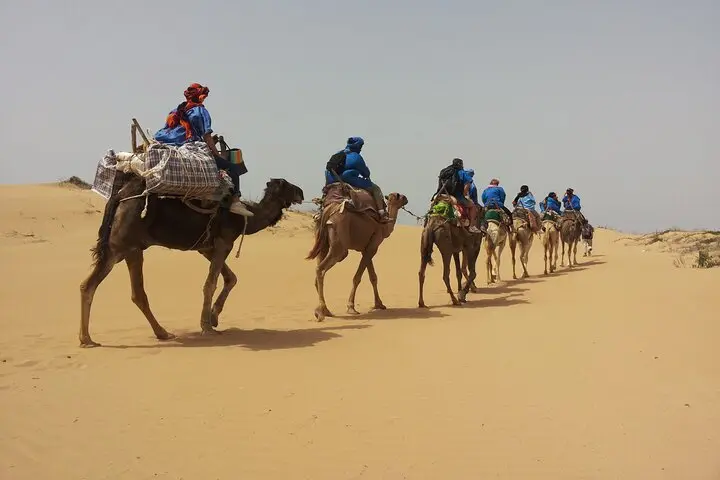
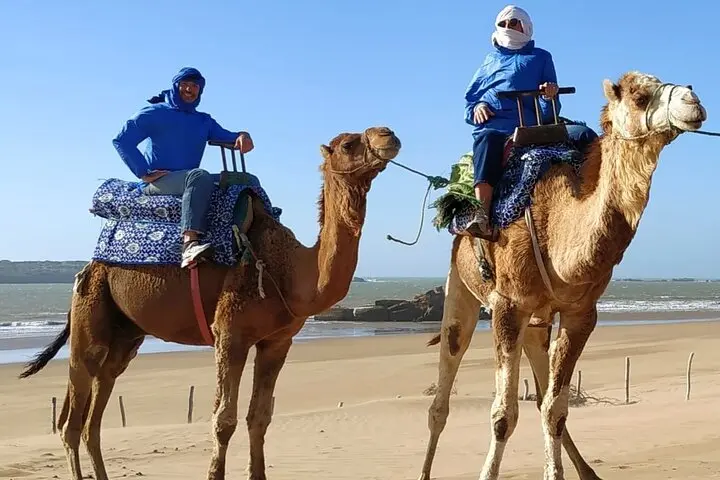
A slow, rhythmic procession of camels moves along wind-scoured sand as the Atlantic throws long light across the horizon. Salted breeze and the faint clatter of fishing boats set the tempo; you feel the animal’s steady sway beneath you while the shore stretches from pine forest to open dune.
A slow, rhythmic procession of camels moves along wind-scoured sand as the Atlantic throws long light across the horizon. Salted breeze and the faint clatter of fishing boats set the tempo; you feel the animal’s steady sway beneath you while the shore stretches from pine forest to open dune.
Essaouira’s shoreline tells a layered story: a fortified 18th-century port carved out under Alaouite rule, older Portuguese defensive works glazing the headlands, and a coastline shaped by Atlantic swells and wind that sweep sand into mobile dunes. Local life threads through the scene—fishers hauling blue-netted catches at the harbour, women preparing Amlou and mint tea, and shepherds guiding small flocks beyond the palms.
The camel route typically crosses packed beach, soft dunes and a stretch of maritime pine edge; expect mostly level terrain, about 5–8 km covered in three hours at a leisurely pace. Weather can shift quickly—sea wind sharpens in the afternoon and sunsets concentrate the chill once the sun slips.
Practical guidance: book a small-group or private departure near late afternoon for the classic sunset light; wear closed-toe shoes for shifting sand, bring layered sun protection and at least 1–1.5 L of water. Cameras and phones are fine but secure them—cameras can swing on the animal. The operator usually provides bottled water, a short snack and a cultural pause for mint tea and homemade cake fronting the ocean.
This is an accessible, low-impact way to touch coastal Morocco’s landscape and rhythms—respect handlers’ directions and avoid approaching wildlife or fragile dune vegetation.