THE ADVENTURE COLLECTIVE® · Independent discovery and booking for outdoor travel

Head to Essaouira on a full-day escape from Agadir to walk its UNESCO medina, climb the sea-facing ramparts, and visit a working argan cooperative. Expect cobbled lanes, brisk Atlantic winds, and a mix of cultural sights and seaside calm.
Head to Essaouira on a full-day escape from Agadir to walk its UNESCO medina, climb the sea-facing ramparts, and visit a working argan cooperative. Expect cobbled lanes, brisk Atlantic winds, and a mix of cultural sights and seaside calm.
A salt wind tugs at your jacket as the bus eases toward Essaouira’s low skyline — whitewashed houses, the lumbering silhouette of the old port and cannons on the ramparts. By the time you step down into the medina, the Atlantic is already working on the town: gulls wheel, fishing boats bob, and the air carries a briny, spice-tinged hush.
Verified experiences and guided adventures in the surrounding area.
Operated by Agadir Bouffi Tours · Essaouira, Marrakech-Safi
A salt wind tugs at your jacket as the bus eases toward Essaouira’s low skyline — whitewashed houses, the lumbering silhouette of the old port and cannons on the ramparts. By the time you step down into the medina, the Atlantic is already working on the town: gulls wheel, fishing boats bob, and the air carries a briny, spice-tinged hush.
Essaouira, historically known as Mogador, was reshaped in the 18th century by Sultan Sidi Mohamed ben Abdallah into a fortified Atlantic port with wide corridors and European-style ramparts. The town’s geology is plain and coastal: sandy beaches, exposed limestone outcrops, and shallow offshore shelves that pull in strong winds — one reason the town became a wind- and kitesurfing hub.
Culture here is blunt and tactile: craftsmen in the medina carve thuya wood, women at argan cooperatives press oil in meetings that blend production and social enterprise. The Skala du Port’s cannons still aim at the ocean, offering a panoramic counterpoint to the narrow souk alleys.
Practical guidance: this full-day itinerary (about nine hours including transit) involves long periods of walking on uneven cobbles and time on the coach between Agadir and Essaouira (roughly 2.5–3 hours each way). Bring layered wind protection, sturdy shoes for cobbles, cash for small purchases, and plan your visit early or late in the day to avoid the strongest sun and crowds. Respect local customs when photographing people and support argan cooperatives directly to ensure economic benefit stays local.
Expect roughly 2.5–3 hours each way by air-conditioned coach, depending on traffic and stops.
Meals are typically not included; the itinerary allows free time to eat in the medina where seafood and local cafés are available.
Parts of the medina and the beachfront promenade are accessible, but many streets are narrow and cobbled; visitors with mobility concerns should check accessibility with the operator in advance.
Yes — buying directly from a cooperative supports local producers; look for cooperatives that explain production and allow sampling before purchase.
Agadir Bouffi Tours operates guided outdoor trips and adventures with an emphasis on safety, stewardship, and memorable experiences.
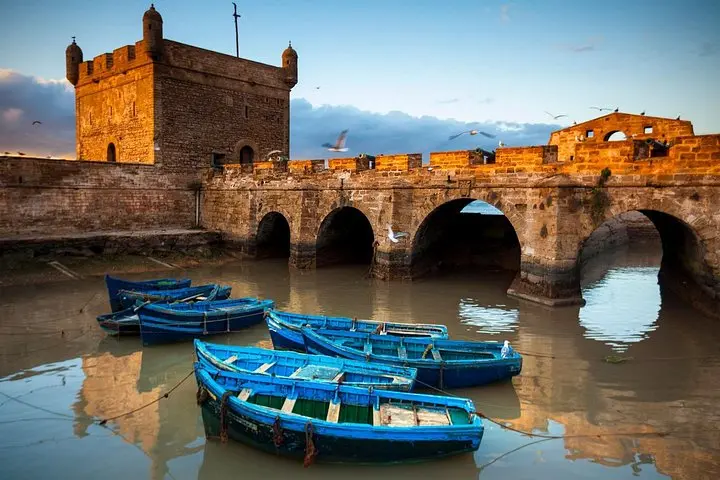
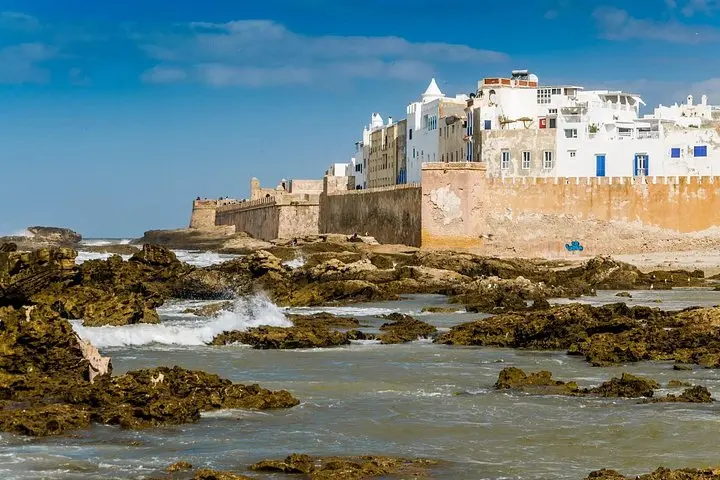
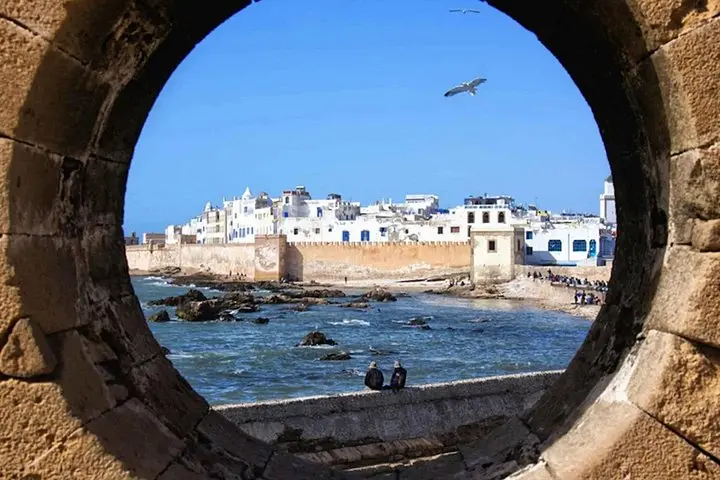
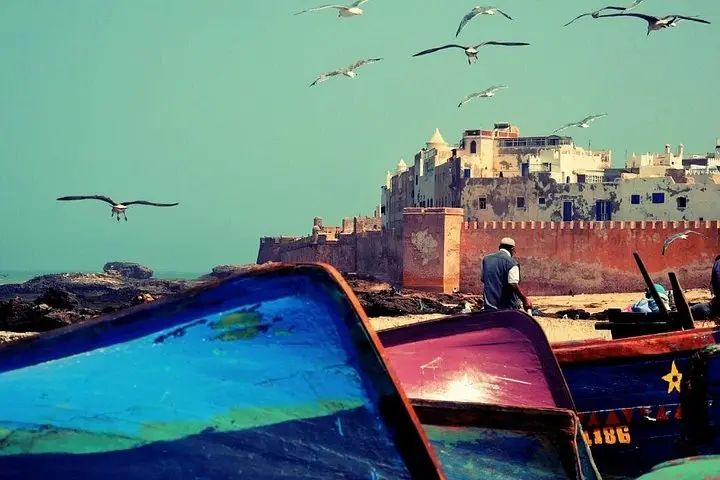
A salt wind tugs at your jacket as the bus eases toward Essaouira’s low skyline — whitewashed houses, the lumbering silhouette of the old port and cannons on the ramparts. By the time you step down into the medina, the Atlantic is already working on the town: gulls wheel, fishing boats bob, and the air carries a briny, spice-tinged hush.
A salt wind tugs at your jacket as the bus eases toward Essaouira’s low skyline — whitewashed houses, the lumbering silhouette of the old port and cannons on the ramparts. By the time you step down into the medina, the Atlantic is already working on the town: gulls wheel, fishing boats bob, and the air carries a briny, spice-tinged hush.
Essaouira, historically known as Mogador, was reshaped in the 18th century by Sultan Sidi Mohamed ben Abdallah into a fortified Atlantic port with wide corridors and European-style ramparts. The town’s geology is plain and coastal: sandy beaches, exposed limestone outcrops, and shallow offshore shelves that pull in strong winds — one reason the town became a wind- and kitesurfing hub.
Culture here is blunt and tactile: craftsmen in the medina carve thuya wood, women at argan cooperatives press oil in meetings that blend production and social enterprise. The Skala du Port’s cannons still aim at the ocean, offering a panoramic counterpoint to the narrow souk alleys.
Practical guidance: this full-day itinerary (about nine hours including transit) involves long periods of walking on uneven cobbles and time on the coach between Agadir and Essaouira (roughly 2.5–3 hours each way). Bring layered wind protection, sturdy shoes for cobbles, cash for small purchases, and plan your visit early or late in the day to avoid the strongest sun and crowds. Respect local customs when photographing people and support argan cooperatives directly to ensure economic benefit stays local.