THE ADVENTURE COLLECTIVE® · Independent discovery and booking for outdoor travel

Spend a full day trading Agadir’s coast for Essaouira’s wind-scoured ramparts, cedar workshops and working fishing port. This one-day journey mixes craft markets, coastal views and a hands-on look at argan cooperatives—ideal for travelers seeking coastal culture on a practical schedule.
Spend a full day trading Agadir’s coast for Essaouira’s wind-scoured ramparts, cedar workshops and working fishing port. This one-day journey mixes craft markets, coastal views and a hands-on look at argan cooperatives—ideal for travelers seeking coastal culture on a practical schedule.
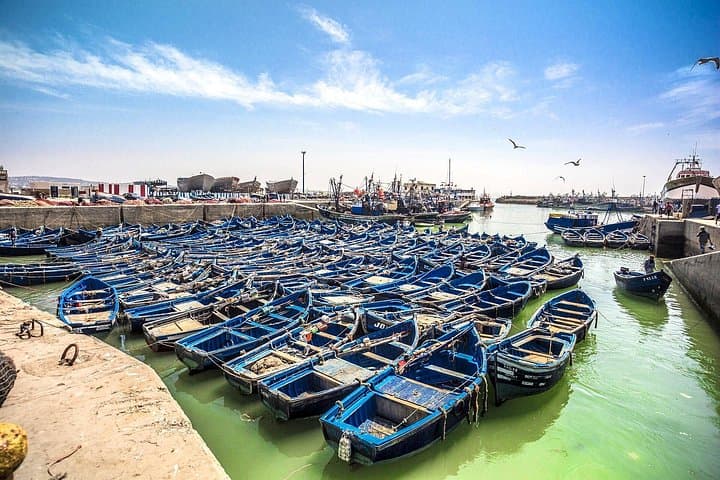
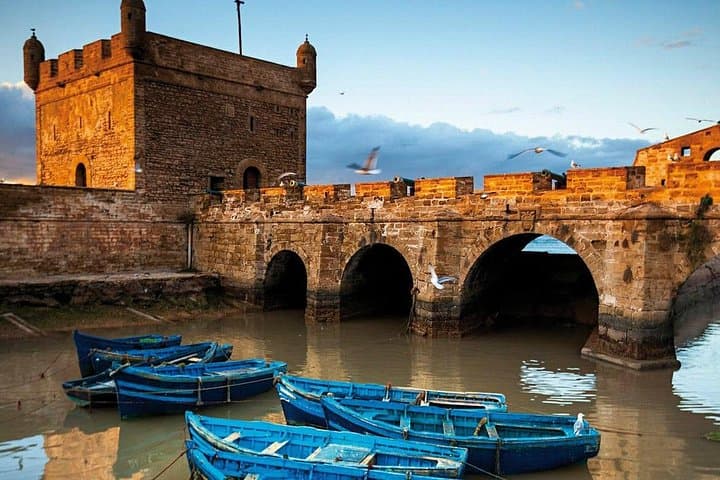
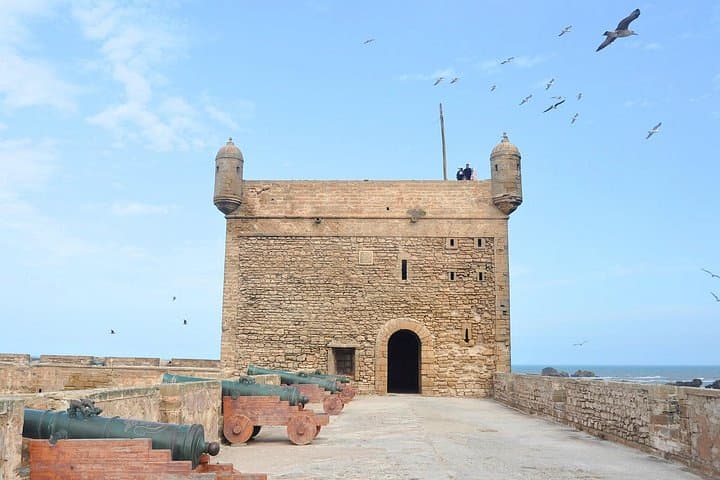
A ragged wind pushes in from the Atlantic as the bus eases into Essaouira, and the city opens like a page of carved cedar and whitewashed stone. The port calls first: nets piled, gulls arguing, and the sqala’s old cannons staring down at waves that dare anything that comes too close.
Verified experiences and guided adventures in the surrounding area.
Operated by Agharass Tours · Essaouira, Marrakesh-Safi
A ragged wind pushes in from the Atlantic as the bus eases into Essaouira, and the city opens like a page of carved cedar and whitewashed stone. The port calls first: nets piled, gulls arguing, and the sqala’s old cannons staring down at waves that dare anything that comes too close.
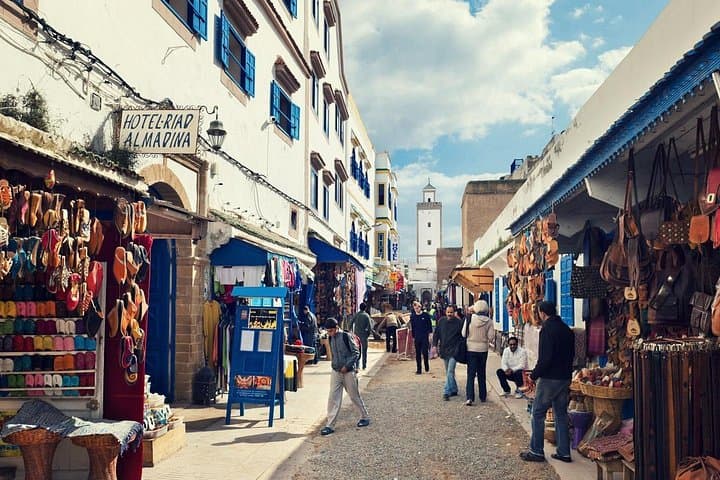
Known historically as Mogador, Essaouira was reworked in the 18th century under Sultan Sidi Mohammed ben Abdallah and a European architect, giving the medina its unusually regular street grid and stone fortifications. Geologically, the coastline here is sedimentary—sandy beaches backed by low dunes and exposed rocky points that shape steady onshore winds. Culturally, the town remains a working fishing port and a crafts hub: cedar inlay, thuja marquetry and argan cooperatives are part of daily life.
On a day trip from Agadir expect two to four hours wandering the medina, a stop at a women’s argan cooperative, and time on the ramparts and fishing port. The air is often brisk; currents of wind push kitesurfers offshore and chatter through alleys. Local guides emphasize support for artisans and avoiding single-use plastics; conservation efforts focus on dune protection and sustainable fishing.
Practical guide: wear sturdy shoes for cobbles, bring sun protection and a refillable bottle, and plan for a full day—travel takes roughly 2–2.5 hours each way. Mornings bring calmer light for photos; afternoons deliver the strongest winds and best conditions to watch kiters challenge the Atlantic.
Expect roughly 2 to 2.5 hours each way by private vehicle, depending on traffic and stops en route.
Yes—most itineraries include 2–4 hours for independent exploration of the medina, port and ramparts.
Yes, the itinerary typically includes a stop at a local women's cooperative; purchases are optional and often cash-based.
Generally yes—vehicles and infant seats are available, but cobbled streets and stairs may be challenging with strollers.
Agharass Tours operates guided outdoor trips and adventures with an emphasis on safety, stewardship, and memorable experiences.
A ragged wind pushes in from the Atlantic as the bus eases into Essaouira, and the city opens like a page of carved cedar and whitewashed stone. The port calls first: nets piled, gulls arguing, and the sqala’s old cannons staring down at waves that dare anything that comes too close.
A ragged wind pushes in from the Atlantic as the bus eases into Essaouira, and the city opens like a page of carved cedar and whitewashed stone. The port calls first: nets piled, gulls arguing, and the sqala’s old cannons staring down at waves that dare anything that comes too close.
Known historically as Mogador, Essaouira was reworked in the 18th century under Sultan Sidi Mohammed ben Abdallah and a European architect, giving the medina its unusually regular street grid and stone fortifications. Geologically, the coastline here is sedimentary—sandy beaches backed by low dunes and exposed rocky points that shape steady onshore winds. Culturally, the town remains a working fishing port and a crafts hub: cedar inlay, thuja marquetry and argan cooperatives are part of daily life.
On a day trip from Agadir expect two to four hours wandering the medina, a stop at a women’s argan cooperative, and time on the ramparts and fishing port. The air is often brisk; currents of wind push kitesurfers offshore and chatter through alleys. Local guides emphasize support for artisans and avoiding single-use plastics; conservation efforts focus on dune protection and sustainable fishing.
Practical guide: wear sturdy shoes for cobbles, bring sun protection and a refillable bottle, and plan for a full day—travel takes roughly 2–2.5 hours each way. Mornings bring calmer light for photos; afternoons deliver the strongest winds and best conditions to watch kiters challenge the Atlantic.