THE ADVENTURE COLLECTIVE® · Independent discovery and booking for outdoor travel

Escape Marrakech for a day on the Atlantic coast: Essaouira’s UNESCO medina, working fishing port and ramparts give way to miles of wind‑bruised beach. This full‑day private transfer balances local insight with time to explore independently.
Escape Marrakech for a day on the Atlantic coast: Essaouira’s UNESCO medina, working fishing port and ramparts give way to miles of wind‑bruised beach. This full‑day private transfer balances local insight with time to explore independently.
A salty wind meets the road as you leave Marrakech behind and head west toward the Atlantic: low scrub, ochre riads shrinking in the rearview, and then the blue that defines Essaouira. On arrival the city opens with a working harbour hemmed by stone ramparts, the clang of fishermen’s gear, and a line of rusted cannons marking an 18th‑century citadel that still watches the sea.
Verified experiences and guided adventures in the surrounding area.
Operated by Casablanca Airport Taxi - Welcome Pickups · Essaouira, Marrakesh-Safi
A salty wind meets the road as you leave Marrakech behind and head west toward the Atlantic: low scrub, ochre riads shrinking in the rearview, and then the blue that defines Essaouira. On arrival the city opens with a working harbour hemmed by stone ramparts, the clang of fishermen’s gear, and a line of rusted cannons marking an 18th‑century citadel that still watches the sea.
Essaouira’s medina is a UNESCO World Heritage site whose narrow lanes and whitewashed facades reflect centuries of trade between Europe, Africa and the Atlantic. Geologically the coastline is shaped by long sandy spits and wind‑scoured rock; the prevailing ocean wind has made this a kitesurfing and windsurfing mecca and a place where the surf seems to dare you forward. Culturally, the town blends Berber, Arab and Portuguese influence—Scala du Port and Moulay Hassan Square show fortification styles and maritime architecture notable in the 1700s and later.
Practically, expect a full day: the drive from Marrakech is roughly 170–180 km each way and usually takes 2.5–3 hours. The driver serves as a knowledgeable local guide but cannot enter paid sites with you; plan short walking stints on cobbles and time on the broad beach for sunset. Bring layered clothing for strong winds, sturdy shoes for uneven streets, local currency for small purchases at the port, and a charged camera. Aim for an early departure to maximize time wandering the medina, visiting the citadel ramparts, watching the fish auction, and finishing on the beach as the Atlantic lowers the light.
Expect roughly 170–180 km and 2.5–3 hours each way depending on traffic and stops.
Drivers provide local historical context and recommendations but are not licensed to accompany you inside paid sights.
Yes—this full‑day itinerary includes time for the medina, port, ramparts and beach; an early start maximizes time on site.
Yes—fresh seafood at the harbour, cafés in the medina, and small bakeries; bring cash for market stalls and tips.
Casablanca Airport Taxi - Welcome Pickups operates guided outdoor trips and adventures with an emphasis on safety, stewardship, and memorable experiences.
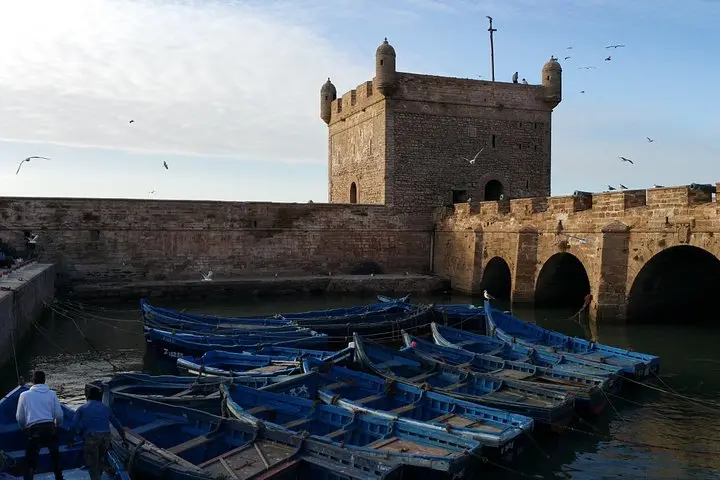
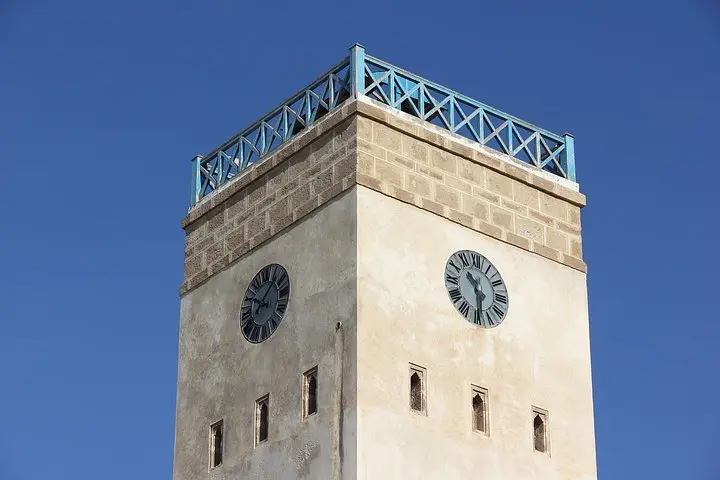
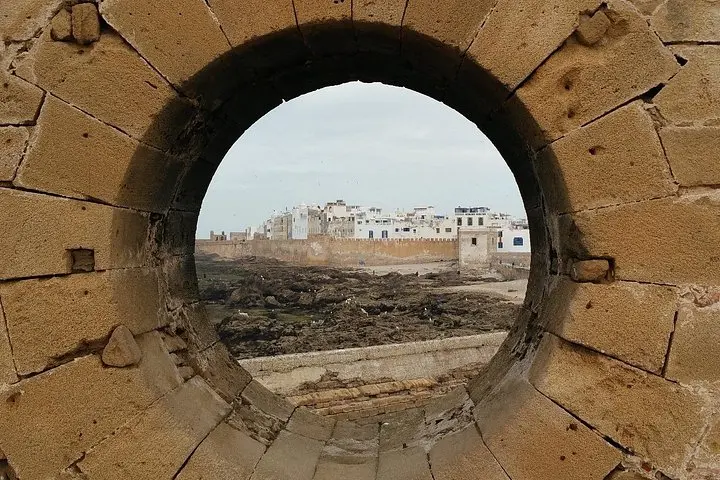
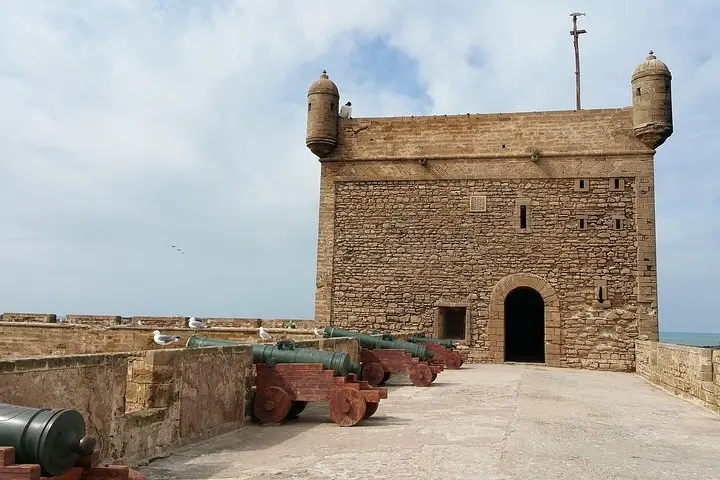
A salty wind meets the road as you leave Marrakech behind and head west toward the Atlantic: low scrub, ochre riads shrinking in the rearview, and then the blue that defines Essaouira. On arrival the city opens with a working harbour hemmed by stone ramparts, the clang of fishermen’s gear, and a line of rusted cannons marking an 18th‑century citadel that still watches the sea.
A salty wind meets the road as you leave Marrakech behind and head west toward the Atlantic: low scrub, ochre riads shrinking in the rearview, and then the blue that defines Essaouira. On arrival the city opens with a working harbour hemmed by stone ramparts, the clang of fishermen’s gear, and a line of rusted cannons marking an 18th‑century citadel that still watches the sea.
Essaouira’s medina is a UNESCO World Heritage site whose narrow lanes and whitewashed facades reflect centuries of trade between Europe, Africa and the Atlantic. Geologically the coastline is shaped by long sandy spits and wind‑scoured rock; the prevailing ocean wind has made this a kitesurfing and windsurfing mecca and a place where the surf seems to dare you forward. Culturally, the town blends Berber, Arab and Portuguese influence—Scala du Port and Moulay Hassan Square show fortification styles and maritime architecture notable in the 1700s and later.
Practically, expect a full day: the drive from Marrakech is roughly 170–180 km each way and usually takes 2.5–3 hours. The driver serves as a knowledgeable local guide but cannot enter paid sites with you; plan short walking stints on cobbles and time on the broad beach for sunset. Bring layered clothing for strong winds, sturdy shoes for uneven streets, local currency for small purchases at the port, and a charged camera. Aim for an early departure to maximize time wandering the medina, visiting the citadel ramparts, watching the fish auction, and finishing on the beach as the Atlantic lowers the light.