THE ADVENTURE COLLECTIVE® · Independent discovery and booking for outdoor travel

From Marrakech, a day by the Atlantic offers medieval ramparts, a working fishing port, and argan cooperatives en route. This day trip blends coastal scenery with hands-on cultural stops and easy walking through a compact UNESCO medina.
From Marrakech, a day by the Atlantic offers medieval ramparts, a working fishing port, and argan cooperatives en route. This day trip blends coastal scenery with hands-on cultural stops and easy walking through a compact UNESCO medina.
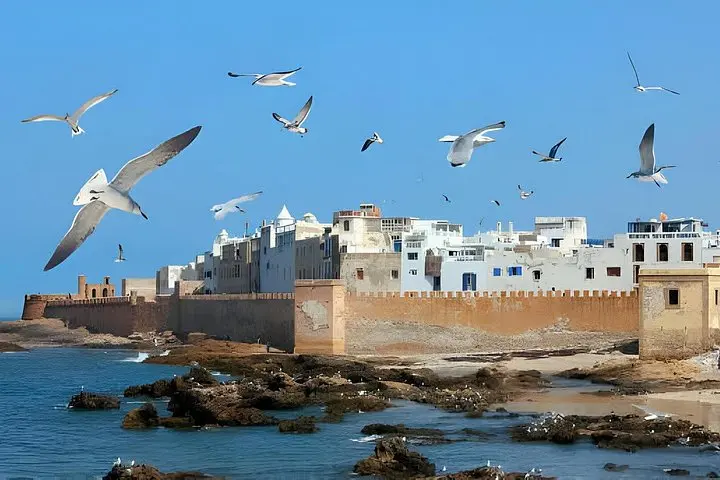
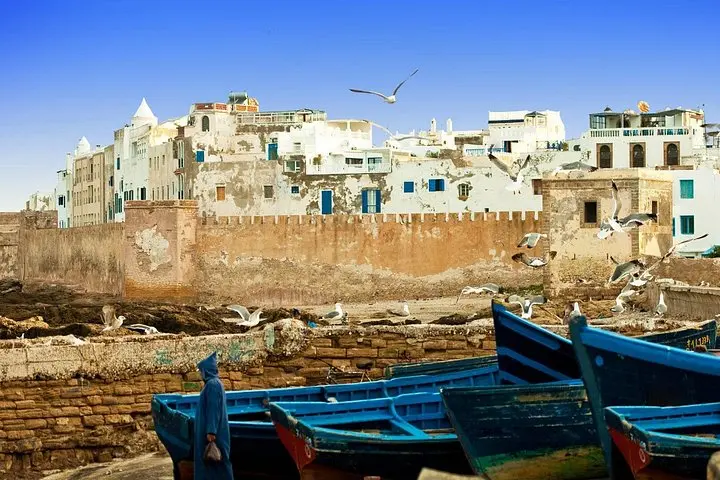
The ocean wind meets the city long before the road does: by midmorning you can smell salt on the air as the driver slows and the ramparts of Essaouira come into view. The medina unfolds in white-washed walls and blue shutters, gulls wheel above the fishing port, and the sound of distant drums from Gnaoua music festivals sometimes threads through the lanes.
Verified experiences and guided adventures in the surrounding area.
Operated by Transfert Marrakech · Essaouira, Marrakesh-Safi
The ocean wind meets the city long before the road does: by midmorning you can smell salt on the air as the driver slows and the ramparts of Essaouira come into view. The medina unfolds in white-washed walls and blue shutters, gulls wheel above the fishing port, and the sound of distant drums from Gnaoua music festivals sometimes threads through the lanes.
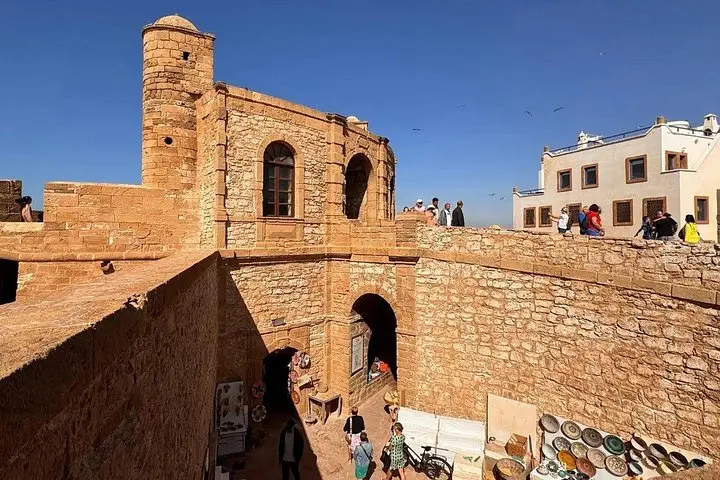
Essaouira’s story is visible in stone — Portuguese bastions buttress the sea, Ottoman-era gates frame market alleys, and the harbor still operates with net-menders and small wooden boats. Geologically the coastline is a broad Atlantic shelf with long sandy beaches and steady surf; culturally it’s a meeting point of Berber, Arab, Jewish and European influences, and the city’s UNESCO status preserves its compact historic fabric.
On a day trip from Marrakech expect a 3–3.5 hour drive each way with a scheduled stop at an argan cooperative en route, where traditional oil extraction and women-led cottage industry practices are explained. In town you’ll have hours to walk the ramparts, browse Derb Lealouj’s lanes, watch fishermen at the port, and eat fresh seafood at harbor restaurants.
Practical tips: the wind is constant—bring a windproof layer and sun protection; many streets are cobbled, so choose sturdy shoes; cash is useful at small vendors. If you prefer structure, hire a local guide in Essaouira for a focused cultural walk; otherwise the compact medina is eminently navigable on foot. Return to Marrakech in the evening, the Atlantic breeze still urging you forward.
Expect approximately 3 to 3.5 hours each way by private vehicle, depending on traffic and stops.
Lunch is typically not included—you can choose a seafood restaurant at the port or cafés in the medina.
Yes; most itineraries include a stop at a women-run argan cooperative to observe traditional oil production.
Transport and many public areas are accessible, but medina alleys and ramparts have cobbles and steps that may limit access in places.
Transfert Marrakech operates guided outdoor trips and adventures with an emphasis on safety, stewardship, and memorable experiences.

The ocean wind meets the city long before the road does: by midmorning you can smell salt on the air as the driver slows and the ramparts of Essaouira come into view. The medina unfolds in white-washed walls and blue shutters, gulls wheel above the fishing port, and the sound of distant drums from Gnaoua music festivals sometimes threads through the lanes.
The ocean wind meets the city long before the road does: by midmorning you can smell salt on the air as the driver slows and the ramparts of Essaouira come into view. The medina unfolds in white-washed walls and blue shutters, gulls wheel above the fishing port, and the sound of distant drums from Gnaoua music festivals sometimes threads through the lanes.
Essaouira’s story is visible in stone — Portuguese bastions buttress the sea, Ottoman-era gates frame market alleys, and the harbor still operates with net-menders and small wooden boats. Geologically the coastline is a broad Atlantic shelf with long sandy beaches and steady surf; culturally it’s a meeting point of Berber, Arab, Jewish and European influences, and the city’s UNESCO status preserves its compact historic fabric.
On a day trip from Marrakech expect a 3–3.5 hour drive each way with a scheduled stop at an argan cooperative en route, where traditional oil extraction and women-led cottage industry practices are explained. In town you’ll have hours to walk the ramparts, browse Derb Lealouj’s lanes, watch fishermen at the port, and eat fresh seafood at harbor restaurants.
Practical tips: the wind is constant—bring a windproof layer and sun protection; many streets are cobbled, so choose sturdy shoes; cash is useful at small vendors. If you prefer structure, hire a local guide in Essaouira for a focused cultural walk; otherwise the compact medina is eminently navigable on foot. Return to Marrakech in the evening, the Atlantic breeze still urging you forward.