THE ADVENTURE COLLECTIVE® · Independent discovery and booking for outdoor travel

A manageable, windswept day trip from Marrakech to Essaouira that blends coastal walks, fortified medina streets, argan cooperatives, and fresh seafood. Expect a 10-hour round-trip with several hours to explore the port, kasbah, and beaches at your own pace.
A manageable, windswept day trip from Marrakech to Essaouira that blends coastal walks, fortified medina streets, argan cooperatives, and fresh seafood. Expect a 10-hour round-trip with several hours to explore the port, kasbah, and beaches at your own pace.
You arrive from Marrakech with the highway unrolling across the Haouz plains, the van humming as argan trees begin to dot the roadside. By the time Essaouira’s stone towers come into view, the Atlantic wind—locally known as the alizé—has already started to shape the day: cool, bracing, and honest.
Verified experiences and guided adventures in the surrounding area.
Operated by Marrakech Atlas Day Tours · Essaouira, Marrakesh-Safi
You arrive from Marrakech with the highway unrolling across the Haouz plains, the van humming as argan trees begin to dot the roadside. By the time Essaouira’s stone towers come into view, the Atlantic wind—locally known as the alizé—has already started to shape the day: cool, bracing, and honest.
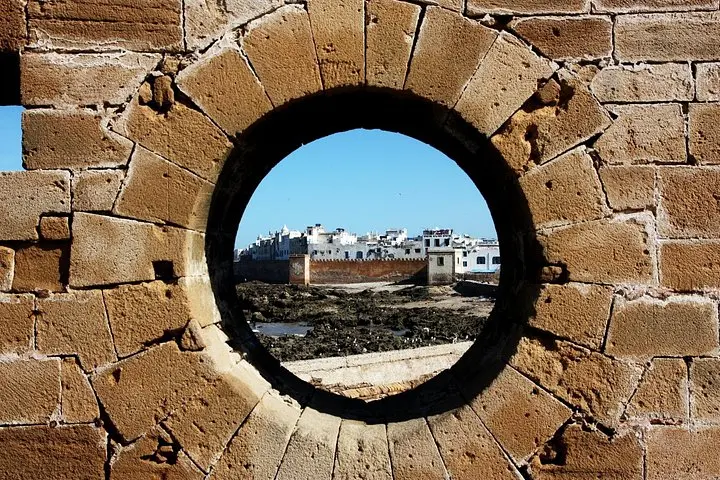
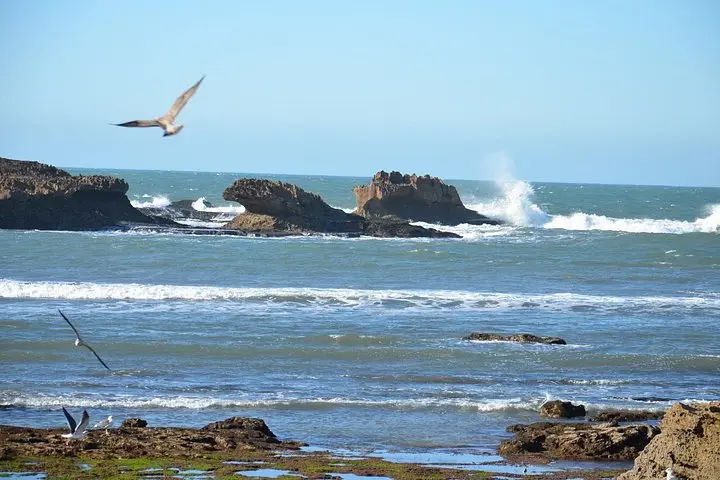
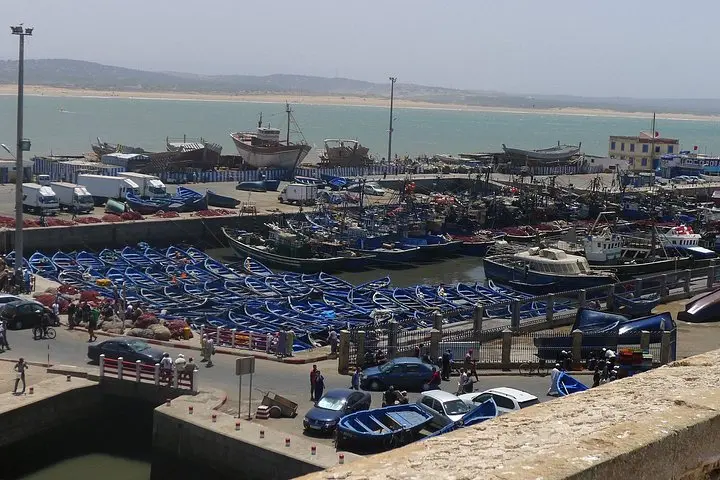
This full-day escape pairs cultural streetscapes with coastal air. The medina’s grid is compact and walkable: wooden thuya workshops and gallery windows line narrow lanes that funnel toward the fishing port, where Portuguese-era ramparts and rusted cannons keep silent watch over wheeling gulls. Explore Bab Laalouj and the Mellah to read layers of the town’s history: a fortified 18th-century plan, mercantile exchanges, and a once-thriving Jewish quarter. Geologically, Essaouira’s coast is a meeting of recent Atlantic sands and older sedimentary outcrops—beaches here are long and flat, ideal for walking rather than steep climbs.
Local life surfaces in small ways: a stop at a women’s cooperative to see argan oil pressings, the tang of seafood straight from the quay, and artisans shaping thuya wood into boxes and bowls. Practicalities matter: expect roughly 2.5–3 hours each way from Marrakech, several hours on foot in town (3–5 km typical), and flat, cobbled terrain with some uneven steps.
Bring sun protection and sturdy shoes, time your lunch for the harbor stalls, and leave room to wander the walls at sunset—when the wind pushes the Atlantic’s light across the water and the town’s white façades answer back.
Typical travel time is about 2.5–3 hours each way depending on traffic and stops, making this a roughly 10-hour day trip.
Lunch is not usually included; you’ll have free time to choose a seafood café or market stall in the harbor area.
Major streets and many areas are accessible, but some alleys and ramps have uneven surfaces—check with the operator about specific accessibility needs.
Yes, the beach is accessible for a walk or a swim, but currents can be strong—swimming conditions vary and there are limited lifeguard services.
Marrakech Atlas Day Tours operates guided outdoor trips and adventures with an emphasis on safety, stewardship, and memorable experiences.
You arrive from Marrakech with the highway unrolling across the Haouz plains, the van humming as argan trees begin to dot the roadside. By the time Essaouira’s stone towers come into view, the Atlantic wind—locally known as the alizé—has already started to shape the day: cool, bracing, and honest.
You arrive from Marrakech with the highway unrolling across the Haouz plains, the van humming as argan trees begin to dot the roadside. By the time Essaouira’s stone towers come into view, the Atlantic wind—locally known as the alizé—has already started to shape the day: cool, bracing, and honest.
This full-day escape pairs cultural streetscapes with coastal air. The medina’s grid is compact and walkable: wooden thuya workshops and gallery windows line narrow lanes that funnel toward the fishing port, where Portuguese-era ramparts and rusted cannons keep silent watch over wheeling gulls. Explore Bab Laalouj and the Mellah to read layers of the town’s history: a fortified 18th-century plan, mercantile exchanges, and a once-thriving Jewish quarter. Geologically, Essaouira’s coast is a meeting of recent Atlantic sands and older sedimentary outcrops—beaches here are long and flat, ideal for walking rather than steep climbs.
Local life surfaces in small ways: a stop at a women’s cooperative to see argan oil pressings, the tang of seafood straight from the quay, and artisans shaping thuya wood into boxes and bowls. Practicalities matter: expect roughly 2.5–3 hours each way from Marrakech, several hours on foot in town (3–5 km typical), and flat, cobbled terrain with some uneven steps.
Bring sun protection and sturdy shoes, time your lunch for the harbor stalls, and leave room to wander the walls at sunset—when the wind pushes the Atlantic’s light across the water and the town’s white façades answer back.