THE ADVENTURE COLLECTIVE® · Independent discovery and booking for outdoor travel

Trade Marrakech’s ochre alleys for Essaouira’s windswept harbor on a full-day outing that pairs historic ramparts, lively souks and fresh seafood. Expect a 9–10 hour door-to-door day with time to explore the medina independently.
Trade Marrakech’s ochre alleys for Essaouira’s windswept harbor on a full-day outing that pairs historic ramparts, lively souks and fresh seafood. Expect a 9–10 hour door-to-door day with time to explore the medina independently.
The wind meets you first — Atlantic gusts pushing fresh air across low, whitewashed buildings and the broad arc of Essaouira’s harbor. In the first hour on the ramparts you can feel the city’s coastal character: gulls wheel, waves break against stone, and the citadel’s cannons keep a silent watch over a harbor still threaded with working fishing boats.
Verified experiences and guided adventures in the surrounding area.
Operated by Maroc Adventure · Essaouira, Marrakesh-Safi
The wind meets you first — Atlantic gusts pushing fresh air across low, whitewashed buildings and the broad arc of Essaouira’s harbor. In the first hour on the ramparts you can feel the city’s coastal character: gulls wheel, waves break against stone, and the citadel’s cannons keep a silent watch over a harbor still threaded with working fishing boats.
Founded and rebuilt under Portuguese and later Moroccan control, Essaouira’s medina is a compact UNESCO site defined by 18th-century ramparts and a grid of streets that were designed for trade and defense. Geologically, the town sits on a rocky shoreline with sandy beaches to the south and windswept plains inland; that wind made it a salt-and-ozone-scented port and today draws windsurfers to the bay.
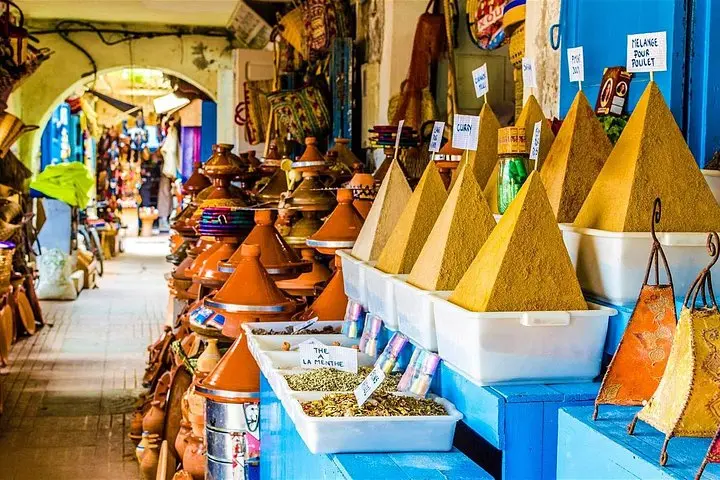
Culturally, the town balances Berber, Arab and European influences: argan cooperatives on the road from Marrakech demonstrate traditional pressing methods, while the souks trade spices, carved thuya wood and fresh fish sold straight off the quay.
Practical guide: expect a roughly 190 km drive each way (about 3 hours depending on traffic), a 9–10 hour day total, and mostly flat walking on cobbles and low ramps with minimal elevation change. Bring layers for wind and sun protection, cash for small purchases, and plan to rendezvous at the scheduled pick-up point — the tour offers wheelchair-accessible transport and flexible time to explore and eat independently. Aim for spring or autumn for cooler breezes and livelier markets, and leave extra time to watch the catch come in at the port before returning to Marrakech.
The trip is about 190 km and typically takes roughly 3 hours each way, depending on traffic and road conditions.
Lunch is not included — you’ll have free time in Essaouira to choose a restaurant or try market seafood.
Yes. The tour notes wheelchair-accessible transport and accessible surfaces in the medina, but check specific mobility needs with the operator before booking.
Yes. Most departures include a stop at an argan cooperative where traditional pressing methods are demonstrated and products are available to purchase.
Maroc Adventure operates guided outdoor trips and adventures with an emphasis on safety, stewardship, and memorable experiences.
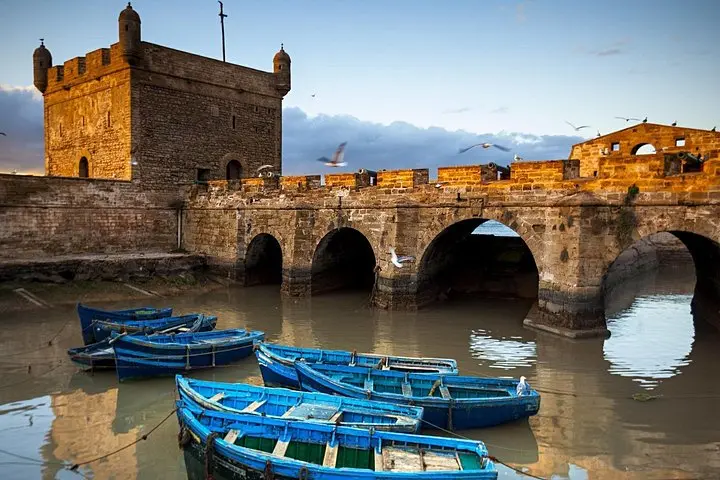
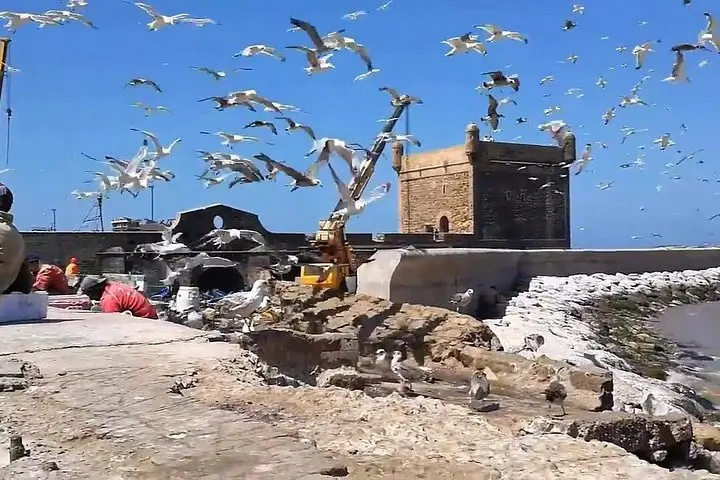
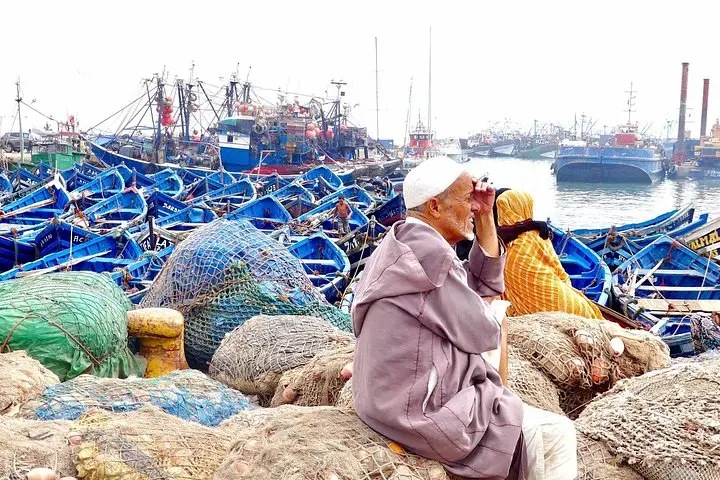
The wind meets you first — Atlantic gusts pushing fresh air across low, whitewashed buildings and the broad arc of Essaouira’s harbor. In the first hour on the ramparts you can feel the city’s coastal character: gulls wheel, waves break against stone, and the citadel’s cannons keep a silent watch over a harbor still threaded with working fishing boats.
The wind meets you first — Atlantic gusts pushing fresh air across low, whitewashed buildings and the broad arc of Essaouira’s harbor. In the first hour on the ramparts you can feel the city’s coastal character: gulls wheel, waves break against stone, and the citadel’s cannons keep a silent watch over a harbor still threaded with working fishing boats.
Founded and rebuilt under Portuguese and later Moroccan control, Essaouira’s medina is a compact UNESCO site defined by 18th-century ramparts and a grid of streets that were designed for trade and defense. Geologically, the town sits on a rocky shoreline with sandy beaches to the south and windswept plains inland; that wind made it a salt-and-ozone-scented port and today draws windsurfers to the bay.
Culturally, the town balances Berber, Arab and European influences: argan cooperatives on the road from Marrakech demonstrate traditional pressing methods, while the souks trade spices, carved thuya wood and fresh fish sold straight off the quay.
Practical guide: expect a roughly 190 km drive each way (about 3 hours depending on traffic), a 9–10 hour day total, and mostly flat walking on cobbles and low ramps with minimal elevation change. Bring layers for wind and sun protection, cash for small purchases, and plan to rendezvous at the scheduled pick-up point — the tour offers wheelchair-accessible transport and flexible time to explore and eat independently. Aim for spring or autumn for cooler breezes and livelier markets, and leave extra time to watch the catch come in at the port before returning to Marrakech.