THE ADVENTURE COLLECTIVE® · Independent discovery and booking for outdoor travel

A wind‑bruised day trip from Marrakech to Essaouira (Mogador) that combines coastal ramparts, a working port, and a walkable medina. Learn about argan production, sample grilled seafood by the harbor, and explore centuries of maritime history in a single full‑day excursion.
A wind‑bruised day trip from Marrakech to Essaouira (Mogador) that combines coastal ramparts, a working port, and a walkable medina. Learn about argan production, sample grilled seafood by the harbor, and explore centuries of maritime history in a single full‑day excursion.
The Atlantic wind meets stone as you step onto Essaouira’s ramparts — gulls wheel above the harbor and the sea sprays at the base of ochre cannons. Walking the coastal path from the Marin Gate toward the Sqala, you can taste salt and grilled sardines before the medina’s narrow alleys pull you into a maze of blue and white facades.
Verified experiences and guided adventures in the surrounding area.
Operated by Masterpiece Morocco Travel · Essaouira, Marrakesh-Safi
The Atlantic wind meets stone as you step onto Essaouira’s ramparts — gulls wheel above the harbor and the sea sprays at the base of ochre cannons. Walking the coastal path from the Marin Gate toward the Sqala, you can taste salt and grilled sardines before the medina’s narrow alleys pull you into a maze of blue and white facades.
Once called Mogador, the town’s footprint spans Phoenician trading posts and a 16th‑century Portuguese fortress; the ramparts and kasbah speak to centuries of maritime commerce. Geologically, Essaouira sits on a rocky promontory where wind and waves sculpt sandy beaches and low dunes; inland the argan forest blankets clay soils and supports the region’s iconic oil tradition. Culturally, the medina mixes Berber, Arab, Jewish and European threads — a visit to the Jewish quarter and the Sidi Mohammed Ben Abdallah Museum underlines that layered history. In June the Gnaoua festival animates the port with percussion and trance rhythms.
Practically, expect a full eight‑hour day with roughly 3–5 km of walking on cobbles and packed sand and minimal elevation gain (<50m). Much of the route is flat but uneven underfoot; wear grippy shoes, carry sun protection and a reusable water bottle, and plan for a seaside lunch at the fish stalls by the port. The day trip typically includes hotel pickup in Marrakech and comfortable transport; bring cash for small vendors and tip modestly for good service. Early starts beat the heat and give cleaner light for the ramparts and fishing boats, while late afternoons deliver warmer colors and stronger winds along the coast.
Yes — most departures include round‑trip pickup from central Marrakech hotels; confirm your exact pickup point at booking.
Expect roughly 3–5 km of walking on mostly flat terrain with occasional steps and uneven cobbles; suitable for most activity levels.
Lunch is usually not included — the tour stops at the port where you can buy fresh grilled fish; bring cash for market purchases.
Transportation and many public areas are accessible, but some medina alleys and ramparts have uneven surfaces and steps that may limit access.
Masterpiece Morocco Travel operates guided outdoor trips and adventures with an emphasis on safety, stewardship, and memorable experiences.
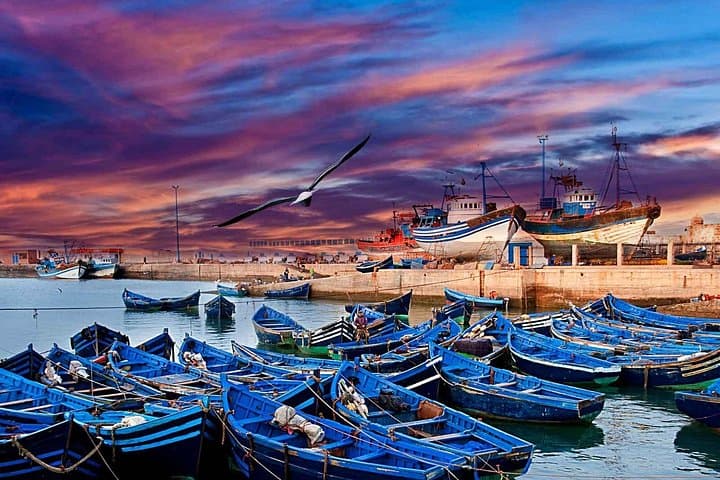
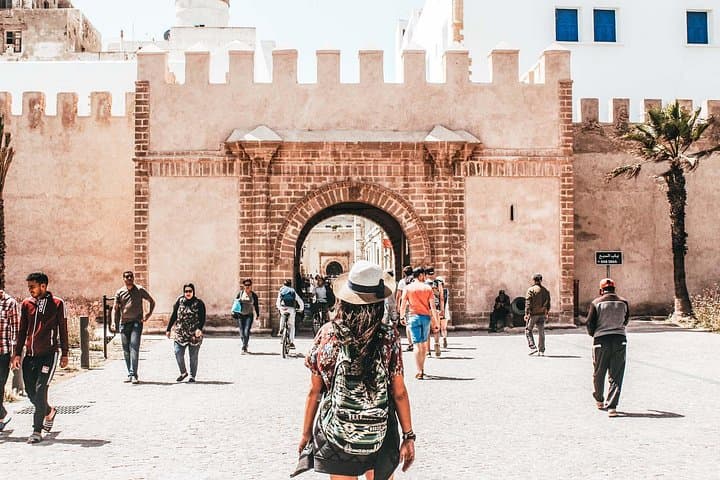
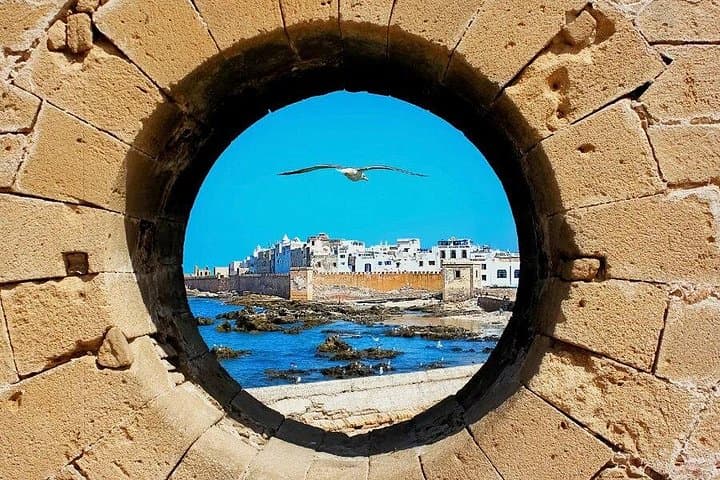
The Atlantic wind meets stone as you step onto Essaouira’s ramparts — gulls wheel above the harbor and the sea sprays at the base of ochre cannons. Walking the coastal path from the Marin Gate toward the Sqala, you can taste salt and grilled sardines before the medina’s narrow alleys pull you into a maze of blue and white facades.
The Atlantic wind meets stone as you step onto Essaouira’s ramparts — gulls wheel above the harbor and the sea sprays at the base of ochre cannons. Walking the coastal path from the Marin Gate toward the Sqala, you can taste salt and grilled sardines before the medina’s narrow alleys pull you into a maze of blue and white facades.
Once called Mogador, the town’s footprint spans Phoenician trading posts and a 16th‑century Portuguese fortress; the ramparts and kasbah speak to centuries of maritime commerce. Geologically, Essaouira sits on a rocky promontory where wind and waves sculpt sandy beaches and low dunes; inland the argan forest blankets clay soils and supports the region’s iconic oil tradition. Culturally, the medina mixes Berber, Arab, Jewish and European threads — a visit to the Jewish quarter and the Sidi Mohammed Ben Abdallah Museum underlines that layered history. In June the Gnaoua festival animates the port with percussion and trance rhythms.
Practically, expect a full eight‑hour day with roughly 3–5 km of walking on cobbles and packed sand and minimal elevation gain (<50m). Much of the route is flat but uneven underfoot; wear grippy shoes, carry sun protection and a reusable water bottle, and plan for a seaside lunch at the fish stalls by the port. The day trip typically includes hotel pickup in Marrakech and comfortable transport; bring cash for small vendors and tip modestly for good service. Early starts beat the heat and give cleaner light for the ramparts and fishing boats, while late afternoons deliver warmer colors and stronger winds along the coast.