THE ADVENTURE COLLECTIVE® · Independent discovery and booking for outdoor travel

Trade Marrakech’s ochre alleys for a breezy Atlantic day: Essaouira’s ramparts, seafood port and thuya wood workshops make a compact cultural and coastal escape. Learn what to expect on the 8–10 hour roundtrip and practical tips to make the most of your visit.
Trade Marrakech’s ochre alleys for a breezy Atlantic day: Essaouira’s ramparts, seafood port and thuya wood workshops make a compact cultural and coastal escape. Learn what to expect on the 8–10 hour roundtrip and practical tips to make the most of your visit.
Morning light breaks over the Atlas foothills as the minivan departs Marrakech, and the Atlantic keeps time at the far end of the road. The drive to Essaouira unfolds across argan-studded plains—goats scale the thorny trees like acrobats—until the city’s pale ramparts appear against a flat, silver sea.
Verified experiences and guided adventures in the surrounding area.
Operated by Morocco Private Excursions · Essaouira, Marrakech-Safi
Morning light breaks over the Atlas foothills as the minivan departs Marrakech, and the Atlantic keeps time at the far end of the road. The drive to Essaouira unfolds across argan-studded plains—goats scale the thorny trees like acrobats—until the city’s pale ramparts appear against a flat, silver sea.
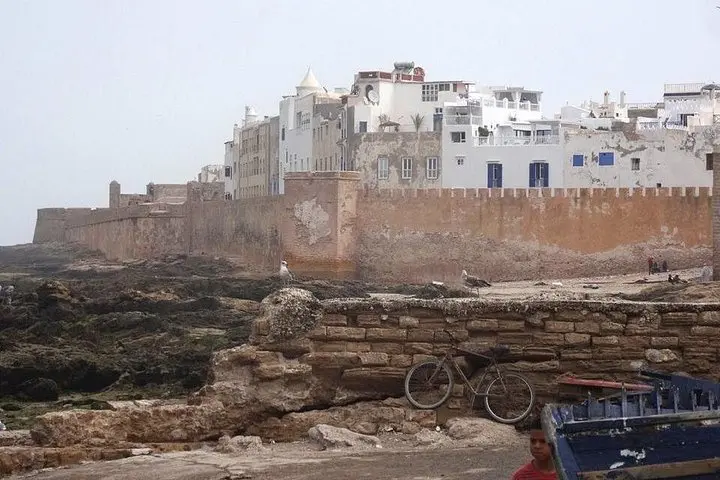
Essaouira (formerly Mogador) is a working port and fortified town with a layered history: Phoenician and Roman traders, Portuguese fortifications in the 16th–18th centuries, and a 20th‑century artist community that reshaped its cultural voice. Geologically the coastline is low and sandy, fed by Atlantic winds that make the bay a favorite for wind sports and a force that shaped the town’s broad, breezy harbor.
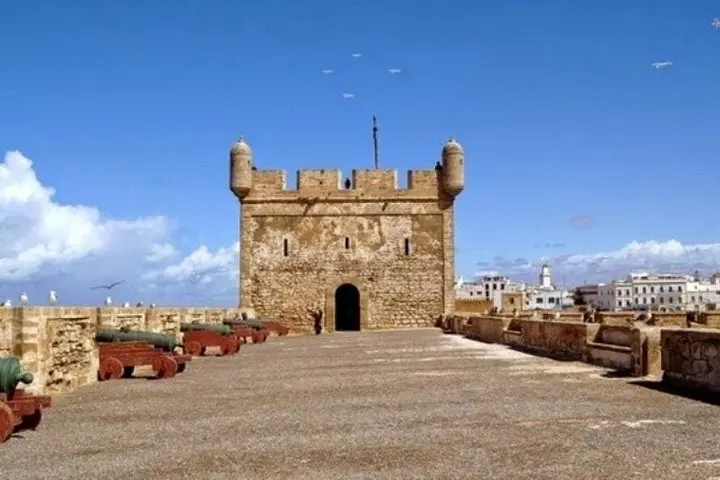
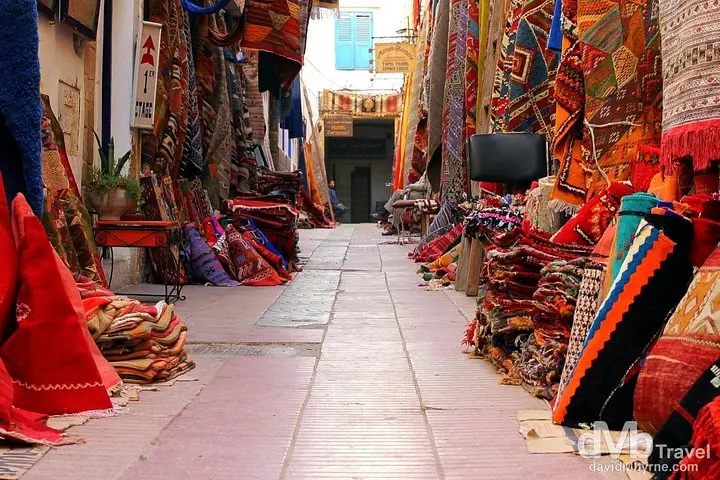
A typical day visit moves at a relaxed pace: a walk on the ramparts and Skala with cannon-lined viewpoints, through the medina’s alleys to thuya wood workshops, past the mellah and market stalls, then down to the port where fishermen unload their catch. The beach offers a clear afternoon option—wide sand and steady wind—or time for a seafood lunch at one of the harbor restaurants.
Practical notes: expect a 2.5–3 hour drive each way (8–10 hour total tour), modest walking on cobbles and steps, and bright sun with Atlantic wind. Carry cash for small purchases, wear sturdy shoes for uneven streets, and bring a windshell and sunscreen. For a full day that mixes history, craft, and coast, Essaouira delivers a compact, accessible taste of Morocco’s seaside life.
Expect roughly 2.5–3 hours each way depending on traffic and any stops; the full excursion is typically 8–10 hours.
Lunch is usually not included—most itineraries allow time to eat at the port or a local seafood restaurant and offer vegetarian options if requested.
Yes, many tours stop at women-led argan cooperatives near the coast where you can taste and buy oil and see traditional production methods.
The medina has narrow alleys and cobbles, so strollers can be difficult; parents should plan for carrying young children in some sections.
Morocco Private Excursions operates guided outdoor trips and adventures with an emphasis on safety, stewardship, and memorable experiences.
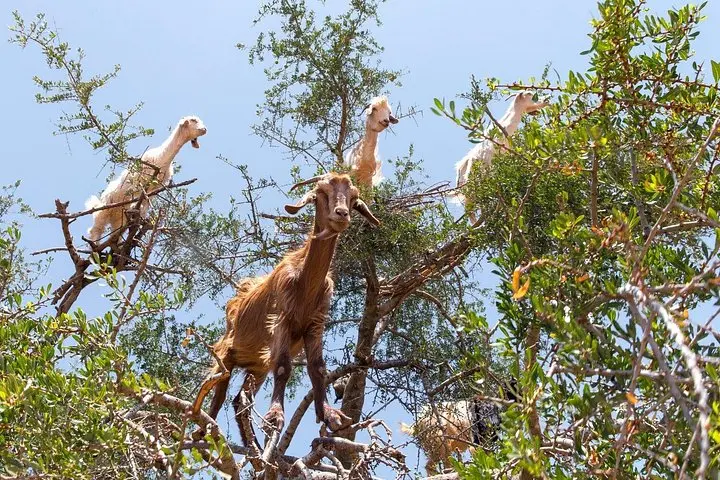
Morning light breaks over the Atlas foothills as the minivan departs Marrakech, and the Atlantic keeps time at the far end of the road. The drive to Essaouira unfolds across argan-studded plains—goats scale the thorny trees like acrobats—until the city’s pale ramparts appear against a flat, silver sea.
Morning light breaks over the Atlas foothills as the minivan departs Marrakech, and the Atlantic keeps time at the far end of the road. The drive to Essaouira unfolds across argan-studded plains—goats scale the thorny trees like acrobats—until the city’s pale ramparts appear against a flat, silver sea.
Essaouira (formerly Mogador) is a working port and fortified town with a layered history: Phoenician and Roman traders, Portuguese fortifications in the 16th–18th centuries, and a 20th‑century artist community that reshaped its cultural voice. Geologically the coastline is low and sandy, fed by Atlantic winds that make the bay a favorite for wind sports and a force that shaped the town’s broad, breezy harbor.
A typical day visit moves at a relaxed pace: a walk on the ramparts and Skala with cannon-lined viewpoints, through the medina’s alleys to thuya wood workshops, past the mellah and market stalls, then down to the port where fishermen unload their catch. The beach offers a clear afternoon option—wide sand and steady wind—or time for a seafood lunch at one of the harbor restaurants.
Practical notes: expect a 2.5–3 hour drive each way (8–10 hour total tour), modest walking on cobbles and steps, and bright sun with Atlantic wind. Carry cash for small purchases, wear sturdy shoes for uneven streets, and bring a windshell and sunscreen. For a full day that mixes history, craft, and coast, Essaouira delivers a compact, accessible taste of Morocco’s seaside life.