THE ADVENTURE COLLECTIVE® · Independent discovery and booking for outdoor travel

Escape Marrakech for a full day on Morocco’s Atlantic coast to explore Essaouira (Mogador). Expect three hours of scenic driving each way, a wandering tour of the medina and port, an argan cooperative visit, and a fresh seafood lunch.
Escape Marrakech for a full day on Morocco’s Atlantic coast to explore Essaouira (Mogador). Expect three hours of scenic driving each way, a wandering tour of the medina and port, an argan cooperative visit, and a fresh seafood lunch.
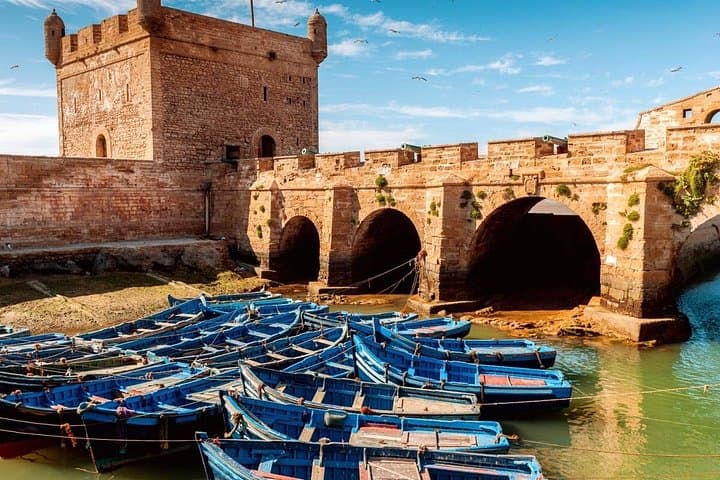
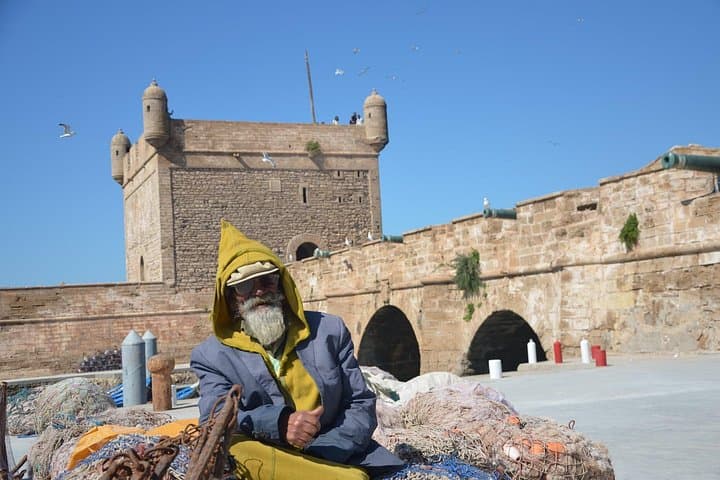
The van rolls out of Marrakech at first light and the red city shrinks behind olive and argan-studded hills. By mid-morning the Atlantic announces itself—the wind pulls at scarves, gulls wheel over the port, and Essaouira’s ochre ramparts come into view like a city laid against the sea.
Verified experiences and guided adventures in the surrounding area.
Operated by Tafraout Voyage · Essaouira, Marrakesh-Safi
The van rolls out of Marrakech at first light and the red city shrinks behind olive and argan-studded hills. By mid-morning the Atlantic announces itself—the wind pulls at scarves, gulls wheel over the port, and Essaouira’s ochre ramparts come into view like a city laid against the sea.
Formerly called Mogador, Essaouira’s layered history is visible in its stone walls: 18th‑century fortifications built to repel European powers, a Portuguese footprint along the harbor, and a long-standing Berber and Jewish presence that shaped the medina’s lanes. Geologically the town sits where soft coastal sands meet exposed volcanic-era rocks, producing broad beaches and wind-sculpted dunes that invite kite surfers and walkers alike.
Culturally the day centers on markets and craft: small cooperatives pressing argan oil, silversmiths in narrow alleys, and fish grilled beside the harbor. A fresh-catch lunch is standard; the sea still tastes of salt and Atlantic clarity.
Practical guidance: expect a 2.5–3 hour drive each way (roughly 185–200 km), with a total outing of about 10–11 hours including stops. The medina’s lanes are cobbled and often narrow—wear sturdy shoes and pack a light windproof layer. Carry cash for small purchases and tips; many stalls are cash-preferred. If wind is high, head to the sheltered souks and the Skala ramparts for better photo light. Return to Marrakech in the evening, typically around 19:00, refreshed from a day where history, sea, and craft meet on a brisk Atlantic breeze.
Expect roughly 2.5–3 hours each way depending on traffic and stops—plan for a full 10–11 hour day.
No—guides add historical and cultural context and handle logistics, but independent wandering in the medina is possible if you’re comfortable navigating narrow streets.
Most full-day tours include a lunch stop with local seafood options, but check the tour details for specifics and dietary accommodations.
Yes; the itinerary is low-impact with minimal walking distances, but anyone with mobility concerns should check vehicle pickup locations and cobbled-area access.
Tafraout Voyage operates guided outdoor trips and adventures with an emphasis on safety, stewardship, and memorable experiences.


The van rolls out of Marrakech at first light and the red city shrinks behind olive and argan-studded hills. By mid-morning the Atlantic announces itself—the wind pulls at scarves, gulls wheel over the port, and Essaouira’s ochre ramparts come into view like a city laid against the sea.
The van rolls out of Marrakech at first light and the red city shrinks behind olive and argan-studded hills. By mid-morning the Atlantic announces itself—the wind pulls at scarves, gulls wheel over the port, and Essaouira’s ochre ramparts come into view like a city laid against the sea.
Formerly called Mogador, Essaouira’s layered history is visible in its stone walls: 18th‑century fortifications built to repel European powers, a Portuguese footprint along the harbor, and a long-standing Berber and Jewish presence that shaped the medina’s lanes. Geologically the town sits where soft coastal sands meet exposed volcanic-era rocks, producing broad beaches and wind-sculpted dunes that invite kite surfers and walkers alike.
Culturally the day centers on markets and craft: small cooperatives pressing argan oil, silversmiths in narrow alleys, and fish grilled beside the harbor. A fresh-catch lunch is standard; the sea still tastes of salt and Atlantic clarity.
Practical guidance: expect a 2.5–3 hour drive each way (roughly 185–200 km), with a total outing of about 10–11 hours including stops. The medina’s lanes are cobbled and often narrow—wear sturdy shoes and pack a light windproof layer. Carry cash for small purchases and tips; many stalls are cash-preferred. If wind is high, head to the sheltered souks and the Skala ramparts for better photo light. Return to Marrakech in the evening, typically around 19:00, refreshed from a day where history, sea, and craft meet on a brisk Atlantic breeze.