THE ADVENTURE COLLECTIVE® · Independent discovery and booking for outdoor travel

Trade Marrakech’s heat for Atlantic breeze on a full-day road trip to Essaouira. Explore UNESCO-listed alleys, ramparts, seafood lunches and argan cooperatives on a 10-hour coastal escape.
Trade Marrakech’s heat for Atlantic breeze on a full-day road trip to Essaouira. Explore UNESCO-listed alleys, ramparts, seafood lunches and argan cooperatives on a 10-hour coastal escape.
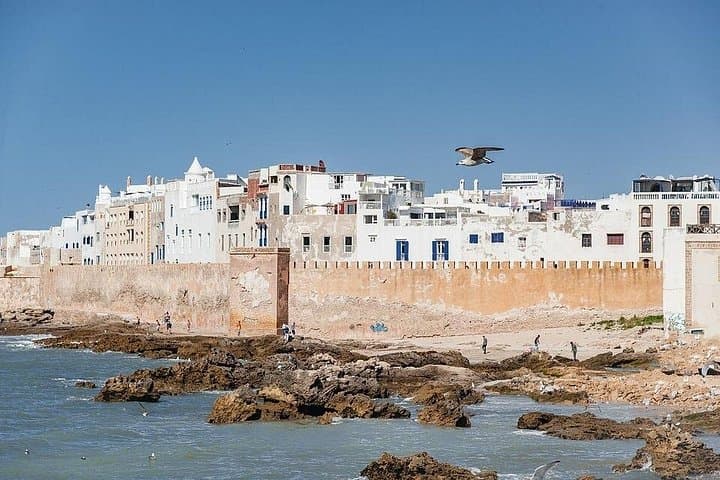
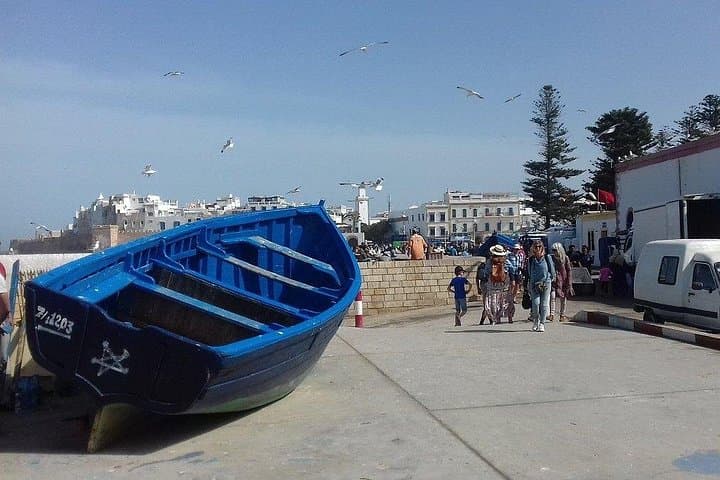
A motorized glide west from Marrakech deposits travelers at a wind-scoured harbor where the Atlantic pushes and tugs at the town’s stone bulwarks. The day opens on the road through argan-studded hills—goats balance in branches as drivers slow for photos—then widens into salt air, blue fishing boats clustered in the port, and the old Ottoman- and Portuguese-built ramparts that frame Essaouira’s seaward face.
Verified experiences and guided adventures in the surrounding area.
Operated by BIG G TOURS EVASION · Essaouira, Marrakech-Safi
A motorized glide west from Marrakech deposits travelers at a wind-scoured harbor where the Atlantic pushes and tugs at the town’s stone bulwarks. The day opens on the road through argan-studded hills—goats balance in branches as drivers slow for photos—then widens into salt air, blue fishing boats clustered in the port, and the old Ottoman- and Portuguese-built ramparts that frame Essaouira’s seaward face.
Essaouira (historic Mogador) is a fortified port with a layered past: Phoenician traders, Portuguese occupiers in the 16th century, and a long tradition of fishing and craftwork have shaped its narrow alleys and blue-white façades. Geologically the town sits on folded coastal plains where wind and waves sculpt dunes and expose the saline flats that feed local fisheries. Culturally, Essaouira’s medina is quieter than Marrakech’s souks, with stronger ties to maritime trades and a well-known Gnaoua music tradition.
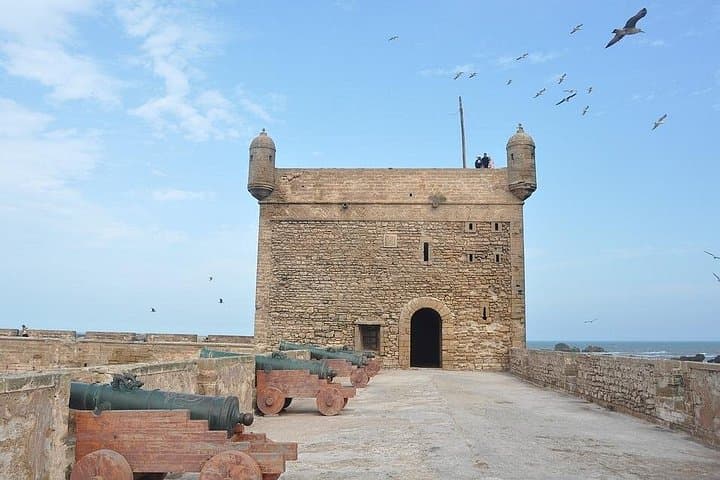
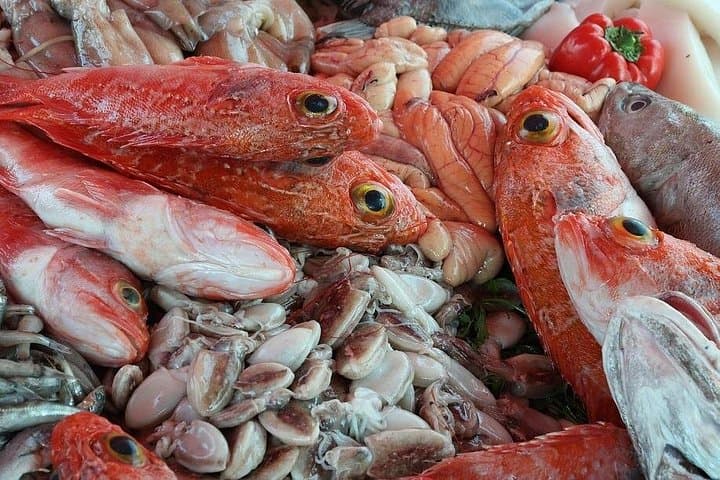
Practically, this is a long but low-effort day: expect roughly 2.5–3 hours each way by air-conditioned vehicle and 3–4 hours walking and exploring in town. Highlights include a stop at an argan women’s cooperative to see traditional pressing, a self-guided walk on the Skala du Port, lunch at a seafood modest eatery, and a shoreline stroll—often windy—where kites and local fishermen share space.
Bring sun protection, sturdy soles for cobbles, and some dirhams for markets and tips. The schedule fits most travelers but plan for a full 10-hour day and pack patience for photo stops and local bargaining etiquette.
Expect about 2.5–3 hours each way depending on traffic and stops; total trip time is roughly 10 hours including exploration.
Yes—the itinerary includes a 60–90 minute lunch and additional time to browse souks and artisan shops in the medina.
Many cooperatives are community-run and provide demonstrations of traditional production; buying products supports local women’s groups.
Transport and main areas are generally accessible, but historic medina streets and some ramparts have uneven surfaces—check with the operator for specific assistance.
BIG G TOURS EVASION operates guided outdoor trips and adventures with an emphasis on safety, stewardship, and memorable experiences.
A motorized glide west from Marrakech deposits travelers at a wind-scoured harbor where the Atlantic pushes and tugs at the town’s stone bulwarks. The day opens on the road through argan-studded hills—goats balance in branches as drivers slow for photos—then widens into salt air, blue fishing boats clustered in the port, and the old Ottoman- and Portuguese-built ramparts that frame Essaouira’s seaward face.
A motorized glide west from Marrakech deposits travelers at a wind-scoured harbor where the Atlantic pushes and tugs at the town’s stone bulwarks. The day opens on the road through argan-studded hills—goats balance in branches as drivers slow for photos—then widens into salt air, blue fishing boats clustered in the port, and the old Ottoman- and Portuguese-built ramparts that frame Essaouira’s seaward face.
Essaouira (historic Mogador) is a fortified port with a layered past: Phoenician traders, Portuguese occupiers in the 16th century, and a long tradition of fishing and craftwork have shaped its narrow alleys and blue-white façades. Geologically the town sits on folded coastal plains where wind and waves sculpt dunes and expose the saline flats that feed local fisheries. Culturally, Essaouira’s medina is quieter than Marrakech’s souks, with stronger ties to maritime trades and a well-known Gnaoua music tradition.
Practically, this is a long but low-effort day: expect roughly 2.5–3 hours each way by air-conditioned vehicle and 3–4 hours walking and exploring in town. Highlights include a stop at an argan women’s cooperative to see traditional pressing, a self-guided walk on the Skala du Port, lunch at a seafood modest eatery, and a shoreline stroll—often windy—where kites and local fishermen share space.
Bring sun protection, sturdy soles for cobbles, and some dirhams for markets and tips. The schedule fits most travelers but plan for a full 10-hour day and pack patience for photo stops and local bargaining etiquette.