THE ADVENTURE COLLECTIVE® · Independent discovery and booking for outdoor travel

Trade Marrakech’s medina for Atlantic winds and Portuguese ramparts on a full-day trip to Essaouira. Explore Mogador’s UNESCO-listed medina, visit an argan co-op and soak up Gnawa music and coastal markets.
Trade Marrakech’s medina for Atlantic winds and Portuguese ramparts on a full-day trip to Essaouira. Explore Mogador’s UNESCO-listed medina, visit an argan co-op and soak up Gnawa music and coastal markets.
You leave Marrakech before sunrise, the road cutting through low hills and argan groves while the Atlas fades behind you. By late morning the Atlantic appears on the horizon and the wind—salt-laced and insistent—meets you at Essaouira’s ramparts, daring you to climb and look back over a harbor that has seen sailors from Portugal, England and Spain.
Verified experiences and guided adventures in the surrounding area.
Operated by Atlas Discovery Tours · Essaouira, Marrakesh-Safi
You leave Marrakech before sunrise, the road cutting through low hills and argan groves while the Atlas fades behind you. By late morning the Atlantic appears on the horizon and the wind—salt-laced and insistent—meets you at Essaouira’s ramparts, daring you to climb and look back over a harbor that has seen sailors from Portugal, England and Spain.
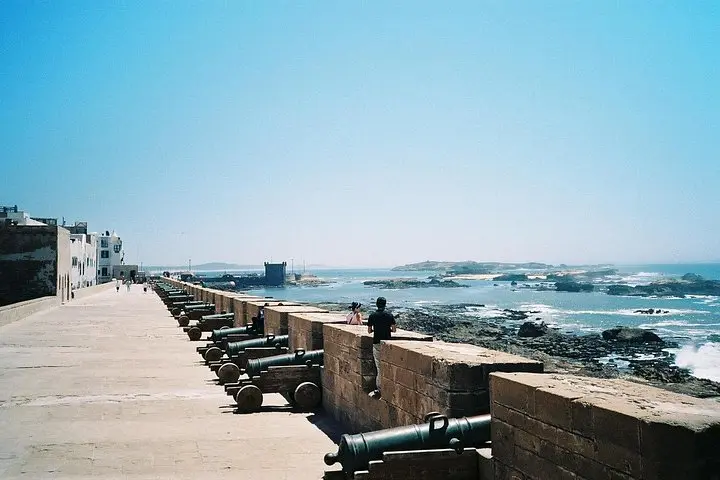
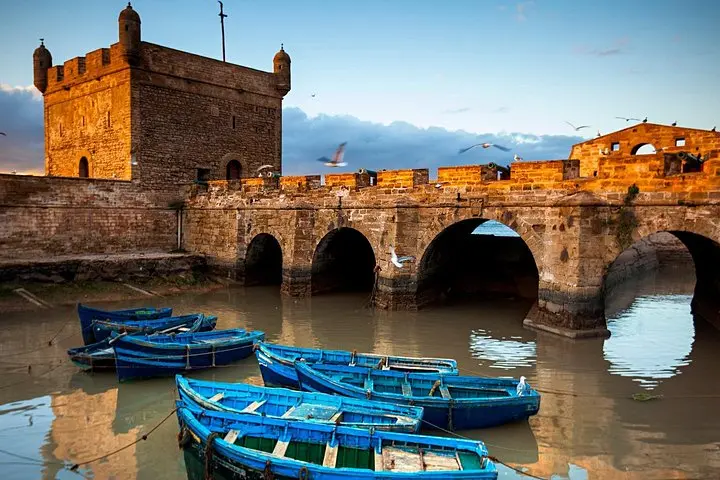
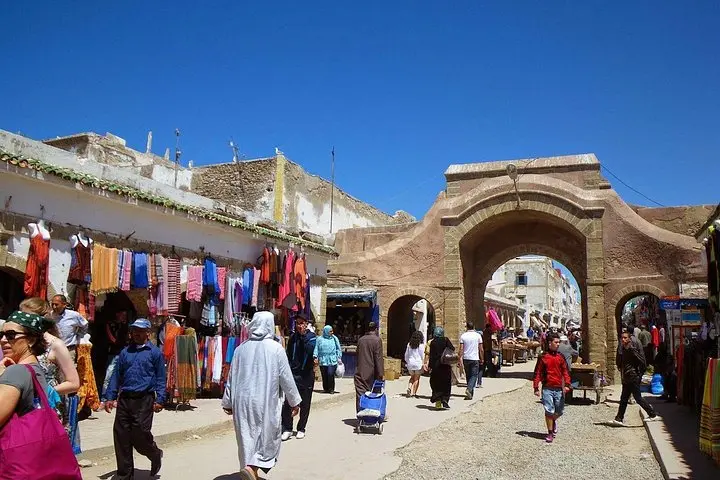
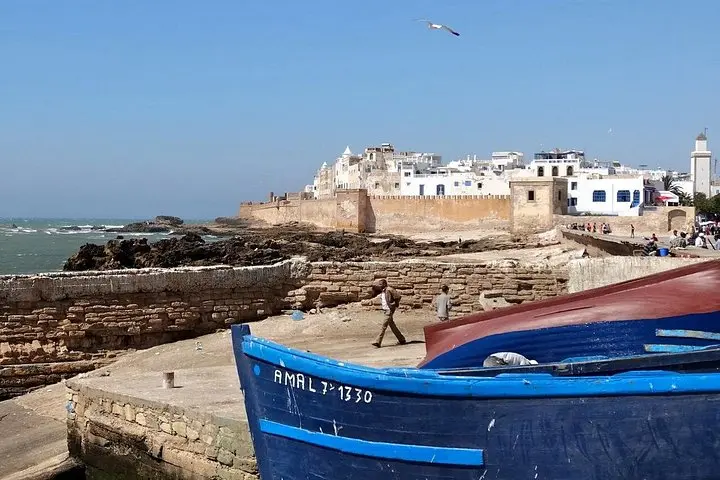
Essaouira (ancient Mogador) sits on a rocky promontory where coastal limestone and Atlantic swells shape the shore. Once a fortified Portuguese outpost, the medina’s stone walls and cannon-lined bastions recall 18th-century maritime competition. The town is UNESCO-listed for its unique blend of European military architecture and Moroccan urban fabric; La Scala and the fishing port remain vivid reminders of that history. The culture here is immediate—Gnawa rhythms drifting from a small café, craftsmen inlaid with thuya wood, and women’s argan cooperatives where oil is still pressed by hand.
Practical guidance: the full-day tour runs about 9–11 hours with hotel pickup in Marrakech; expect 3–4 hours in Essaouira including a guided walk of the medina, market stops and lunch. Wear sturdy shoes for cobbles and breezy layers—the afternoon wind can be cold. Bring sunscreen, a refillable water bottle, small cash for markets, and a light daypack for purchases. If wind sports or fresh seafood market scenes are on your list, schedule the visit outside of mid-summer peak heat to enjoy comfortable walking. Return to Marrakech is typically around early evening, leaving time to rest after a long, salt-scented day.
The transfer is about 180 km (112 miles) and typically takes around 2.5–3 hours each way, depending on traffic and stops.
Lunch is normally arranged at a local restaurant but may not be included; confirm at booking and advise dietary requirements in advance.
Much of Essaouira’s medina has narrow, uneven alleys and steps; access for wheelchairs and strollers is limited though the port area is more navigable.
Yes—cooperatives sell argan oil and cosmetics; check for sealed products and expect to sample items before buying.
Atlas Discovery Tours operates guided outdoor trips and adventures with an emphasis on safety, stewardship, and memorable experiences.
You leave Marrakech before sunrise, the road cutting through low hills and argan groves while the Atlas fades behind you. By late morning the Atlantic appears on the horizon and the wind—salt-laced and insistent—meets you at Essaouira’s ramparts, daring you to climb and look back over a harbor that has seen sailors from Portugal, England and Spain.
You leave Marrakech before sunrise, the road cutting through low hills and argan groves while the Atlas fades behind you. By late morning the Atlantic appears on the horizon and the wind—salt-laced and insistent—meets you at Essaouira’s ramparts, daring you to climb and look back over a harbor that has seen sailors from Portugal, England and Spain.
Essaouira (ancient Mogador) sits on a rocky promontory where coastal limestone and Atlantic swells shape the shore. Once a fortified Portuguese outpost, the medina’s stone walls and cannon-lined bastions recall 18th-century maritime competition. The town is UNESCO-listed for its unique blend of European military architecture and Moroccan urban fabric; La Scala and the fishing port remain vivid reminders of that history. The culture here is immediate—Gnawa rhythms drifting from a small café, craftsmen inlaid with thuya wood, and women’s argan cooperatives where oil is still pressed by hand.
Practical guidance: the full-day tour runs about 9–11 hours with hotel pickup in Marrakech; expect 3–4 hours in Essaouira including a guided walk of the medina, market stops and lunch. Wear sturdy shoes for cobbles and breezy layers—the afternoon wind can be cold. Bring sunscreen, a refillable water bottle, small cash for markets, and a light daypack for purchases. If wind sports or fresh seafood market scenes are on your list, schedule the visit outside of mid-summer peak heat to enjoy comfortable walking. Return to Marrakech is typically around early evening, leaving time to rest after a long, salt-scented day.