THE ADVENTURE COLLECTIVE® · Independent discovery and booking for outdoor travel

Escape Marrakech for a day and trade riad alleys for Atlantic wind and fortified ramparts. This small-group trip to Essaouira combines a guided walking tour of the medina with local craft visits, coastal views, and time to explore the port.
Escape Marrakech for a day and trade riad alleys for Atlantic wind and fortified ramparts. This small-group trip to Essaouira combines a guided walking tour of the medina with local craft visits, coastal views, and time to explore the port.
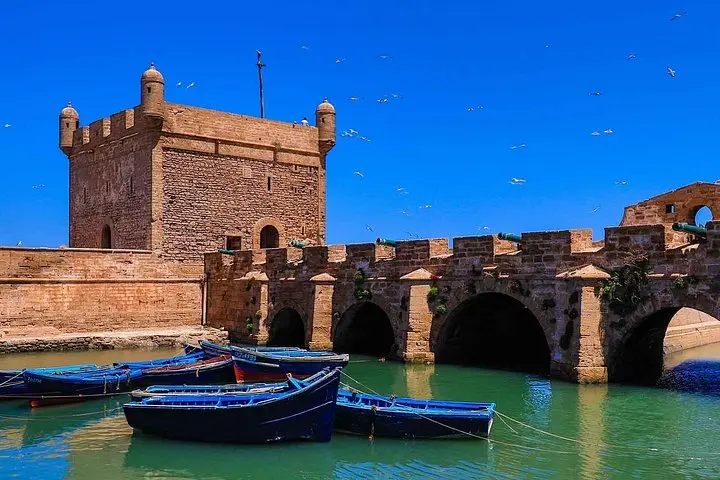
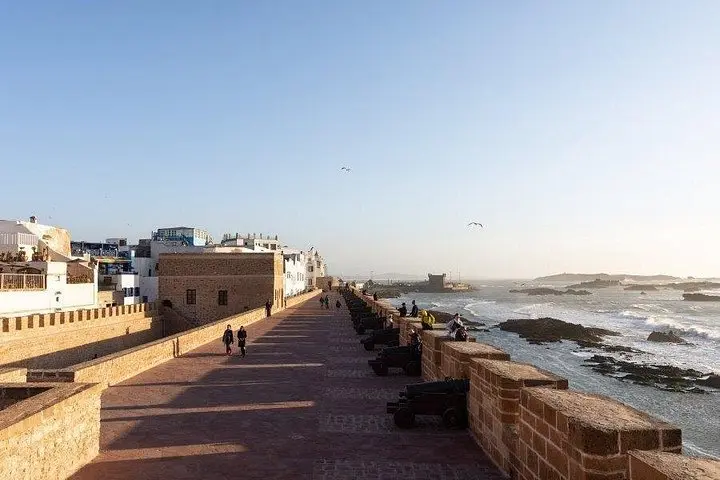
On the road before dawn the Atlas foothills blur into low scrub; the Atlantic calls ahead and, as the van slides down toward Essaouira, a sharp salt wind dares you to step out. The city appears on the horizon as white buildings and crenellated ramparts, the sea pushing foam against a broad, wind-scoured beach.
Verified experiences and guided adventures in the surrounding area.
Operated by Uncommon Morocco · Essaouira, Marrakech-Safi
On the road before dawn the Atlas foothills blur into low scrub; the Atlantic calls ahead and, as the van slides down toward Essaouira, a sharp salt wind dares you to step out. The city appears on the horizon as white buildings and crenellated ramparts, the sea pushing foam against a broad, wind-scoured beach.
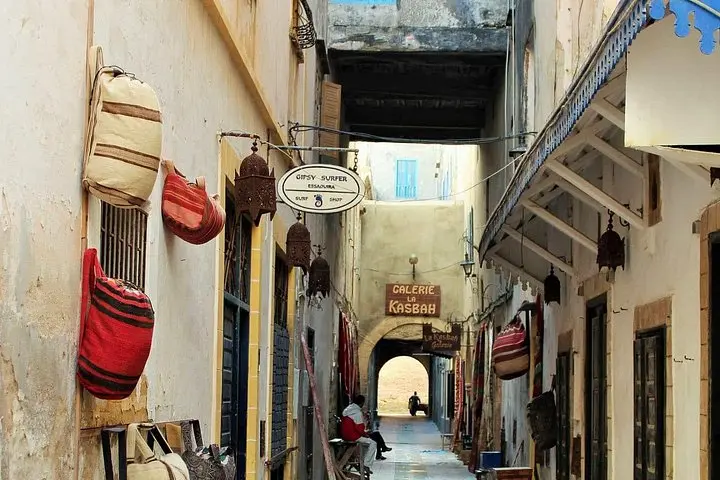
Essaouira—historically Mogador—has worn many faces: Phoenician and Roman touchpoints, a fortified Portuguese footprint, and centuries of Moroccan coastal trade. The town’s mellow stone ramparts and the Skala’s row of brass cannons tell a pragmatic maritime story, while the medina’s blue-and-white houses and wooden shutters reflect its artisan traditions. Geologically, the coastline is low and rocky with sweeping sandy bays; elevation never rises far above sea level, so the day stays easy on the legs but sharp in the senses.
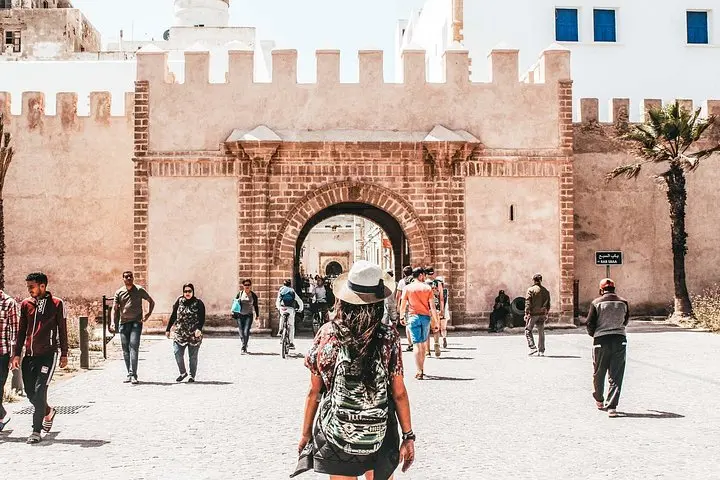
Your guided walking tour moves from bustling port to narrow alleys where argan oil cooperatives and woodworking shops demonstrate crafts that sustain the local economy. Expect a stop to photograph goats in argan trees and a pause for souiri mint tea and local cake. The compact medina is best explored on foot; surfaces are cobbled and uneven, and gusts can be strong—bring layers.
Practical notes: travel time from Marrakech is roughly 2.5–3 hours each way (about 180 km), the tour runs around 10 hours total, and small-group limits mean personalized pacing. Carry cash (Moroccan dirham) for markets, wear sturdy walking shoes, hydrate, and plan for wind—sunglasses and a windbreaker make the day more comfortable. The itinerary delivers coastal history, hands-on craft encounters, and free time to linger by the port or the beach.
Expect approximately 2.5–3 hours each way depending on traffic, roadworks, and stops along the route—total trip time is around 10 hours.
This tour includes Moroccan snacks and bottled water; you’ll have free time in Essaouira to buy lunch at local cafés or the port restaurants.
The tour lists wheelchair-accessible transportation and surfaces, but the medina has narrow, cobbled streets where accessibility can be limited—contact the operator about specific needs.
Yes—after the guided walking tour you’ll have free time to explore the beach, harbor, and medina shops at your own pace.
Uncommon Morocco operates guided outdoor trips and adventures with an emphasis on safety, stewardship, and memorable experiences.
On the road before dawn the Atlas foothills blur into low scrub; the Atlantic calls ahead and, as the van slides down toward Essaouira, a sharp salt wind dares you to step out. The city appears on the horizon as white buildings and crenellated ramparts, the sea pushing foam against a broad, wind-scoured beach.
On the road before dawn the Atlas foothills blur into low scrub; the Atlantic calls ahead and, as the van slides down toward Essaouira, a sharp salt wind dares you to step out. The city appears on the horizon as white buildings and crenellated ramparts, the sea pushing foam against a broad, wind-scoured beach.
Essaouira—historically Mogador—has worn many faces: Phoenician and Roman touchpoints, a fortified Portuguese footprint, and centuries of Moroccan coastal trade. The town’s mellow stone ramparts and the Skala’s row of brass cannons tell a pragmatic maritime story, while the medina’s blue-and-white houses and wooden shutters reflect its artisan traditions. Geologically, the coastline is low and rocky with sweeping sandy bays; elevation never rises far above sea level, so the day stays easy on the legs but sharp in the senses.
Your guided walking tour moves from bustling port to narrow alleys where argan oil cooperatives and woodworking shops demonstrate crafts that sustain the local economy. Expect a stop to photograph goats in argan trees and a pause for souiri mint tea and local cake. The compact medina is best explored on foot; surfaces are cobbled and uneven, and gusts can be strong—bring layers.
Practical notes: travel time from Marrakech is roughly 2.5–3 hours each way (about 180 km), the tour runs around 10 hours total, and small-group limits mean personalized pacing. Carry cash (Moroccan dirham) for markets, wear sturdy walking shoes, hydrate, and plan for wind—sunglasses and a windbreaker make the day more comfortable. The itinerary delivers coastal history, hands-on craft encounters, and free time to linger by the port or the beach.