THE ADVENTURE COLLECTIVE® · Independent discovery and booking for outdoor travel

Head to the Atlantic coast for a full day in Essaouira: an 18th‑century fortified port, a UNESCO medina, and argan groves with tree‑climbing goats. This one‑day tour from Marrakech delivers history, seafood, and wind‑sculpted beaches with five hours to explore on your own.
Head to the Atlantic coast for a full day in Essaouira: an 18th‑century fortified port, a UNESCO medina, and argan groves with tree‑climbing goats. This one‑day tour from Marrakech delivers history, seafood, and wind‑sculpted beaches with five hours to explore on your own.
The bus eases out of Marrakech at dawn and the Atlas foothills flatten into ochre plain; by late morning the Atlantic wind arrives, cool and insistent, pushing through the palms and the alleys of Essaouira.
Verified experiences and guided adventures in the surrounding area.
Operated by Great Travel Morocco · Essaouira, Marrakesh-Safi
The bus eases out of Marrakech at dawn and the Atlas foothills flatten into ochre plain; by late morning the Atlantic wind arrives, cool and insistent, pushing through the palms and the alleys of Essaouira.
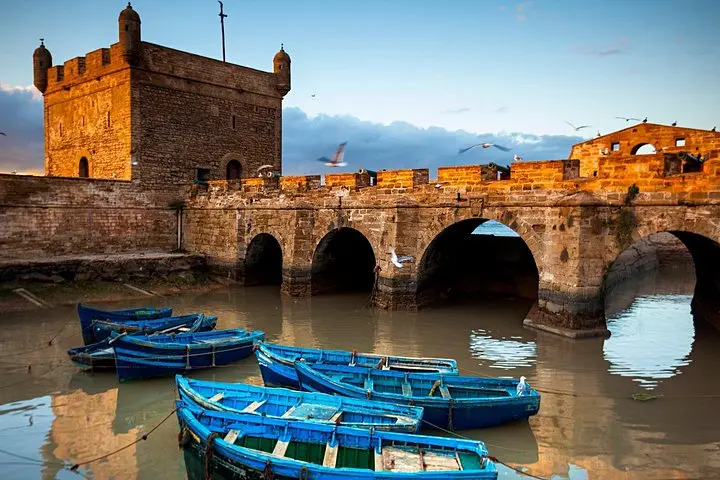
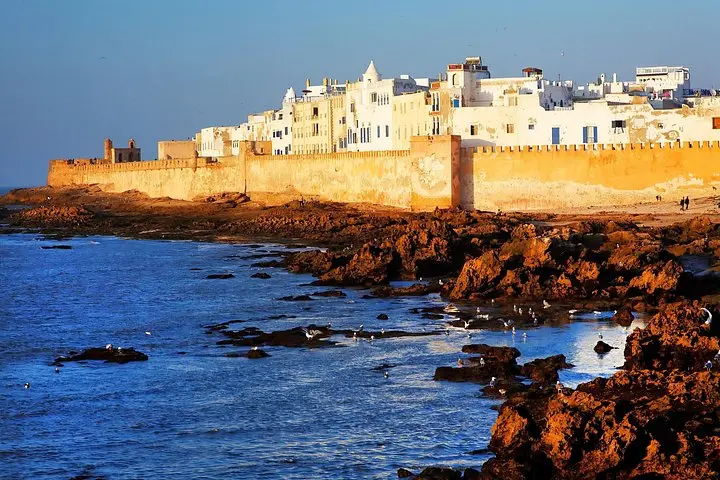
A visitor stepping through the city gate meets an 18th‑century fortified port shaped by European military plans and Atlantic weather. The medina—UNESCO listed in 2001—unfolds as compact streets of whitewashed walls, blue shutters and doors that speak to both North African and European influences. Geology here is coastal: low limestone headlands and sandy spits that feed long beaches and strong currents, which in turn carved the working port and turned it into a fishing hub.
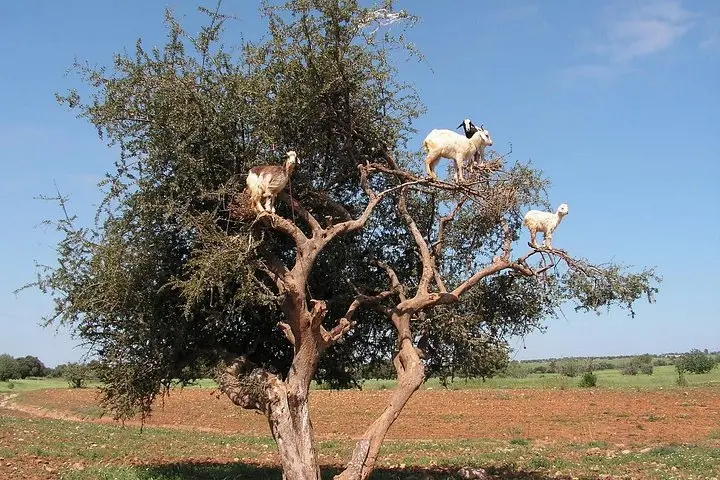
Culturally the town is equal parts fishing quarter, artisan souk and argan country. Travelers on the road out of Marrakech will pass argan trees, some amusingly occupied by sure‑footed goats, and often stop at family cooperatives that press oil from the nut—an industry tied to local livelihoods and conservation efforts.
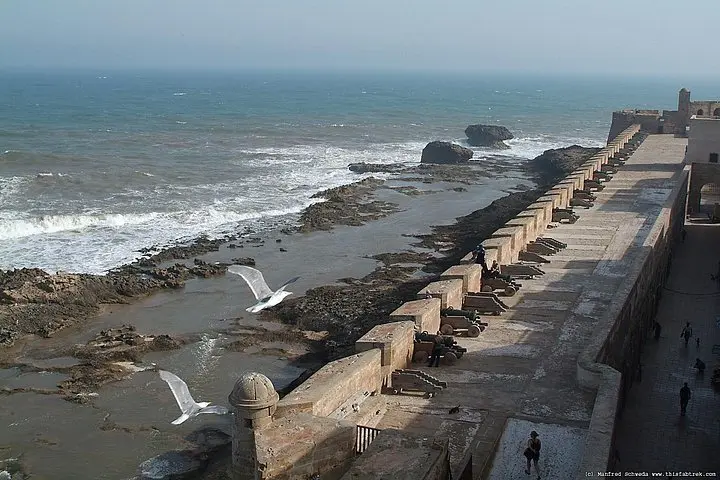
Practical guidance: expect a 9–10 hour day with roughly five hours in Essaouira for independent exploration. Wear sturdy walking shoes for cobbled alleys and the Scala ramparts; bring a wind‑resistant layer and sunscreen—wind can strip warmth quickly. Carry cash for small souks and seafood lunches; vendors accept dirhams and many spots will take cards, but smaller stalls won’t.
Timing matters: morning arrival reduces the strongest afternoon winds and gives calmer conditions at the port. Respect local norms—moderate dress and polite bargaining—and you'll leave having seen a coastal town where architecture, sea and argan country intersect.
The drive takes about 2.5–3 hours each way depending on traffic and stops, making the total outing roughly 9–10 hours.
Yes—this full‑day trip typically includes about five hours of independent time to visit the medina, port and beach.
Large parts of the medina have narrow, uneven cobbles and stairs; access is limited though some streets and cafes near the port are more accessible.
Swimming is generally not recommended because the water is cool and currents are strong; most visitors enjoy the beach from shore or hire certified surf instructors if interested.
Great Travel Morocco operates guided outdoor trips and adventures with an emphasis on safety, stewardship, and memorable experiences.
The bus eases out of Marrakech at dawn and the Atlas foothills flatten into ochre plain; by late morning the Atlantic wind arrives, cool and insistent, pushing through the palms and the alleys of Essaouira.
The bus eases out of Marrakech at dawn and the Atlas foothills flatten into ochre plain; by late morning the Atlantic wind arrives, cool and insistent, pushing through the palms and the alleys of Essaouira.
A visitor stepping through the city gate meets an 18th‑century fortified port shaped by European military plans and Atlantic weather. The medina—UNESCO listed in 2001—unfolds as compact streets of whitewashed walls, blue shutters and doors that speak to both North African and European influences. Geology here is coastal: low limestone headlands and sandy spits that feed long beaches and strong currents, which in turn carved the working port and turned it into a fishing hub.
Culturally the town is equal parts fishing quarter, artisan souk and argan country. Travelers on the road out of Marrakech will pass argan trees, some amusingly occupied by sure‑footed goats, and often stop at family cooperatives that press oil from the nut—an industry tied to local livelihoods and conservation efforts.
Practical guidance: expect a 9–10 hour day with roughly five hours in Essaouira for independent exploration. Wear sturdy walking shoes for cobbled alleys and the Scala ramparts; bring a wind‑resistant layer and sunscreen—wind can strip warmth quickly. Carry cash for small souks and seafood lunches; vendors accept dirhams and many spots will take cards, but smaller stalls won’t.
Timing matters: morning arrival reduces the strongest afternoon winds and gives calmer conditions at the port. Respect local norms—moderate dress and polite bargaining—and you'll leave having seen a coastal town where architecture, sea and argan country intersect.