THE ADVENTURE COLLECTIVE® · Independent discovery and booking for outdoor travel

Spend a day walking Essaouira’s UNESCO medina, climbing its ocean-swept ramparts and relaxing on wide Atlantic beaches. This guided day trip mixes history, coastal geology and local craft for an easy-paced cultural adventure.
Spend a day walking Essaouira’s UNESCO medina, climbing its ocean-swept ramparts and relaxing on wide Atlantic beaches. This guided day trip mixes history, coastal geology and local craft for an easy-paced cultural adventure.
A low, briny wind pushes up off the Atlantic as you step from the bus into Essaouira’s white-and-blue streets. Salt and cedar smoke hang in the air; gulls wheel above stone ramparts while the medina’s alleys open like a living map of glass, wood and spice. The town moves at seafaring pace — deliberate, loud, and welcoming.
Verified experiences and guided adventures in the surrounding area.
Operated by Oubadi Travel Agency · Essaouira, Marrakech-Safi
A low, briny wind pushes up off the Atlantic as you step from the bus into Essaouira’s white-and-blue streets. Salt and cedar smoke hang in the air; gulls wheel above stone ramparts while the medina’s alleys open like a living map of glass, wood and spice. The town moves at seafaring pace — deliberate, loud, and welcoming.
Essaouira’s history is visible in its walls: a 16th–18th century coastal fortress shaped by Portuguese and later Moroccan fortifications, later a trading hub connecting Saharan caravans to European markets. The geology is straightforward — wind-carved beaches, long dunes, and an exposed Atlantic shelf that makes for strong currents and reliable wind, the reason kitesurfers and sailors gravitate here. Culturally, Essaouira is a crossroads: fishing crews hauling silver sardines, artisans carving thuya wood, and Gnawa musicians keeping centuries-old rhythms alive in cafés and festivals.
On a typical day trip you’ll get guided time in the UNESCO-listed medina, a walk on the ramparts past bronze cannons, a stop at Skala de la Ville for surf-lashed views, and free time on the wide beach. Expect cobblestones, narrow steps, and open winds — dress in layers and secure any loose items.
Practical notes: bring cash for small workshops and markets, wear sturdy shoes for uneven alleys, and plan for wind — a light windbreaker is useful even in summer. Early mornings and late afternoons offer softer light for photography and calmer crowds. The trip is accessible to most travelers and gives a compact, sensory-rich snapshot of Morocco’s Atlantic coast.
The trip runs about 8 hours, including transport time from Marrakech and guided time in Essaouira.
Most sites visited (medina, ramparts, beach) have no admission fee; specialized museums or activities may require separate payment.
Meals are not listed as included—there will be free time to try local seafood and cafés in the medina.
The tour is family-friendly, but narrow alleys and ramps can be challenging for limited mobility; contact the operator about accessibility accommodations.
Oubadi Travel Agency operates guided outdoor trips and adventures with an emphasis on safety, stewardship, and memorable experiences.
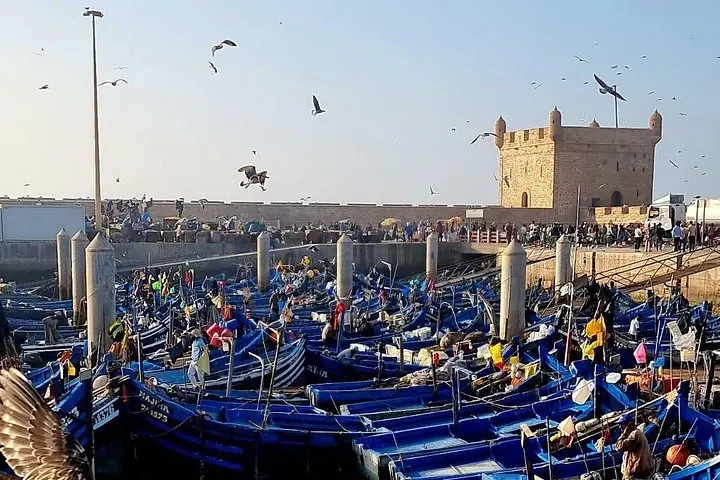
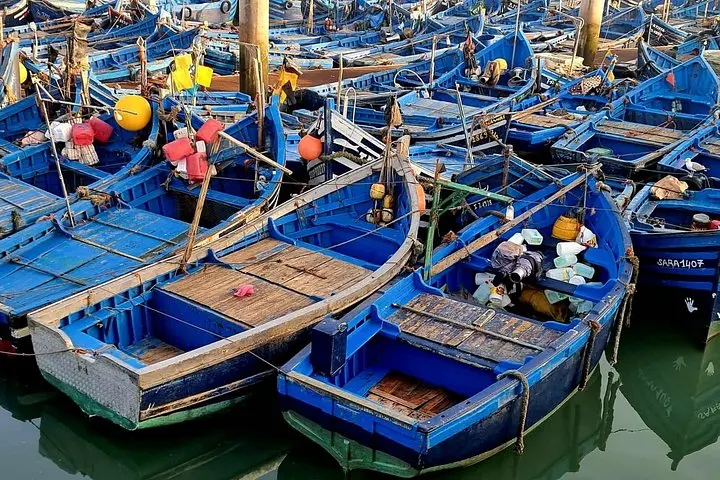
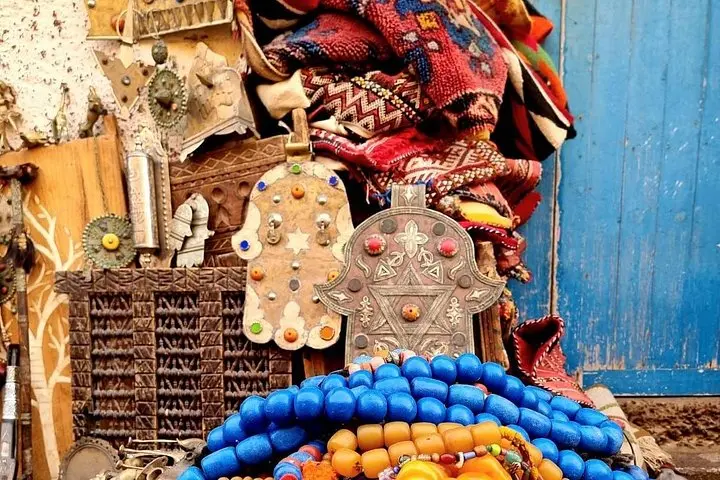
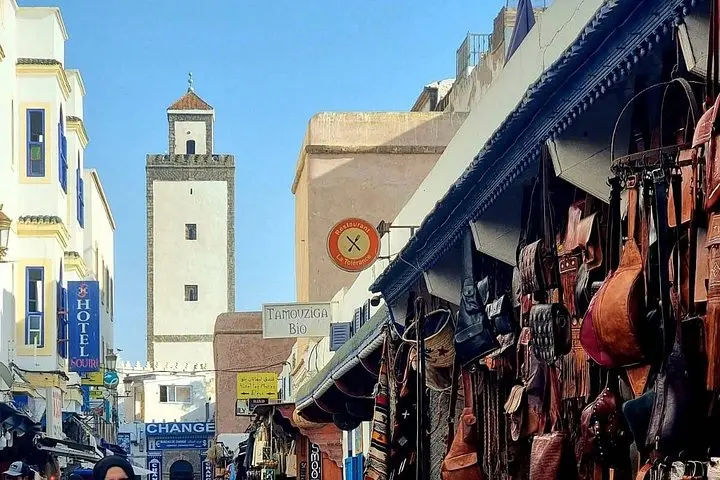
A low, briny wind pushes up off the Atlantic as you step from the bus into Essaouira’s white-and-blue streets. Salt and cedar smoke hang in the air; gulls wheel above stone ramparts while the medina’s alleys open like a living map of glass, wood and spice. The town moves at seafaring pace — deliberate, loud, and welcoming.
A low, briny wind pushes up off the Atlantic as you step from the bus into Essaouira’s white-and-blue streets. Salt and cedar smoke hang in the air; gulls wheel above stone ramparts while the medina’s alleys open like a living map of glass, wood and spice. The town moves at seafaring pace — deliberate, loud, and welcoming.
Essaouira’s history is visible in its walls: a 16th–18th century coastal fortress shaped by Portuguese and later Moroccan fortifications, later a trading hub connecting Saharan caravans to European markets. The geology is straightforward — wind-carved beaches, long dunes, and an exposed Atlantic shelf that makes for strong currents and reliable wind, the reason kitesurfers and sailors gravitate here. Culturally, Essaouira is a crossroads: fishing crews hauling silver sardines, artisans carving thuya wood, and Gnawa musicians keeping centuries-old rhythms alive in cafés and festivals.
On a typical day trip you’ll get guided time in the UNESCO-listed medina, a walk on the ramparts past bronze cannons, a stop at Skala de la Ville for surf-lashed views, and free time on the wide beach. Expect cobblestones, narrow steps, and open winds — dress in layers and secure any loose items.
Practical notes: bring cash for small workshops and markets, wear sturdy shoes for uneven alleys, and plan for wind — a light windbreaker is useful even in summer. Early mornings and late afternoons offer softer light for photography and calmer crowds. The trip is accessible to most travelers and gives a compact, sensory-rich snapshot of Morocco’s Atlantic coast.