THE ADVENTURE COLLECTIVE® · Independent discovery and booking for outdoor travel

Trade Marrakech’s bustle for a wind-scoured Atlantic port on this private day trip to Essaouira. Explore argan groves, a UNESCO medina, the busy harbor, and ramparts with sweeping coastal views—then relax with fresh seafood by the sea.
Trade Marrakech’s bustle for a wind-scoured Atlantic port on this private day trip to Essaouira. Explore argan groves, a UNESCO medina, the busy harbor, and ramparts with sweeping coastal views—then relax with fresh seafood by the sea.
A salt-laced wind meets the bus as you leave Marrakech’s ochre heat behind and roll through low hills planted with squat argan trees. By mid-morning the town’s whitewashed buildings and blue shutters appear on the horizon; Essaouira’s harbor calls with gulls and the slap of waves against wooden dhows.
Verified experiences and guided adventures in the surrounding area.
Operated by Green Atlas Travel · Essaouira, Marrakesh-Safi
A salt-laced wind meets the bus as you leave Marrakech’s ochre heat behind and roll through low hills planted with squat argan trees. By mid-morning the town’s whitewashed buildings and blue shutters appear on the horizon; Essaouira’s harbor calls with gulls and the slap of waves against wooden dhows.
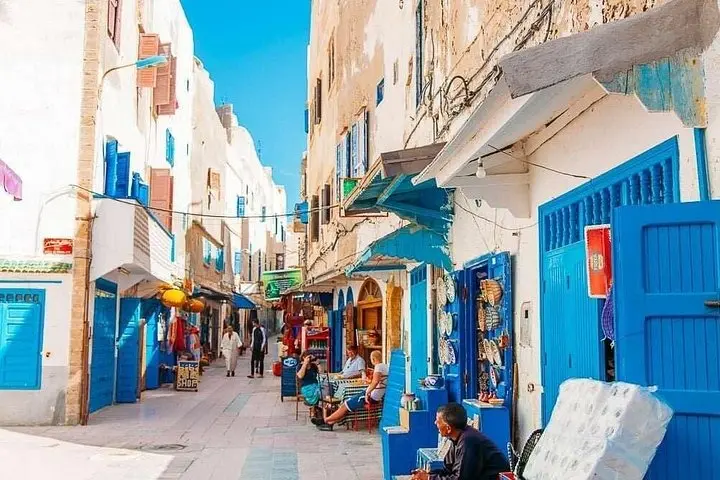
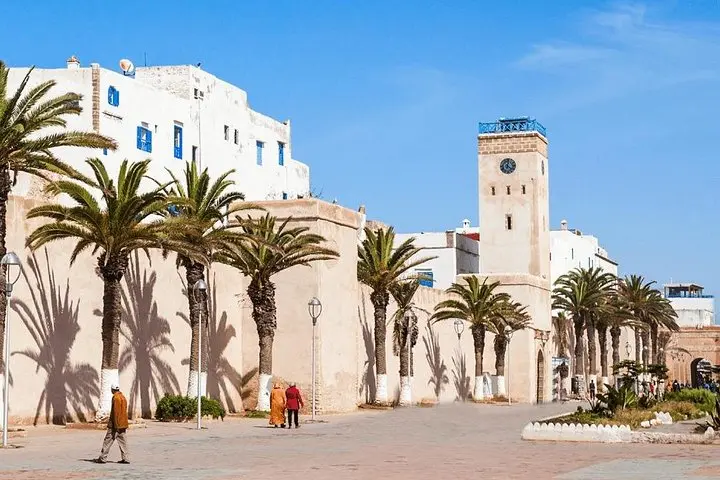
The medina here is UNESCO-listed for good reason: 18th-century fortifications by Portuguese builders, later French and Moroccan influences, create a grid of narrow lanes lined with cedar and thuya wood workshops. Geologically the coast is a broad Atlantic shelf—sandy beaches backed by dunes and volcanic outcrops—so the ramparts (the Skala) give panoramic views of surf and distant islands, a useful vantage for spotting passing dolphins.
Culture arrives in savory form: a seafood lunch of grilled fish or sardines at the port feels like a local ritual after a visit to an argan cooperative where women demonstrate cold-press methods and you sample fresh oil.
Practical guidance: the drive is about 2.5–3 hours each way from Marrakech (prepare for a full 7–10 hour day). Expect uneven cobbles in the medina and concrete or packed sand on the seafront; comfortable walking shoes and sun protection are essential. Bring cash for small purchases, and plan your free afternoon—choose a beach walk, a gallery stop, or another climb of the ramparts for sunset light.
Timing matters: mornings are cooler and less crowded in the medina; late afternoons bring stronger winds on the strand. With a private driver, you gain flexibility to pace the town and return refreshed to Marrakech by evening.
Expect about 2.5–3 hours each way by car depending on traffic and your exact pickup location in Marrakech.
Some main lanes are wide and reasonably flat, but many alleys are narrow and cobbled—ask your operator about adapted routes or transport within the town if mobility is a concern.
Moroccan dirhams (MAD) are preferred for local purchases; larger restaurants accept cards, but small vendors may not.
Seafood lunch is typically included; specify dietary restrictions when booking so your guide can arrange alternatives.
Green Atlas Travel operates guided outdoor trips and adventures with an emphasis on safety, stewardship, and memorable experiences.
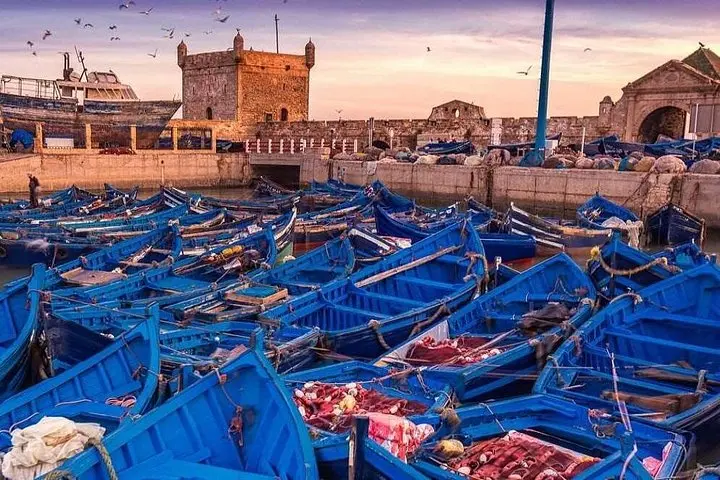
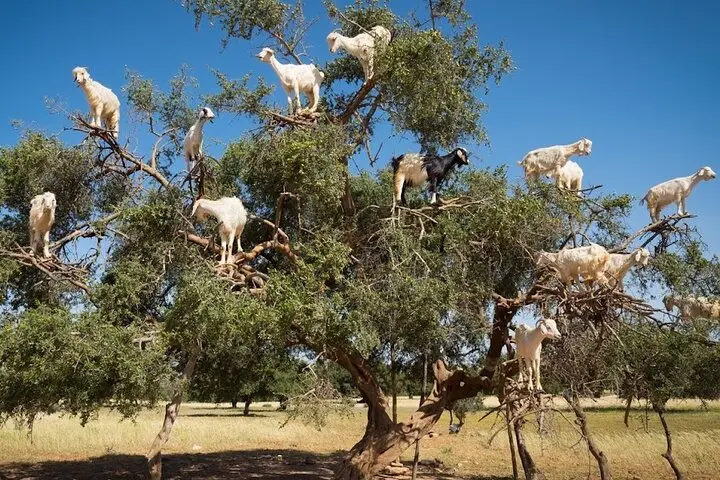
A salt-laced wind meets the bus as you leave Marrakech’s ochre heat behind and roll through low hills planted with squat argan trees. By mid-morning the town’s whitewashed buildings and blue shutters appear on the horizon; Essaouira’s harbor calls with gulls and the slap of waves against wooden dhows.
A salt-laced wind meets the bus as you leave Marrakech’s ochre heat behind and roll through low hills planted with squat argan trees. By mid-morning the town’s whitewashed buildings and blue shutters appear on the horizon; Essaouira’s harbor calls with gulls and the slap of waves against wooden dhows.
The medina here is UNESCO-listed for good reason: 18th-century fortifications by Portuguese builders, later French and Moroccan influences, create a grid of narrow lanes lined with cedar and thuya wood workshops. Geologically the coast is a broad Atlantic shelf—sandy beaches backed by dunes and volcanic outcrops—so the ramparts (the Skala) give panoramic views of surf and distant islands, a useful vantage for spotting passing dolphins.
Culture arrives in savory form: a seafood lunch of grilled fish or sardines at the port feels like a local ritual after a visit to an argan cooperative where women demonstrate cold-press methods and you sample fresh oil.
Practical guidance: the drive is about 2.5–3 hours each way from Marrakech (prepare for a full 7–10 hour day). Expect uneven cobbles in the medina and concrete or packed sand on the seafront; comfortable walking shoes and sun protection are essential. Bring cash for small purchases, and plan your free afternoon—choose a beach walk, a gallery stop, or another climb of the ramparts for sunset light.
Timing matters: mornings are cooler and less crowded in the medina; late afternoons bring stronger winds on the strand. With a private driver, you gain flexibility to pace the town and return refreshed to Marrakech by evening.