THE ADVENTURE COLLECTIVE® · Independent discovery and booking for outdoor travel

Trade Marrakech’s ochre lanes for Essaouira’s wind-scoured ramparts and working fishing port on this private full-day trip. Expect two hours each way, a guided Medina walk, fresh seafood by the quay and time to explore the beach and fortifications.
Trade Marrakech’s ochre lanes for Essaouira’s wind-scoured ramparts and working fishing port on this private full-day trip. Expect two hours each way, a guided Medina walk, fresh seafood by the quay and time to explore the beach and fortifications.
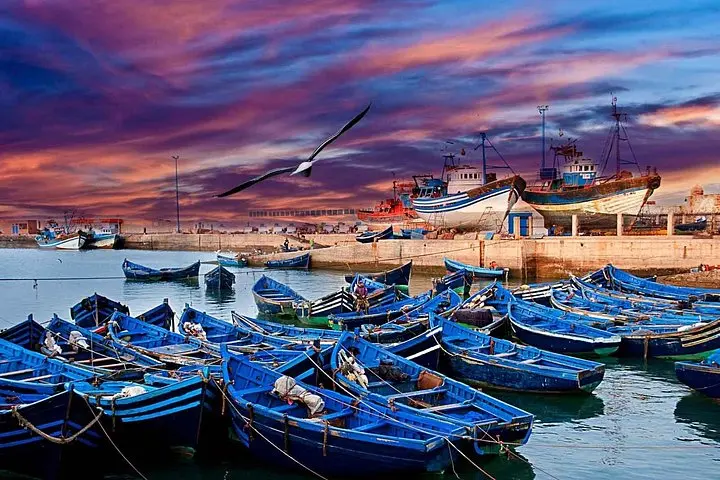
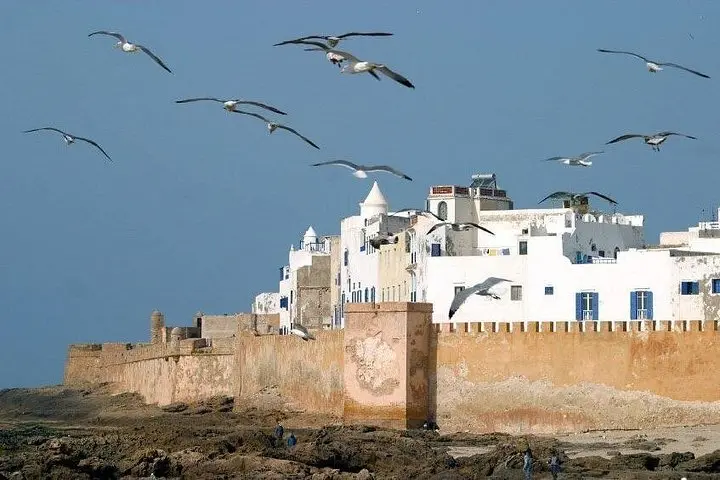
A morning drive west from Marrakech eases out of red-earth plains into low argan-studded hills, and the Atlantic wind begins to push at the windows long before the city appears. By the time the ramparts of Essaouira come into view, the sea has already set the town’s tempo: brisk, salty, and insistent. Visitors step into a town where stone walls angle against surf and gulls chase the fishing boats back to port.
Verified experiences and guided adventures in the surrounding area.
Operated by Art de Cuivre Travel · Essaouira, Marrakech-Safi
A morning drive west from Marrakech eases out of red-earth plains into low argan-studded hills, and the Atlantic wind begins to push at the windows long before the city appears. By the time the ramparts of Essaouira come into view, the sea has already set the town’s tempo: brisk, salty, and insistent. Visitors step into a town where stone walls angle against surf and gulls chase the fishing boats back to port.
Essaouira (historically Mogador) was redesigned in the 18th century under Sultan Mohammed ben Abdallah with European military engineers; today its ramparts, cannons, and grid-like medina reflect that layered history. The coastline is late-Triassic and Cenozoic marine terrace in feel—long sandy beaches, low cliffs, and a working harbor—conditioned by steady Atlantic trade winds that give the town its reputation for wind sports.
Culture here is practical and musical: Gnawa rhythms echo from café courtyards, argan cooperatives work nearby, and fishermen haul the day’s catch onto the quay. A guided stroll through the souk exposes mosaic workshops, spice stalls, and the Skala du Port where film crews have shot coastal scenes.
Practical guidance: expect a two-hour drive each way from Marrakech, roughly eight to nine hours total including guided Medina time and free lunch. Wear comfortable, non-slip shoes for cobbles and ramps, bring sun protection and cash for small purchases, and leave bulky luggage behind — the trip is a day-focused, walk-heavy experience. If you want a quieter visit, ask to schedule the arrival for late morning when the port is livelier and shops are open.
Expect about two hours each way depending on traffic and stops, so plan for roughly 8–9 hours total including time in Essaouira.
Lunch is generally not included; the itinerary allows free time to eat at the fishing port where fresh grilled seafood is common.
Yes — the tour offers hotel pickup and drop-off in Marrakech; confirm your address when booking.
The medina has narrow, uneven streets and steps; while some areas are manageable, full wheelchair access is limited.
Art de Cuivre Travel operates guided outdoor trips and adventures with an emphasis on safety, stewardship, and memorable experiences.
A morning drive west from Marrakech eases out of red-earth plains into low argan-studded hills, and the Atlantic wind begins to push at the windows long before the city appears. By the time the ramparts of Essaouira come into view, the sea has already set the town’s tempo: brisk, salty, and insistent. Visitors step into a town where stone walls angle against surf and gulls chase the fishing boats back to port.
A morning drive west from Marrakech eases out of red-earth plains into low argan-studded hills, and the Atlantic wind begins to push at the windows long before the city appears. By the time the ramparts of Essaouira come into view, the sea has already set the town’s tempo: brisk, salty, and insistent. Visitors step into a town where stone walls angle against surf and gulls chase the fishing boats back to port.
Essaouira (historically Mogador) was redesigned in the 18th century under Sultan Mohammed ben Abdallah with European military engineers; today its ramparts, cannons, and grid-like medina reflect that layered history. The coastline is late-Triassic and Cenozoic marine terrace in feel—long sandy beaches, low cliffs, and a working harbor—conditioned by steady Atlantic trade winds that give the town its reputation for wind sports.
Culture here is practical and musical: Gnawa rhythms echo from café courtyards, argan cooperatives work nearby, and fishermen haul the day’s catch onto the quay. A guided stroll through the souk exposes mosaic workshops, spice stalls, and the Skala du Port where film crews have shot coastal scenes.
Practical guidance: expect a two-hour drive each way from Marrakech, roughly eight to nine hours total including guided Medina time and free lunch. Wear comfortable, non-slip shoes for cobbles and ramps, bring sun protection and cash for small purchases, and leave bulky luggage behind — the trip is a day-focused, walk-heavy experience. If you want a quieter visit, ask to schedule the arrival for late morning when the port is livelier and shops are open.