THE ADVENTURE COLLECTIVE® · Independent discovery and booking for outdoor travel

Three hours of quad biking south of Essaouira takes you across dunes, pine-scented tracks and through traditional villages. This private ride mixes coastal views with local culture — practical, fast-paced, and best timed for cooler morning or late-afternoon light.
Three hours of quad biking south of Essaouira takes you across dunes, pine-scented tracks and through traditional villages. This private ride mixes coastal views with local culture — practical, fast-paced, and best timed for cooler morning or late-afternoon light.
The engine kicks, sand sprays, and the coastline slides into a low, wind-bent horizon as you head south from Essaouira. For three hours the quad trail threads between sea-swept dunes, umbrella pines, and the ochre roofs of tiny Berber villages — the landscape alternating between open, thirsty sand and shaded tracks that smell of resin and salt.
Verified experiences and guided adventures in the surrounding area.
Operated by Diana Dromadaires · Essaouira, Marrakech-Safi
The engine kicks, sand sprays, and the coastline slides into a low, wind-bent horizon as you head south from Essaouira. For three hours the quad trail threads between sea-swept dunes, umbrella pines, and the ochre roofs of tiny Berber villages — the landscape alternating between open, thirsty sand and shaded tracks that smell of resin and salt.
Essaouira grew from a fortified 18th-century port designed to control Atlantic trade; its approach roads and dunes hide older caravan routes and seasonal fishing camps. Geologically the region is young coastal plain and wind-worked dunes sitting atop limestone and sandstone outcrops, which creates quick-changing surfaces under your tires. Culturally the area hums with Gnawa rhythms and a fishing-port economy — expect to pass small ateliers and olive groves where locals mend nets or herd goats.
Practical guidance: rides are typically private and last about three hours, with helmets, jackets and gloves provided. Trails range from hard-packed coastal tracks to loose sand; moderate fitness and basic vehicle awareness are required. Start early or late afternoon to avoid strong midday winds and the hottest sand. Bring a small backpack with water, sunscreen, and a compact camera; secure loose items.
Respect local lanes and vegetation — staying on established tracks limits erosion and keeps dunes intact. Expect brief stretches where you slow for village traffic or livestock. The payoff: sudden views of the Atlantic and quiet, little-visited beaches where the coastline opens and the wind dares you forward.
No — guides provide basic instruction; a moderate level of fitness and attention to vehicle handling are recommended.
Helmets, jackets and gloves are included; confirmations are instant and mobile tickets are accepted.
Policies vary; check with the operator. Guests should meet moderate fitness standards and community rules on passenger age/weight.
Full refunds are typically available if you cancel at least 24 hours before departure; check the booking confirmation for exact terms.
Diana Dromadaires operates guided outdoor trips and adventures with an emphasis on safety, stewardship, and memorable experiences.
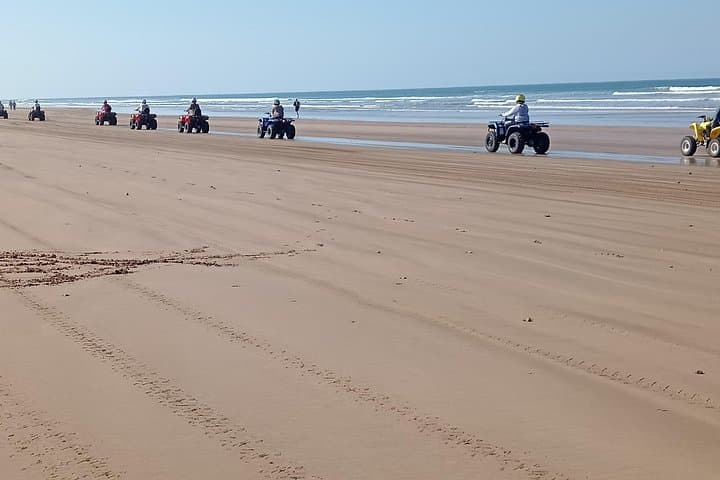


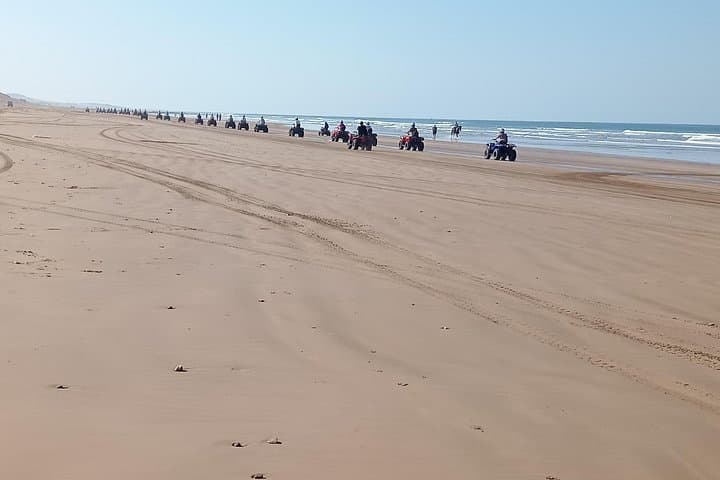
The engine kicks, sand sprays, and the coastline slides into a low, wind-bent horizon as you head south from Essaouira. For three hours the quad trail threads between sea-swept dunes, umbrella pines, and the ochre roofs of tiny Berber villages — the landscape alternating between open, thirsty sand and shaded tracks that smell of resin and salt.
The engine kicks, sand sprays, and the coastline slides into a low, wind-bent horizon as you head south from Essaouira. For three hours the quad trail threads between sea-swept dunes, umbrella pines, and the ochre roofs of tiny Berber villages — the landscape alternating between open, thirsty sand and shaded tracks that smell of resin and salt.
Essaouira grew from a fortified 18th-century port designed to control Atlantic trade; its approach roads and dunes hide older caravan routes and seasonal fishing camps. Geologically the region is young coastal plain and wind-worked dunes sitting atop limestone and sandstone outcrops, which creates quick-changing surfaces under your tires. Culturally the area hums with Gnawa rhythms and a fishing-port economy — expect to pass small ateliers and olive groves where locals mend nets or herd goats.
Practical guidance: rides are typically private and last about three hours, with helmets, jackets and gloves provided. Trails range from hard-packed coastal tracks to loose sand; moderate fitness and basic vehicle awareness are required. Start early or late afternoon to avoid strong midday winds and the hottest sand. Bring a small backpack with water, sunscreen, and a compact camera; secure loose items.
Respect local lanes and vegetation — staying on established tracks limits erosion and keeps dunes intact. Expect brief stretches where you slow for village traffic or livestock. The payoff: sudden views of the Atlantic and quiet, little-visited beaches where the coastline opens and the wind dares you forward.