THE ADVENTURE COLLECTIVE® · Independent discovery and booking for outdoor travel

A focused, private two-day circuit of Rapa Nui that pairs the island’s iconic moai and ceremonial sites with quieter quarries, caves, and volcanic rims. Guided by a certified local, this itinerary balances archaeology, legend, and practical exploration.
A focused, private two-day circuit of Rapa Nui that pairs the island’s iconic moai and ceremonial sites with quieter quarries, caves, and volcanic rims. Guided by a certified local, this itinerary balances archaeology, legend, and practical exploration.
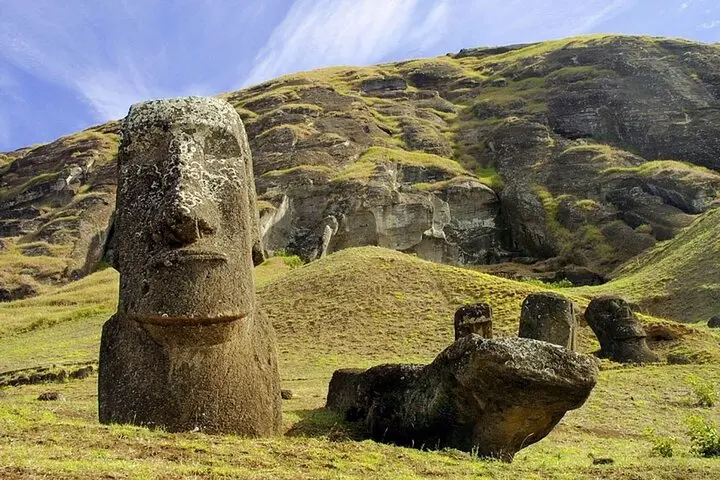
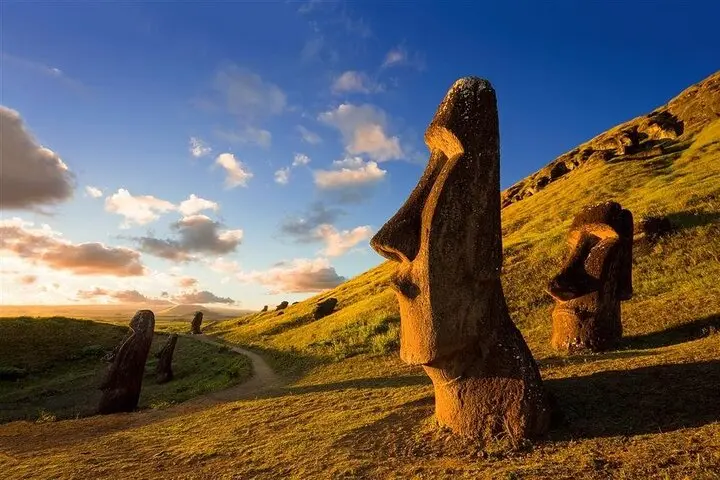
You step off the van and the wind of the Pacific meets you first — salty, insistent, as if the island itself is urging you forward. On this private two-day circuit you move through open quarry slopes where half-finished moai still cling to volcanic rock, across the black fringe of a crater rim with ocean views, and down to a white-sand cove where statues watch the surf.
Verified experiences and guided adventures in the surrounding area.
Operated by Kapua Tours & Experience · Hanga Roa, Valparaíso Region
You step off the van and the wind of the Pacific meets you first — salty, insistent, as if the island itself is urging you forward. On this private two-day circuit you move through open quarry slopes where half-finished moai still cling to volcanic rock, across the black fringe of a crater rim with ocean views, and down to a white-sand cove where statues watch the surf.
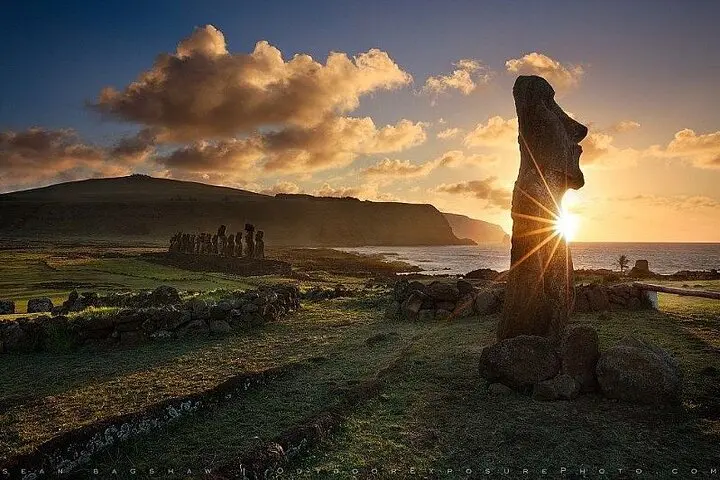
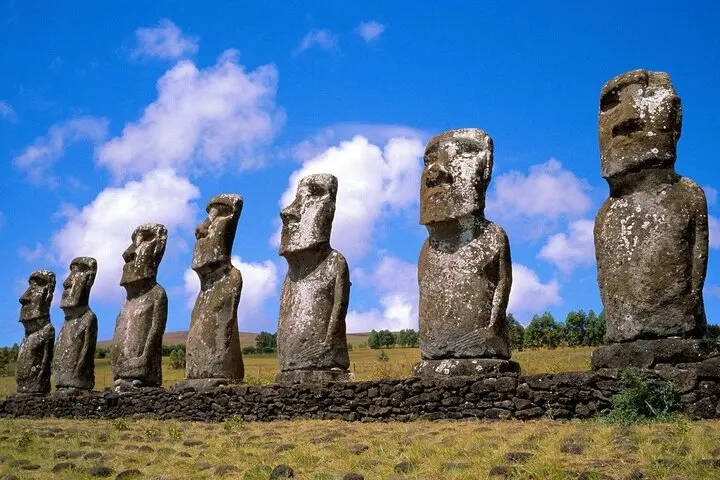
Rapa Nui’s story is written in stone: tuff from Rano Raraku, red scoria from Puna Pau, and basalt platforms (ahu) rebuilt after earlier collapse. The island’s archaeology and oral history converge at sites like Ahu Tongariki — fifteen restored moai facing the sea — and Orongo, perched on the Rano Kau rim where the Birdman cult once staged ritual contests. Geologically young and isolated, the island’s volcanic features create compact but dramatic landscapes: crater lakes, lava tubes such as Ana Te Pahu, and exposed quarries that reveal carving stages.
A certified local guide frames the places with legend and context, moving from the practical — how moai were moved and what the ahu represent — to the cultural, including contemporary Rapa Nui stewardship. Expect short walks (minutes to a couple of kilometers), uneven footing, and frequent wind; Rano Kau’s rim sits at roughly 300 meters above sea level, with sweeping exposures.
Plan for sun, wind, and quick weather shifts: sunscreen, layered windproof outerwear, sturdy footwear, and at least 1–2 liters of water per person per day. Timing your visit for morning light at Rano Raraku and late afternoon at Tongariki gives the best photographs and softer conditions. This private itinerary packs the island’s iconic highlights with quieter corners for a focused, context-rich experience.
Yes. Most main sites are within Rapa Nui National Park and require a park ticket; confirm with your operator that park entrance is included or available for purchase.
Daily walking consists of short site explorations from a vehicle — generally minutes to 1–2 km per stop — with some climbs at crater rims and quarries.
The tour is private and wheelchair-accessible in transport, but some site terrain includes steps and uneven ground; guests should assess mobility and consult the operator about specific accessibility needs.
Easter Island has a mild, maritime climate year-round; summer (Dec–Feb) is warmer but busier, while shoulder seasons are cooler with more comfortable touring conditions.
Kapua Tours & Experience operates guided outdoor trips and adventures with an emphasis on safety, stewardship, and memorable experiences.
You step off the van and the wind of the Pacific meets you first — salty, insistent, as if the island itself is urging you forward. On this private two-day circuit you move through open quarry slopes where half-finished moai still cling to volcanic rock, across the black fringe of a crater rim with ocean views, and down to a white-sand cove where statues watch the surf.
You step off the van and the wind of the Pacific meets you first — salty, insistent, as if the island itself is urging you forward. On this private two-day circuit you move through open quarry slopes where half-finished moai still cling to volcanic rock, across the black fringe of a crater rim with ocean views, and down to a white-sand cove where statues watch the surf.
Rapa Nui’s story is written in stone: tuff from Rano Raraku, red scoria from Puna Pau, and basalt platforms (ahu) rebuilt after earlier collapse. The island’s archaeology and oral history converge at sites like Ahu Tongariki — fifteen restored moai facing the sea — and Orongo, perched on the Rano Kau rim where the Birdman cult once staged ritual contests. Geologically young and isolated, the island’s volcanic features create compact but dramatic landscapes: crater lakes, lava tubes such as Ana Te Pahu, and exposed quarries that reveal carving stages.
A certified local guide frames the places with legend and context, moving from the practical — how moai were moved and what the ahu represent — to the cultural, including contemporary Rapa Nui stewardship. Expect short walks (minutes to a couple of kilometers), uneven footing, and frequent wind; Rano Kau’s rim sits at roughly 300 meters above sea level, with sweeping exposures.
Plan for sun, wind, and quick weather shifts: sunscreen, layered windproof outerwear, sturdy footwear, and at least 1–2 liters of water per person per day. Timing your visit for morning light at Rano Raraku and late afternoon at Tongariki gives the best photographs and softer conditions. This private itinerary packs the island’s iconic highlights with quieter corners for a focused, context-rich experience.