THE ADVENTURE COLLECTIVE® · Independent discovery and booking for outdoor travel

A compact six-day loop from Hammamet to Carthage, Dougga and El Jem that covers Tunisia’s key Roman and Islamic sites. Expect coastal views, rich mosaics, maze-like medinas and a steady pace designed for exploration rather than endurance.
A compact six-day loop from Hammamet to Carthage, Dougga and El Jem that covers Tunisia’s key Roman and Islamic sites. Expect coastal views, rich mosaics, maze-like medinas and a steady pace designed for exploration rather than endurance.
The first night in Hammamet arrives with the sea still warm and a coastal breeze moving through the hotel courtyard—lanterns click on, and the smell of simmering harissa and grilled fish drifts from nearby cafés. Over six days you move from that Mediterranean edge inland to amphitheaters carved into low hills, ornate mosques, and white-and-blue cliffsides where the water dares you to pause.
Verified experiences and guided adventures in the surrounding area.
Operated by TUNISIVISION · Hammamet, Nabeul Governorate
The first night in Hammamet arrives with the sea still warm and a coastal breeze moving through the hotel courtyard—lanterns click on, and the smell of simmering harissa and grilled fish drifts from nearby cafés. Over six days you move from that Mediterranean edge inland to amphitheaters carved into low hills, ornate mosques, and white-and-blue cliffsides where the water dares you to pause.
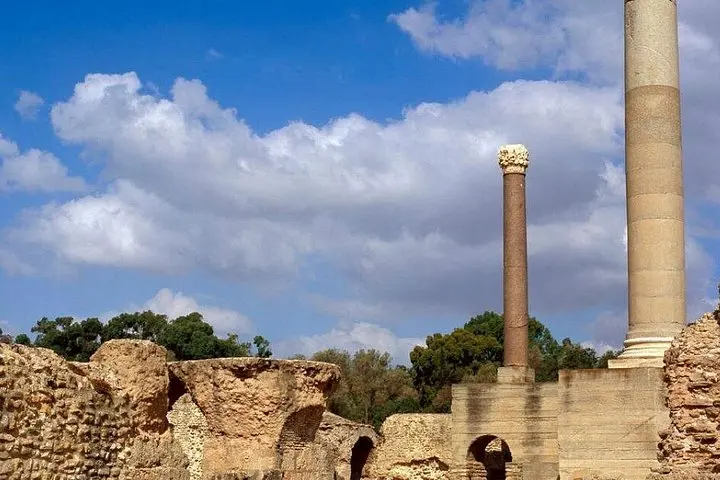
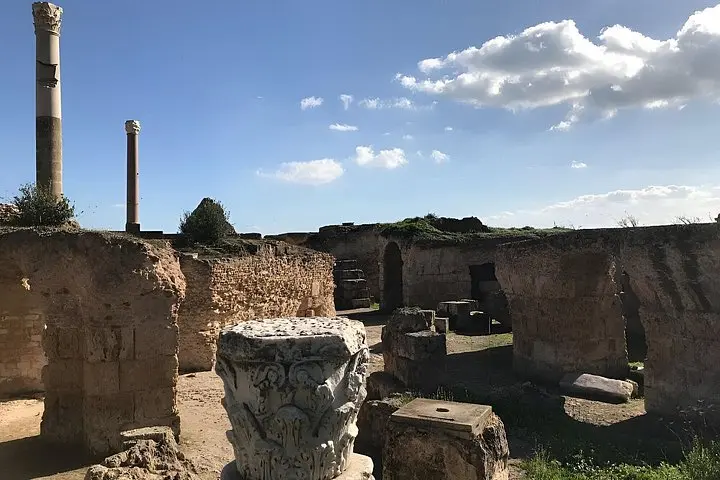
This loop stitches together Tunisia’s layered history: Phoenician Carthage’s coastal ruins, Roman precision at Dougga and El Jem, and the Islamic artistry of Kairouan and Tunis’s medina. Geologically the route follows the fertile coastal plain into gentle limestone plateaus where Roman cities sought defensible, well-drained sites; olive groves and citrus orchards mark the landscape between towns.
Culturally expect lively souks, Andalusian-influenced architecture in Testour, and the signature rooftop vantage points of Sidi Bou Said. Local meals highlight couscous, brik, and strong mint tea, often eaten outdoors beneath fig trees or in orchard settings.
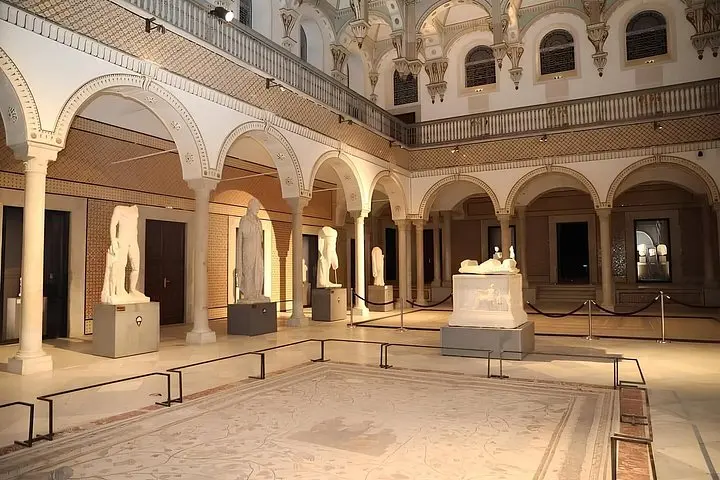
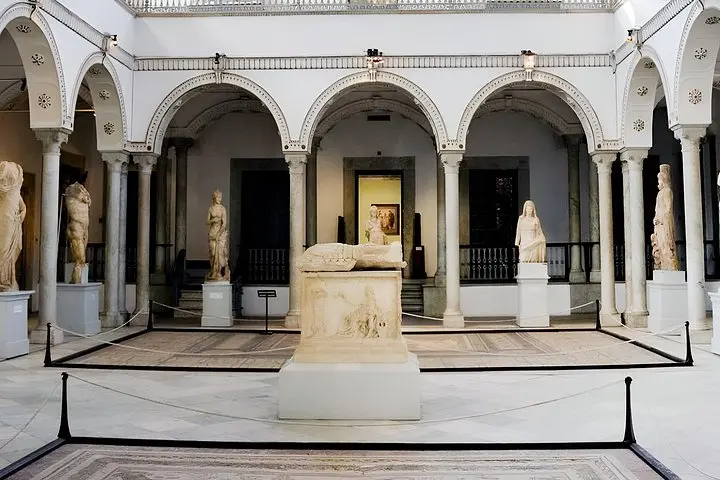
Practical guidance: the itinerary is driven—private transport covers the distances but daily walking on uneven cobbles and archaeological terraces requires stable footwear and steady knees. Museums like the Bardo and the Colosseum at El Jem have steps and uneven floors. Carry sun protection, a refillable water bottle, a small amount of Tunisian dinar for market purchases, and a light layer for coastal evenings. Confirm language and any included admissions with the operator before travel. Pace your days to savor sites rather than rush them; many highlights reward slow observation and the quiet corners between guided groups.
Arrival transfer to Hammamet is provided according to your flight schedule and a departure transfer to the airport is included on the final day; confirm your flight details at booking.
Some admissions (for example the Bardo Museum and several archaeological sites) are noted as included in parts of the itinerary; verify which entries are covered when you book.
The tour involves walking on uneven ground, steps and cobbled alleys and is not recommended for travelers with serious spinal or cardiovascular conditions; guests should have moderate fitness.
Guides are typically multilingual—often English and French in Tunisia—but confirm the guide’s language when you reserve to ensure compatibility with your group.
TUNISIVISION operates guided outdoor trips and adventures with an emphasis on safety, stewardship, and memorable experiences.
The first night in Hammamet arrives with the sea still warm and a coastal breeze moving through the hotel courtyard—lanterns click on, and the smell of simmering harissa and grilled fish drifts from nearby cafés. Over six days you move from that Mediterranean edge inland to amphitheaters carved into low hills, ornate mosques, and white-and-blue cliffsides where the water dares you to pause.
The first night in Hammamet arrives with the sea still warm and a coastal breeze moving through the hotel courtyard—lanterns click on, and the smell of simmering harissa and grilled fish drifts from nearby cafés. Over six days you move from that Mediterranean edge inland to amphitheaters carved into low hills, ornate mosques, and white-and-blue cliffsides where the water dares you to pause.
This loop stitches together Tunisia’s layered history: Phoenician Carthage’s coastal ruins, Roman precision at Dougga and El Jem, and the Islamic artistry of Kairouan and Tunis’s medina. Geologically the route follows the fertile coastal plain into gentle limestone plateaus where Roman cities sought defensible, well-drained sites; olive groves and citrus orchards mark the landscape between towns.
Culturally expect lively souks, Andalusian-influenced architecture in Testour, and the signature rooftop vantage points of Sidi Bou Said. Local meals highlight couscous, brik, and strong mint tea, often eaten outdoors beneath fig trees or in orchard settings.
Practical guidance: the itinerary is driven—private transport covers the distances but daily walking on uneven cobbles and archaeological terraces requires stable footwear and steady knees. Museums like the Bardo and the Colosseum at El Jem have steps and uneven floors. Carry sun protection, a refillable water bottle, a small amount of Tunisian dinar for market purchases, and a light layer for coastal evenings. Confirm language and any included admissions with the operator before travel. Pace your days to savor sites rather than rush them; many highlights reward slow observation and the quiet corners between guided groups.