THE ADVENTURE COLLECTIVE® · Independent discovery and booking for outdoor travel

Depart Taormina for a six-hour guided exploration of Mount Etna’s side craters, lava fields and a volcanic cave. This accessible day tour mixes geology, short hikes and dramatic viewpoints suitable for families and active travelers.
Depart Taormina for a six-hour guided exploration of Mount Etna’s side craters, lava fields and a volcanic cave. This accessible day tour mixes geology, short hikes and dramatic viewpoints suitable for families and active travelers.
A shuttle peels away from Taormina’s cliff-road and the Ionian coast shrinks to a silver strip while Mount Etna rises like a working map of fire and stone. The tour deposits you on the volcano’s eastern flank where black fields of hardened lava meet stands of twisted pine; steam still whispers from crevasses and side craters punctuate the skyline.
Verified experiences and guided adventures in the surrounding area.
Operated by Sicily Adventure · Nicolosi, Sicily
A shuttle peels away from Taormina’s cliff-road and the Ionian coast shrinks to a silver strip while Mount Etna rises like a working map of fire and stone. The tour deposits you on the volcano’s eastern flank where black fields of hardened lava meet stands of twisted pine; steam still whispers from crevasses and side craters punctuate the skyline.
Etna is Europe’s highest active volcano, sculpted by millennia of eruptions and human stories—farmers, shepherds and towns rebuilt after the eruptions of recent decades, most notably the 2002 flow that buried parts of Piano Provenzana. Geologically the mountain is a layered stratovolcano; you’ll see pahoehoe and ʻaʻā textures in the flows and walk on ash that recorded past blasts. Cultural threads run through the day: local vendors sell pistachio sweets and volcanic trinkets, and you’ll pass regrown pine stands that are still recovering from past lava events.
The guided route focuses on side craters near ~1,800 m with a two-hour walking section over rocky, uneven terrain and short inclines. A separate stop visits a volcanic cave with helmets and torches to examine lava tubes and chilled flow structures. Expect dust, loose scree, and sharp volcanic rock underfoot.
Practical guidance: bring sturdy footwear, layered outerwear (winds and sun at altitude), 1–2 liters of water, and sun protection. Allow six hours including transport; check weather and bring any prescription medication for altitude sensitivity. Tours typically provide helmets, torches and walking poles on request—confirm pickup and any accessibility needs when you book.
The guided crater walk is about 2 hours over mixed terrain with short ascents and rocky sections—expect 3–4 kilometers of walking at uneven grade.
Yes—guides provide helmets and portable torches for the volcanic cave visit; you can still bring your own headlamp if preferred.
The itinerary is advertised as family-friendly, but children should be steady on their feet and older adults with mobility or cardiovascular issues should consult with the operator due to uneven terrain and altitude.
Altitude here is moderate (~1,800 m for the main walks); if you have heart or spinal conditions notify the operator. Operators monitor volcanic activity and cancel if conditions become unsafe—check cancellation policies before booking.
Sicily Adventure operates guided outdoor trips and adventures with an emphasis on safety, stewardship, and memorable experiences.
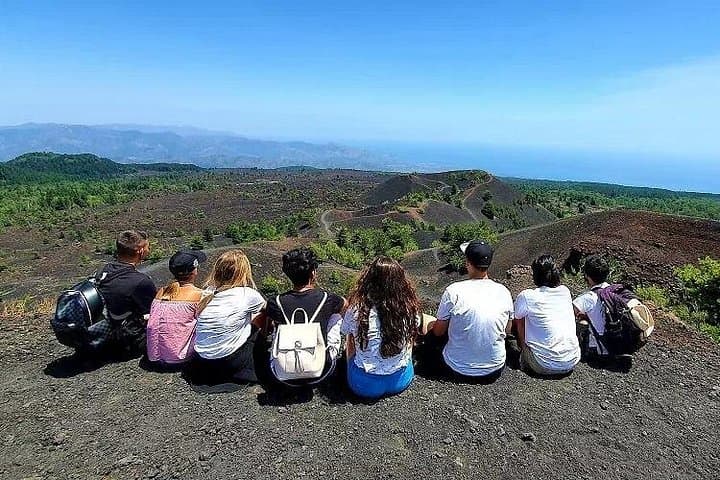
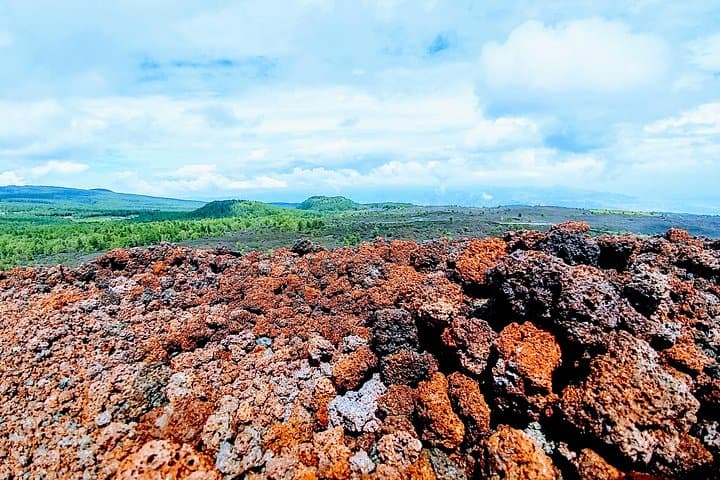

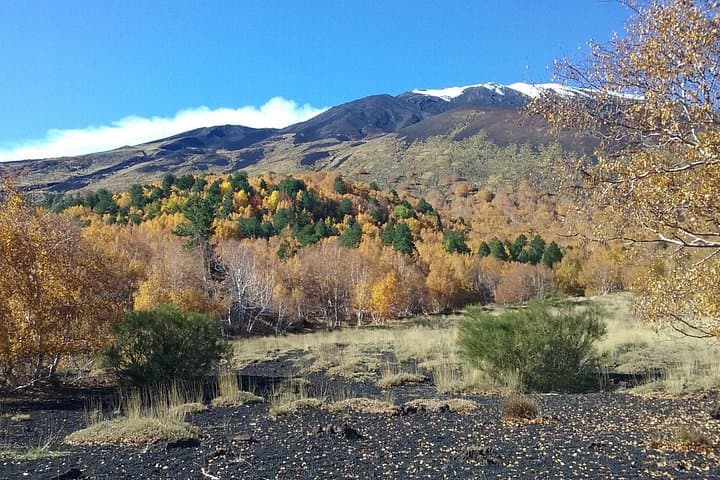
A shuttle peels away from Taormina’s cliff-road and the Ionian coast shrinks to a silver strip while Mount Etna rises like a working map of fire and stone. The tour deposits you on the volcano’s eastern flank where black fields of hardened lava meet stands of twisted pine; steam still whispers from crevasses and side craters punctuate the skyline.
A shuttle peels away from Taormina’s cliff-road and the Ionian coast shrinks to a silver strip while Mount Etna rises like a working map of fire and stone. The tour deposits you on the volcano’s eastern flank where black fields of hardened lava meet stands of twisted pine; steam still whispers from crevasses and side craters punctuate the skyline.
Etna is Europe’s highest active volcano, sculpted by millennia of eruptions and human stories—farmers, shepherds and towns rebuilt after the eruptions of recent decades, most notably the 2002 flow that buried parts of Piano Provenzana. Geologically the mountain is a layered stratovolcano; you’ll see pahoehoe and ʻaʻā textures in the flows and walk on ash that recorded past blasts. Cultural threads run through the day: local vendors sell pistachio sweets and volcanic trinkets, and you’ll pass regrown pine stands that are still recovering from past lava events.
The guided route focuses on side craters near ~1,800 m with a two-hour walking section over rocky, uneven terrain and short inclines. A separate stop visits a volcanic cave with helmets and torches to examine lava tubes and chilled flow structures. Expect dust, loose scree, and sharp volcanic rock underfoot.
Practical guidance: bring sturdy footwear, layered outerwear (winds and sun at altitude), 1–2 liters of water, and sun protection. Allow six hours including transport; check weather and bring any prescription medication for altitude sensitivity. Tours typically provide helmets, torches and walking poles on request—confirm pickup and any accessibility needs when you book.