THE ADVENTURE COLLECTIVE® · Independent discovery and booking for outdoor travel

Trace black lava highways up Mount Etna, step into a subterranean lava tube, then descend to the icy Alcantara Gorge where basalt columns rise like walls. This full-day jeep-and-hike excursion pairs geology with local tasting and a walk inside one of Sicily’s most dramatic rivers.
Trace black lava highways up Mount Etna, step into a subterranean lava tube, then descend to the icy Alcantara Gorge where basalt columns rise like walls. This full-day jeep-and-hike excursion pairs geology with local tasting and a walk inside one of Sicily’s most dramatic rivers.
A cold wind from the volcano pushes across the jeep’s hood as the convoy climbs into scrub and black rock. Under a high, luminous Sicilian sky, the landscape alternates between dense chestnut forest and fields of glassy, fractured lava—black ribbons that once flowed like rivers and now dare you to trace their course. On the ridge a lateral crater gapes like a cut in the mountain’s skin; below, the Alcantara River waits, cutting a white line through columnar basalt.
Verified experiences and guided adventures in the surrounding area.
Operated by EtnaWay · Catania, Sicily
A cold wind from the volcano pushes across the jeep’s hood as the convoy climbs into scrub and black rock. Under a high, luminous Sicilian sky, the landscape alternates between dense chestnut forest and fields of glassy, fractured lava—black ribbons that once flowed like rivers and now dare you to trace their course. On the ridge a lateral crater gapes like a cut in the mountain’s skin; below, the Alcantara River waits, cutting a white line through columnar basalt.
This full-day excursion, roughly eight to nine hours, moves quickly between two of eastern Sicily’s most visceral landscapes: Mount Etna, Europe’s most active volcano, and the Alcantara Gorge, a dramatic canyon carved by water through ancient lava. Etna’s current edifice began building some 500,000 years ago; its recent eruptions—visible in the scars and fresh flows encountered along the route—are chapters in a geologic story that is still being written. The lava caves you enter are collapsed tubes and flow tunnels, cold interiors where basalt cools into shiny, ropy pahoehoe or chunky aa, offering a tactile sense of volcanic chemistry.
Culturally the region is shaped by both mountain and sea. Village kitchens at the roadside serve up mountain cheeses, honey, and robust wines from slopes that thrive on volcanic soils; a midday stop in a chalet-style rifugio pairs alpine-style fare with Sicilian ingredients. The Alcantara Valley, by contrast, tells a different tale: 25-meter basalt cliffs rise vertically where the river exploited joints in the lava, creating hexagonal columns that seem deliberately sculpted.
Practicalities: the day uses 4×4 jeeps to reach higher slopes and old mule tracks (mulattiere), and includes guided access into a lava flow cave—torches and helmets provided. Expect uneven ground, short sections of scrambling over loose volcanic scree, and a walk down to the riverbed inside the gorge. The itinerary also includes a tasting of local products—honey, liqueurs—and a visit to a recent 2002 lava flow viewpoint.
Prepare for variable conditions: Etna’s microclimate can shift sharply from sunny and warm at lower elevations to windswept and cold near 1,000 meters. Good leather hiking boots, layered clothing, sun protection, and at least 1.5–2 liters of water are essential. If you plan to enter the river, bring a quick-dry layer and water shoes—the current is cold and assertive.
This is a high-value day for travelers who want geology, short-form exploration, and cultural flavor without technical climbing. It’s a hands-on, sensory introduction to Sicily’s volcanic heart and the river that carved its own dramatic response below.
The lava cave requires stooping and walking on uneven rock for short sections; helmets and torches are provided and guides assist with navigation.
Brave visitors sometimes wade or swim in calm sections, but the water is icy; follow the guide and avoid strong currents.
Yes—children can join but must be supervised; check age restrictions with the operator and request infant seats if needed.
Closed, sturdy hiking boots with good tread are recommended due to sharp basalt and loose scree.
Active lava is uncommon on day tours; you’ll see recent flows, vents and fresh volcanic rock but not typically flowing lava.
Pickup is available from Catania and nearby towns; travel time to Etna’s mid-slopes is roughly 40–75 minutes depending on pickup location.
EtnaWay operates guided outdoor trips and adventures with an emphasis on safety, stewardship, and memorable experiences.
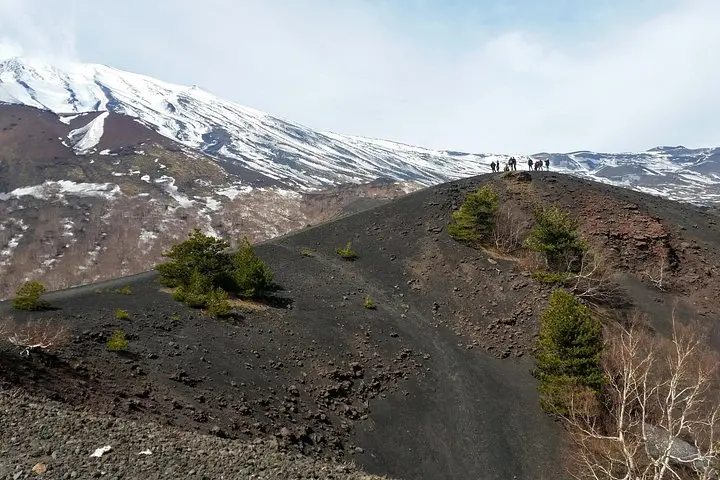
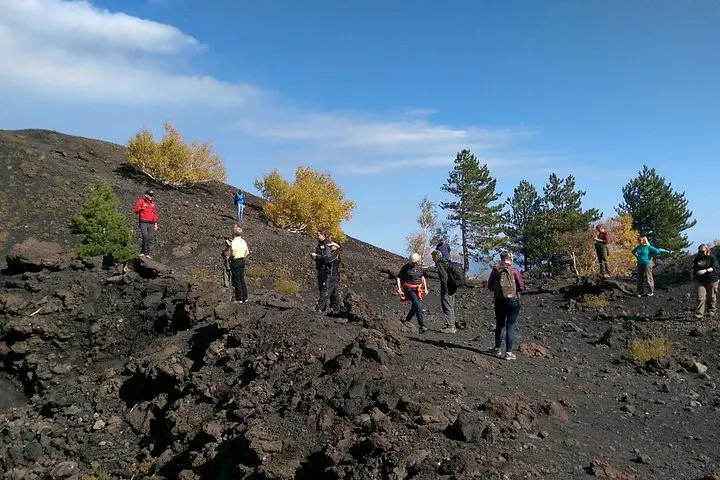
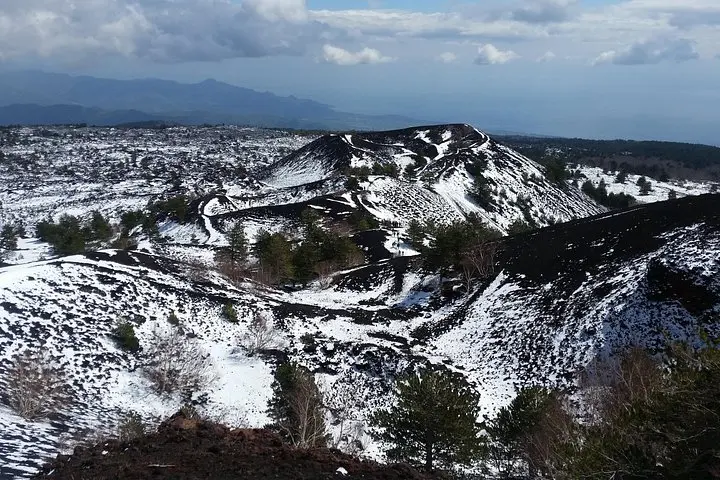
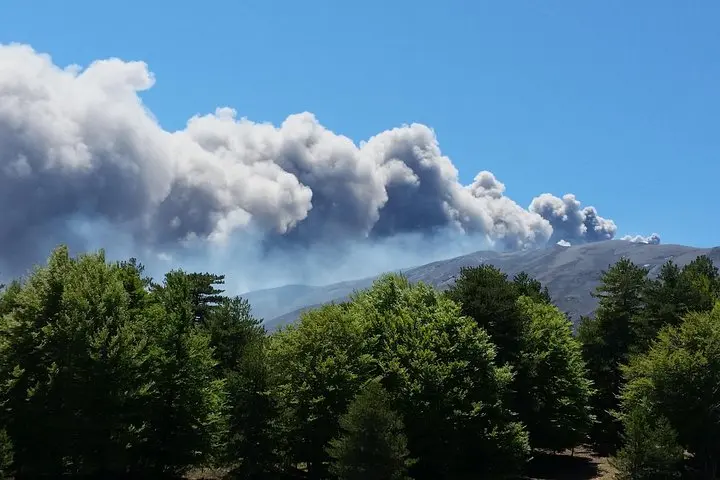
A cold wind from the volcano pushes across the jeep’s hood as the convoy climbs into scrub and black rock. Under a high, luminous Sicilian sky, the landscape alternates between dense chestnut forest and fields of glassy, fractured lava—black ribbons that once flowed like rivers and now dare you to trace their course. On the ridge a lateral crater gapes like a cut in the mountain’s skin; below, the Alcantara River waits, cutting a white line through columnar basalt.
A cold wind from the volcano pushes across the jeep’s hood as the convoy climbs into scrub and black rock. Under a high, luminous Sicilian sky, the landscape alternates between dense chestnut forest and fields of glassy, fractured lava—black ribbons that once flowed like rivers and now dare you to trace their course. On the ridge a lateral crater gapes like a cut in the mountain’s skin; below, the Alcantara River waits, cutting a white line through columnar basalt.
This full-day excursion, roughly eight to nine hours, moves quickly between two of eastern Sicily’s most visceral landscapes: Mount Etna, Europe’s most active volcano, and the Alcantara Gorge, a dramatic canyon carved by water through ancient lava. Etna’s current edifice began building some 500,000 years ago; its recent eruptions—visible in the scars and fresh flows encountered along the route—are chapters in a geologic story that is still being written. The lava caves you enter are collapsed tubes and flow tunnels, cold interiors where basalt cools into shiny, ropy pahoehoe or chunky aa, offering a tactile sense of volcanic chemistry.
Culturally the region is shaped by both mountain and sea. Village kitchens at the roadside serve up mountain cheeses, honey, and robust wines from slopes that thrive on volcanic soils; a midday stop in a chalet-style rifugio pairs alpine-style fare with Sicilian ingredients. The Alcantara Valley, by contrast, tells a different tale: 25-meter basalt cliffs rise vertically where the river exploited joints in the lava, creating hexagonal columns that seem deliberately sculpted.
Practicalities: the day uses 4×4 jeeps to reach higher slopes and old mule tracks (mulattiere), and includes guided access into a lava flow cave—torches and helmets provided. Expect uneven ground, short sections of scrambling over loose volcanic scree, and a walk down to the riverbed inside the gorge. The itinerary also includes a tasting of local products—honey, liqueurs—and a visit to a recent 2002 lava flow viewpoint.
Prepare for variable conditions: Etna’s microclimate can shift sharply from sunny and warm at lower elevations to windswept and cold near 1,000 meters. Good leather hiking boots, layered clothing, sun protection, and at least 1.5–2 liters of water are essential. If you plan to enter the river, bring a quick-dry layer and water shoes—the current is cold and assertive.
This is a high-value day for travelers who want geology, short-form exploration, and cultural flavor without technical climbing. It’s a hands-on, sensory introduction to Sicily’s volcanic heart and the river that carved its own dramatic response below.