THE ADVENTURE COLLECTIVE® · Independent discovery and booking for outdoor travel

Walk across fresh lava fields and stand beside the Sylvester craters on Mount Etna in a half-day guided trek from Taormina or Giardini Naxos. Expect uneven volcanic terrain, strong winds, and a post-hike tasting of Etna wines and olive oil.
Walk across fresh lava fields and stand beside the Sylvester craters on Mount Etna in a half-day guided trek from Taormina or Giardini Naxos. Expect uneven volcanic terrain, strong winds, and a post-hike tasting of Etna wines and olive oil.
A wind-scoured track opens above the orange groves and coastal glare of Taormina, and within an hour the sea shrinks to a thin blue ribbon. You step onto black glassy fields where recent lava has cooled into fractured, geometric plates; steam still sighs from fumaroles and the Sylvester craters sit like torn seams in the mountain’s flank. The walk and short trek to about 1,900 m puts you on the active shoulders of Europe’s tallest volcano, where raw rock and scrub meet wide, volcanic skylines.
Verified experiences and guided adventures in the surrounding area.
Operated by Travel In Sicily Tour Operator · Taormina, Sicily
A wind-scoured track opens above the orange groves and coastal glare of Taormina, and within an hour the sea shrinks to a thin blue ribbon. You step onto black glassy fields where recent lava has cooled into fractured, geometric plates; steam still sighs from fumaroles and the Sylvester craters sit like torn seams in the mountain’s flank. The walk and short trek to about 1,900 m puts you on the active shoulders of Europe’s tallest volcano, where raw rock and scrub meet wide, volcanic skylines.
Etna’s geology is immediate: layers of basalt and ash stacked by centuries of eruptions, channels carved by fast lava flows, and younger scoria cones perched on older slopes. Human history here runs parallel — vineyards and orchards cling to nutrient-rich slopes, and rural hamlets have adapted farming and winemaking to the volcanic soil. Local guides often weave stories of past eruptions and the producers who harvest olives and Nero d’Avola grapes from the volcanic rim.
Practically, this is a short, high-elevation outing rather than a summit expedition. Expect uneven rock, loose scree and sudden wind. Comfortable hiking shoes, a windproof layer, sun protection and at least 1–1.5 liters of water are sensible. Aim for morning departures to avoid afternoon wind and to catch clearer views. If you’re traveling from Taormina or Giardini Naxos, round-trip transport is typically two hours; the guided portion runs about three hours on-site. Respect closed areas around active vents, follow your guide’s instructions, and allow time at the tasting to sample Etna’s distinct wines and oils — the human and geological stories are best tasted as well as seen.
The on-site guided visit and trek are roughly three hours, within a five-hour total tour that includes round-trip transport from Taormina/Giardini Naxos.
The trek is family-friendly for those used to walking on uneven ground, but children and older adults should be comfortable with short uphill sections and cooler, windy conditions.
No — this tour reaches craters and lava fields around 1,900 m; summit ascents require specialized routes, equipment and often cable car/4x4 logistics.
Wear layered clothing and a windproof outer layer; temperatures can be several degrees colder than the coast and wind can be strong at 1,900 m.
Travel In Sicily Tour Operator operates guided outdoor trips and adventures with an emphasis on safety, stewardship, and memorable experiences.
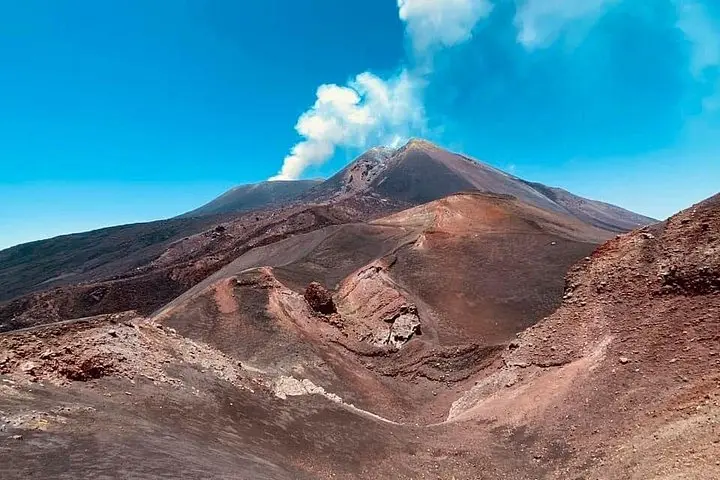
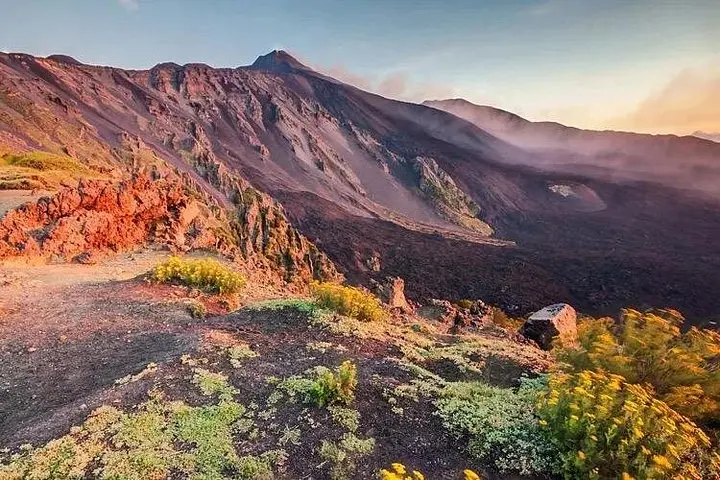
A wind-scoured track opens above the orange groves and coastal glare of Taormina, and within an hour the sea shrinks to a thin blue ribbon. You step onto black glassy fields where recent lava has cooled into fractured, geometric plates; steam still sighs from fumaroles and the Sylvester craters sit like torn seams in the mountain’s flank. The walk and short trek to about 1,900 m puts you on the active shoulders of Europe’s tallest volcano, where raw rock and scrub meet wide, volcanic skylines.
A wind-scoured track opens above the orange groves and coastal glare of Taormina, and within an hour the sea shrinks to a thin blue ribbon. You step onto black glassy fields where recent lava has cooled into fractured, geometric plates; steam still sighs from fumaroles and the Sylvester craters sit like torn seams in the mountain’s flank. The walk and short trek to about 1,900 m puts you on the active shoulders of Europe’s tallest volcano, where raw rock and scrub meet wide, volcanic skylines.
Etna’s geology is immediate: layers of basalt and ash stacked by centuries of eruptions, channels carved by fast lava flows, and younger scoria cones perched on older slopes. Human history here runs parallel — vineyards and orchards cling to nutrient-rich slopes, and rural hamlets have adapted farming and winemaking to the volcanic soil. Local guides often weave stories of past eruptions and the producers who harvest olives and Nero d’Avola grapes from the volcanic rim.
Practically, this is a short, high-elevation outing rather than a summit expedition. Expect uneven rock, loose scree and sudden wind. Comfortable hiking shoes, a windproof layer, sun protection and at least 1–1.5 liters of water are sensible. Aim for morning departures to avoid afternoon wind and to catch clearer views. If you’re traveling from Taormina or Giardini Naxos, round-trip transport is typically two hours; the guided portion runs about three hours on-site. Respect closed areas around active vents, follow your guide’s instructions, and allow time at the tasting to sample Etna’s distinct wines and oils — the human and geological stories are best tasted as well as seen.