THE ADVENTURE COLLECTIVE® · Independent discovery and booking for outdoor travel

Walk old lava, explore a lava tube and peer into Valle del Bove on a 5–6 hour Etna morning tour from Catania. Guides cover eruption history, local farming traditions and practical safety for volcanic terrain.
Walk old lava, explore a lava tube and peer into Valle del Bove on a 5–6 hour Etna morning tour from Catania. Guides cover eruption history, local farming traditions and practical safety for volcanic terrain.
The air tastes mineral and raw as the van pulls away from Catania and the lower foothills give way to black and rust-colored slopes. By mid-morning you're walking on old lava, the granular ground crunching underfoot, while the mountain's higher cones loom and the Valle del Bove opens like a scorched amphitheater daring you to look closer.
Verified experiences and guided adventures in the surrounding area.
Operated by Etnavic · Catania, Sicily
The air tastes mineral and raw as the van pulls away from Catania and the lower foothills give way to black and rust-colored slopes. By mid-morning you're walking on old lava, the granular ground crunching underfoot, while the mountain's higher cones loom and the Valle del Bove opens like a scorched amphitheater daring you to look closer.
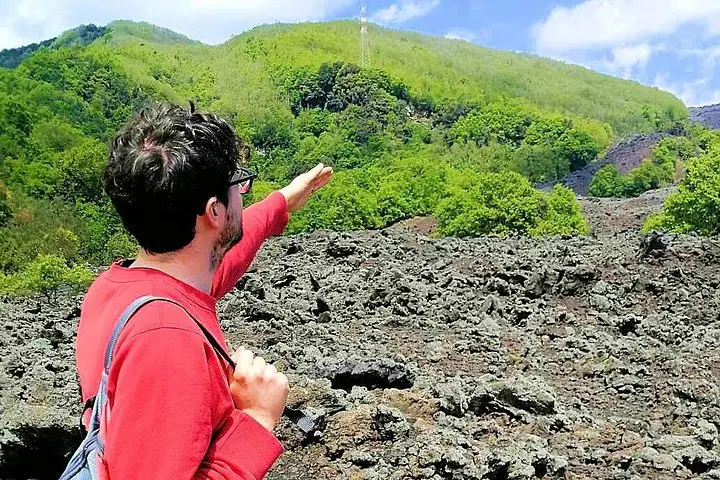
Mount Etna is Europe’s most active volcano: eruptions have reshaped its flanks from the 17th century through the 1991–93 flows that reached Zafferana Etnea. Geologically it’s a composite of basaltic lava and pyroclastic deposits; the tour traces extinct 19th-century craters and newer lava fronts so visitors can see how successive eruptions stack and alter the landscape. Culturally, the slopes host centuries-old farms—local honey, olive oil and wines reflect soil born of fire, and farmers adapted their terraces to the mountain’s moods.
The itinerary pairs short, easy treks around an extinct crater at ~2,000 m with a guided walk through a lava tube; helmets and lights are provided. Expect uneven volcanic scree, steep viewpoints into Valle del Bove, and a farm stop with tastings. Guides explain eruption history, local food traditions and how Etna’s microclimates influence vineyards.
Practical edge: wear sturdy shoes with ankle support, layered clothing for abrupt temperature shifts, and carry 1–2 liters of water. The route is accessible for most fitness levels but includes loose rock and altitude that can make walking feel harder than distance alone. Tours run 5–6 hours; check pickup details and cancelation policy if weather turns, and always follow your guide’s instructions to minimize impact on this dynamic, fragile landscape.
Yes—it's described as easy to moderate; however, guardians should assess children’s ability to handle uneven ground and a 5–6 hour day.
Yes—helmets and flashlights are included in the tour; guests can bring their own headlamps for convenience.
Departures are arranged from Catania or agreed meeting points; transfers in air-conditioned vehicles with drivers are included—confirm your pickup when booking.
The trip does not automatically cancel for bad weather; check the operator’s 24-hour cancellation policy and confirm safety decisions with your guide if conditions change.
Etnavic operates guided outdoor trips and adventures with an emphasis on safety, stewardship, and memorable experiences.
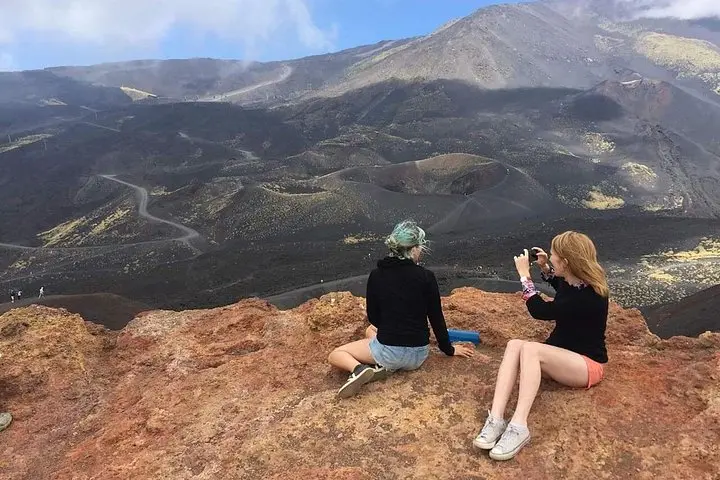
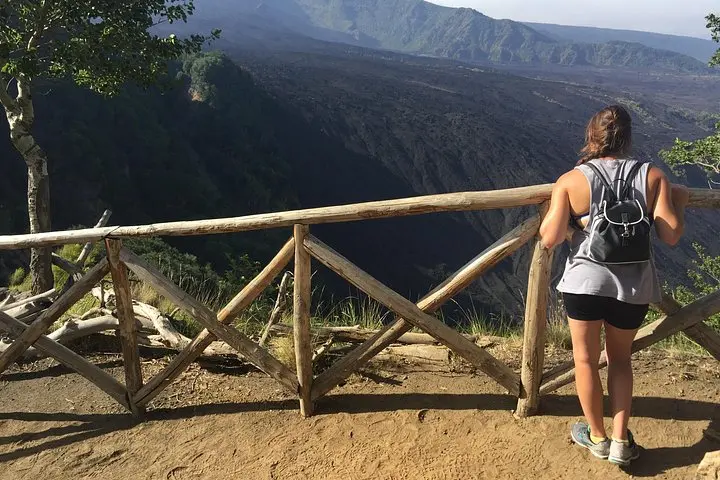
The air tastes mineral and raw as the van pulls away from Catania and the lower foothills give way to black and rust-colored slopes. By mid-morning you're walking on old lava, the granular ground crunching underfoot, while the mountain's higher cones loom and the Valle del Bove opens like a scorched amphitheater daring you to look closer.
The air tastes mineral and raw as the van pulls away from Catania and the lower foothills give way to black and rust-colored slopes. By mid-morning you're walking on old lava, the granular ground crunching underfoot, while the mountain's higher cones loom and the Valle del Bove opens like a scorched amphitheater daring you to look closer.
Mount Etna is Europe’s most active volcano: eruptions have reshaped its flanks from the 17th century through the 1991–93 flows that reached Zafferana Etnea. Geologically it’s a composite of basaltic lava and pyroclastic deposits; the tour traces extinct 19th-century craters and newer lava fronts so visitors can see how successive eruptions stack and alter the landscape. Culturally, the slopes host centuries-old farms—local honey, olive oil and wines reflect soil born of fire, and farmers adapted their terraces to the mountain’s moods.
The itinerary pairs short, easy treks around an extinct crater at ~2,000 m with a guided walk through a lava tube; helmets and lights are provided. Expect uneven volcanic scree, steep viewpoints into Valle del Bove, and a farm stop with tastings. Guides explain eruption history, local food traditions and how Etna’s microclimates influence vineyards.
Practical edge: wear sturdy shoes with ankle support, layered clothing for abrupt temperature shifts, and carry 1–2 liters of water. The route is accessible for most fitness levels but includes loose rock and altitude that can make walking feel harder than distance alone. Tours run 5–6 hours; check pickup details and cancelation policy if weather turns, and always follow your guide’s instructions to minimize impact on this dynamic, fragile landscape.